


The legal department’s workload has grown substantially in recent years, and the pressure shows no sign of easing. According to FTI Consulting’s General Counsel Report 2025, 85% of general counsel expect corporate risk and demand on the legal department to increase at an accelerating rate in the year ahead. Regulatory compliance is now the top risk for 41% of legal department leaders, up 11 percentage points from the previous year.
So why are legal departments so important within companies? What are the functions and responsibilities of the legal team? What is its strategic role?
Definition of a Legal Department
The legal department within a company is responsible for ensuring that the organization operates in compliance with applicable laws and regulations. It is composed of legal professionals, often referred to as the company’s in-house lawyers.
In daily operations, legal monitoring takes up a significant portion of the department’s work. Lawyers must stay continuously informed about all laws and regulations relevant to the company’s activities. Since legal norms are constantly changing, this task requires a high degree of diligence to identify potential impacts on business operations at an early stage.
At the same time, the legal department serves a consulting and awareness-raising function within the company. It works closely with other departments to ensure the correct application of legal requirements, especially when rules are new or have changed.
Key responsibilities of the legal department include:
Responsibilities and Competences of the Legal Department
Profile of a Lawyer
A good lawyer should ideally embody all of the following qualities and skills:
Risks Managed by the Legal Department
The risks managed by the legal department can vary depending on the company’s business sector. Most of the regulations and disputes they deal with are industry-specific (banking, real estate, online services, food and drink, etc.).
However, some risks are more general and remain the same even between sectors. They mostly tend to evolve along with technological innovations and societal shifts.
According to FTI Consulting’s General Counsel Report 2025, data privacy is the single most time-consuming area for 61% of legal departments globally, followed by litigation and internal investigations. A 2021 study by the Cercle Montesquieu found similar priorities across French legal departments:
These concerns remain central today. Interest in data protection surged in 2018 following the introduction of GDPR. Since then, new waves of regulation, including the EU AI Act and cybersecurity requirements under NIS2, have further expanded the compliance perimeter. In the U.S., compliance with Freedom of Information Act (FOIA) requests may also fall under the purview of the legal department in certain industries.
The Legal Department’s Strategic Role
For much of its history, the legal department was seen as a cost center: a back-office function brought in to review contracts and defend against litigation. That framing no longer holds.
General counsel now sit at the executive table in most large organizations. They advise the board on governance, represent the company in regulatory discussions, and weigh in on decisions from M&A to market expansion. The evolving GC mandate reflects a broader recognition that legal expertise is not just a risk-management tool. It is a strategic asset.
The scope has expanded too. Legal teams are regularly called on to:
This shift matters for how companies resource and position their legal departments. A legal team that sits close to the business tends to catch problems earlier and support decisions with more confidence.
Is admin work slowing down your legal team?
See what in-house legal professionals say are the biggest productivity drains, how inefficiencies affect morale, and how modern legal tech can help you reclaim time for high-value work.

Contract Management
All companies have various types of contracts to manage, such as internal, the most common being employment contracts , and external, with suppliers and, of course, clients. These contracts are crucial documents, often processed in large volumes and handled by multiple parties and departments: purchasing, sales, human resources, finance, and of course, the legal department.
Whether the contracts are related to purchasing, business negotiations, or even standard recruitment contracts, all of these documents must strictly comply with all the relevant standards. Why? Because even the slightest mistake can prove very costly, both legally and financially speaking, not to mention the issue of the company’s reputation if the dispute becomes public. For all these reasons, the role of the legal department is paramount when it comes to contract management.
Lawyers provide legal advice, help draft clauses, and ensure regulatory compliance. They also search for legal precedents and regulatory updates to ensure contracts meet current standards.
On a day-to-day basis, lawyers are responsible for ensuring that all contracts are compliant and that their performance is in line with all clauses. They also contribute to the process before the contracts are even signed, during the drafting and negotiation stages. This requires meticulous monitoring and regular discussions with other departments within the company.
DiliTrust Provides the Solution for Legal Departments
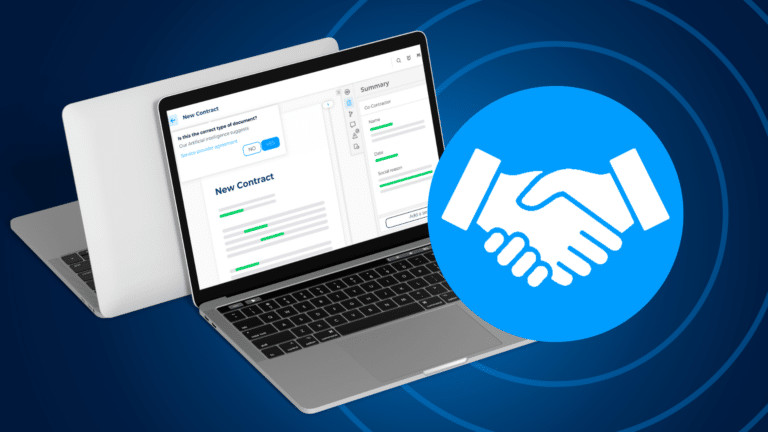
DiliTrust’s Contracts module is a Contract Lifecycle Management solution. In other words, it is a tool that automates the management of contracts throughout their lifecycle. As the brainchild of former lawyers, this tool makes legal professionals’ daily workload a great deal lighter and simpler, freeing up their time (and mental space!) for high-value-added tasks: providing legal opinions, giving advice, and making key decisions.
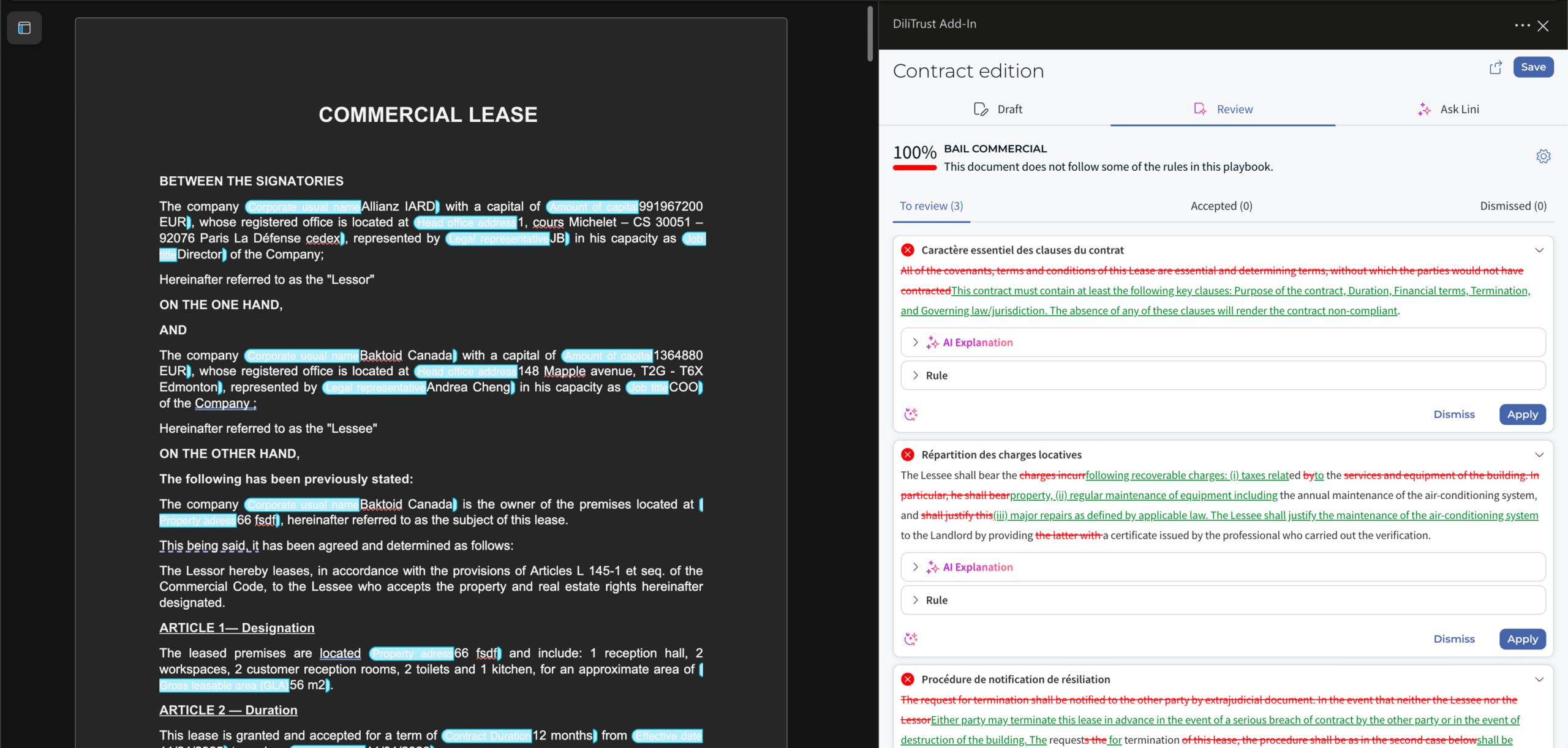
The Contracts module removes the most time-consuming parts of contract work — drafting from scratch, chasing approvals, tracking expiry dates, and carrying out manual clause checks. AI-assisted features, including clause deviation detection and automated summaries, make contract review faster and more consistent, from drafting to execution.
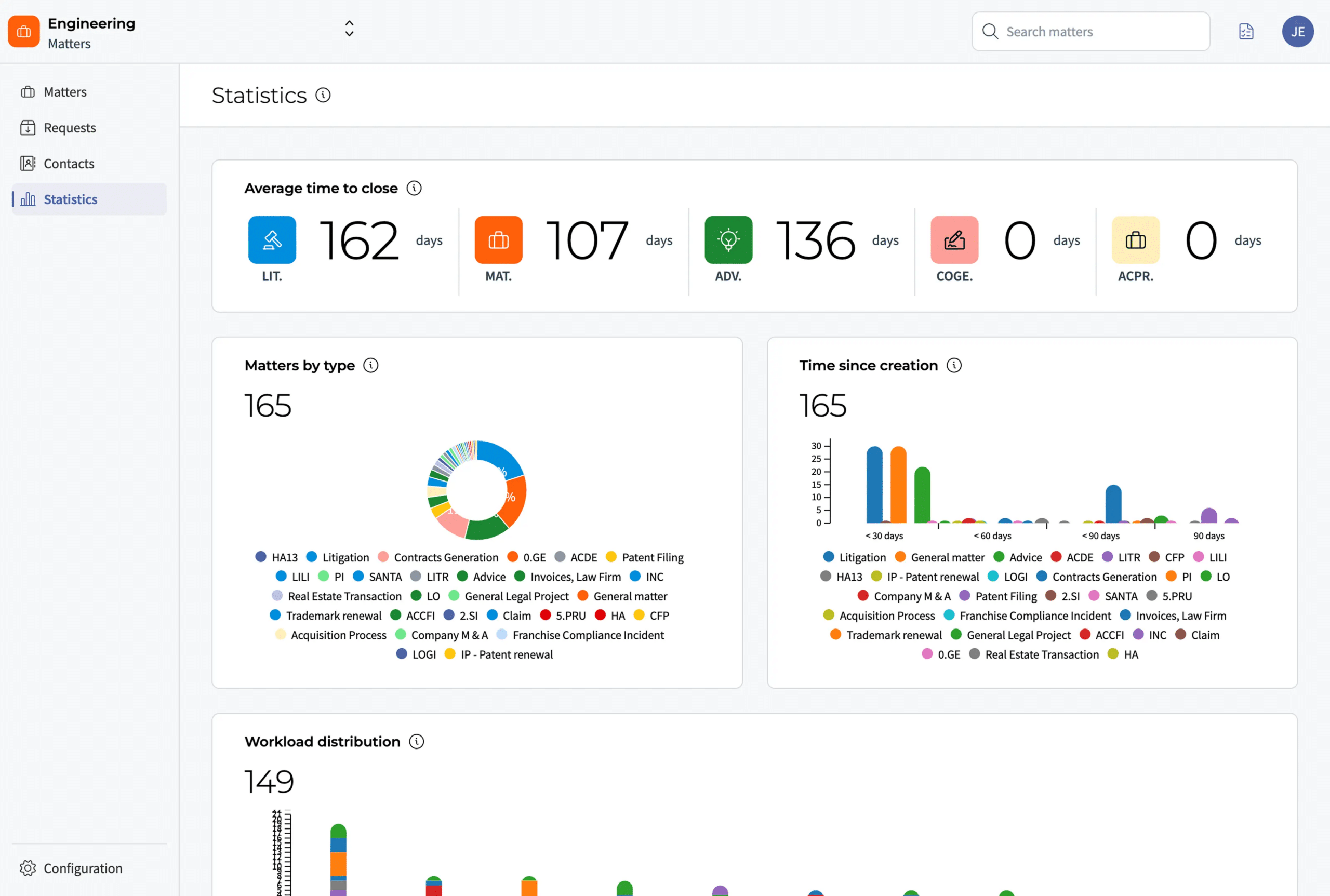
Beyond contracts, DiliTrust’s Matter Management module gives legal teams a single workspace to track every legal request and case, assign tasks, manage deadlines, and report on team workload. It replaces the spreadsheets and email threads that fragment most in-house operations.
Both modules are part of the DiliTrust Governance Suite, which also includes Board Portal, Entity Management, and a Documentation Library. Lini, DiliTrust’s proprietary AI assistant, works across the suite to generate summaries, flag contractual risks, and reduce time spent on routine legal tasks.
The result: better control over contracts and matters, with fewer disputes, fewer errors, and faster processing for every department involved.
Your legal team is managing more risk, more contracts, and more stakeholders than ever.
DiliTrust gives in-house legal teams a purpose-built platform — from contract lifecycle management to matter tracking — so your team works faster, with fewer errors, and with a clear line of sight on every obligation.
Frequently Asked Questions About The Legal Department
What does a legal department do in a company?
The legal department is responsible for keeping the company compliant with applicable laws, managing legal risk, overseeing contracts, and advising other departments on legal matters. It also supports board governance, handles litigation, and monitors regulatory developments relevant to the business.
What is a general counsel?
The general counsel (GC), also called the chief legal officer, leads the in-house legal department. They advise the board and senior management, manage legal risk across the business, and play an increasingly strategic role in company decisions. Five key skills define a successful general counsel.
What is the difference between in-house counsel and external lawyers?
In-house counsel are employed directly by the company. They handle day-to-day legal work and advise across all departments. External lawyers are engaged for specialist matters, high-stakes litigation, or jurisdictions where the company has no in-house resource. Most legal departments work with both.
What software do legal departments use?
Legal teams commonly use contract lifecycle management (CLM) software, matter management platforms, e-signature tools, and legal analytics dashboards. These tools reduce administrative work and give the department visibility across active contracts, matters, and compliance obligations. DiliTrust’s Governance Suite covers CLM, matter management, entity management, and board governance in one platform.
How can legal departments reduce time spent on contract management?
Most in-house legal teams still rely on email threads, shared drives, and spreadsheets to manage contracts, which means deadlines get missed and risks stay invisible. A Contract Lifecycle Management platform like DiliTrust automates the most time-consuming steps: drafting from templates, tracking approval cycles, monitoring key dates, and flagging clause deviations — freeing lawyers to focus on higher-value work.