


Board meetings have a time problem. Directors arrive prepared for strategic discussion, then spend the first 45 minutes approving last quarter’s minutes, confirming committee appointments nobody disputes, and rubber-stamping routine contract renewals. A consent agenda fixes that.
Used by corporate boards, nonprofits, and public sector governing bodies alike, it’s one of the simplest governance tools available for reclaiming meeting time for decisions that actually matter.
Key Takeaways
What is a consent agenda?
A consent agenda is a section of a board meeting agenda that bundles routine, non-controversial items into a single block, approved with one motion and one vote. No discussion takes place unless a board member explicitly requests it.
Also called a “consent calendar,” the concept comes from parliamentary procedure. Its purpose is to protect the board’s most valuable resource: focused deliberation time. When approving a standing vendor contract goes through the same discussion process as a major strategic decision, something has gone wrong.
Consent agenda vs. regular agenda
| Consent agenda | Regular agenda | |
|---|---|---|
| Discussion required | Only if an item is pulled | Yes |
| Vote | One vote for the entire block | Individual vote per item |
| Items | Routine, non-controversial, no surprises | Strategic, complex, or disputed |
| Pre-read required | Yes, mandatory, sent in advance | Yes, but discussion happens at the meeting |
| Time spent | 2 to 3 minutes | Varies per item |
The distinction matters. A consent agenda is not a shortcut for pushing difficult decisions through without scrutiny. It’s a tool to protect time for decisions that genuinely need it.
What items belong on a consent agenda?
The rule is straightforward: if an item needs explanation, debate, or any meaningful judgment call during the meeting, it stays on the regular agenda.
Items appropriate for a consent agenda:
- Approval of previous meeting minutes
- Routine committee reports submitted for information only
- Standard contract renewals (recurring, previously discussed, no material changes)
- Appointment confirmations for committee roles where no disagreement is expected
- Administrative policy updates that are technical in nature
- Ratification of actions already taken under delegated authority
Items that should not appear on a consent agenda:
- Financial statements requiring analysis or board questions
- Anything that generated dissent at a prior meeting
- New strategic initiatives or significant budget decisions
- Executive director or CEO performance topics
- Anything a board member could reasonably want to discuss
A useful test: if you’d be surprised it passed without discussion, it was never a consent item.
Still building board agendas manually? DiliTrust Board Portal lets Corporate Secretaries build structured meeting agendas, attach supporting documents to each agenda item, and share the complete board pack with directors through granular access controls before every meeting. Discover DiliTrust Board Portal →
How a consent agenda works: step by step
Running one takes about two minutes during the meeting. The work that makes it possible happens in the days before.
1. Identify consent items: The Corporate Secretary or board administrator reviews the full agenda and flags which items qualify as routine. These get grouped into a clearly labeled consent section.
2. Prepare supporting documentation: Every consent item must have materials attached. Board members cannot approve something they haven’t read. No documentation, no consent item.
3. Distribute in advance: Send the complete board pack, including all consent materials, at least 7 days before the meeting. For public sector bodies, local regulations may require longer notice windows.
4. Open with a pull request: At the start of the meeting, the chair asks whether any member wants an item removed from the consent block. No reason is required. Any member can pull any item.
5. Handle pulled items: Pulled items move to the regular agenda for the current meeting or are deferred. The consent block continues without them.
6. Vote on the remaining block: One motion, one vote, no individual discussion. Items in the consent block are adopted together.
7. Record accurately in the minutes: The Corporate Secretary documents which items were adopted via consent, which were pulled, and the outcome of any subsequent discussion. Every adopted item needs its full text in the record.
Consent agenda best practices
The mechanics are simple. The discipline is harder.
- Distribute early, not just on time – Seven days is the floor, not the target. Directors need time to read, raise concerns, and request pulls before the meeting starts, not during it.
- Brief board members on the process – New directors often don’t know they can pull items. A short explanation in your board orientation materials prevents confusion and supports genuine oversight rather than passive approval.
- Use it sparingly at first – If your board isn’t used to consent agendas, start with 2 or 3 clearly routine items. Overloading the consent block on the first attempt creates suspicion.
- Protect the intent – The consent agenda exists to free up time, not to avoid scrutiny. Chairs who push contentious matters through the consent block damage board trust and expose the organization to governance risk.
- Target 60 to 75% of meeting time on strategic topics – That’s the real goal. The consent agenda is the tool that creates space to get there.
Spending too much board meeting time on routine approvals? DiliTrust Board Portal structures your agenda so preparation, distribution, and post-meeting documentation happen without the manual back-and-forth. See how governance teams use it →
Common consent agenda mistakes to avoid
| Mistake | Why it matters | The fix |
|---|---|---|
| Including items that need discussion | Items may pass without proper oversight | Apply the “surprise test” before adding any item |
| Sending materials too late | Directors can’t review what they just received | Set a non-negotiable distribution deadline (7+ days) |
| Not explaining the pull process | Directors feel unable to raise concerns | Add a standing note on pull rights in every agenda package |
| Overloading the consent block | Looks like an attempt to rush approvals | Keep consent items genuinely routine |
| Failing to record pulled items | Creates gaps in the governance record | Document every pull, discussion, and outcome in the minutes |
| Omitting adopted items from minutes | Approved items without a record create audit exposure | Include full text of all consent items in the minutes |
Consent agenda template: example structure
Here’s how a typical consent section appears within a full board meeting agenda:
4. Consent Agenda
The following items are proposed for adoption by consent. Any director may request that an item be removed for separate discussion.
- 4.1 Approval of minutes: Board meeting of [date]
- 4.2 Approval of minutes: Audit Committee meeting of [date]
- 4.3 Renewal of standing legal services agreement: [vendor name]
- 4.4 Confirmation of external auditor appointment for FY [year]
- 4.5 Ratification of delegated procurement action: [reference number]
Motion to adopt: [Name] | Seconded: [Name] | Result: Adopted / Adopted as amended
Adapt the format to your governance structure. Corporations, nonprofits, and regulated entities each have slightly different conventions, but the core format holds across sectors.
For a full board meeting agenda template covering all sections (including the consent block, committee reports, and executive session), this guide covers the complete structure.
How board management software supports consent agenda preparation
The consent agenda itself isn’t complex. The preparation behind it often is.
Gathering routine items from multiple contributors, attaching the right documents to each, and getting everything to 10 or 12 directors securely and on time before every meeting is real operational work for Corporate Secretaries and board administrators. Add multiple committees to that picture, and the manual overhead compounds fast. For more on the full scope of that role, see DiliTrust’s guide on the modern board secretary and corporate governance.
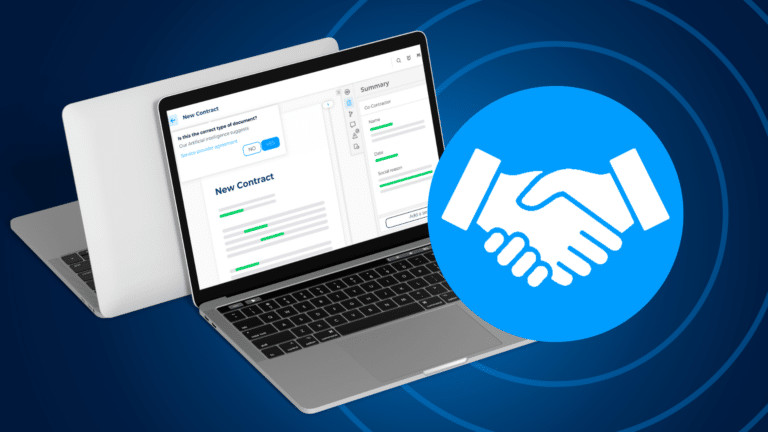
Board management software changes this workflow in a practical way. With DiliTrust Board Portal, the Corporate Secretary builds the full meeting agenda directly in the platform, attaches supporting documentation to each item (including consent items), and distributes the board pack with granular access controls.
When the meeting ends, Lini — DiliTrust’s built-in AI assistant — generates a draft of the board meeting minutes organized by agenda item. That includes a full record of consent items adopted, pulled items, and any subsequent discussion. The audit trail is complete and automatic.
The outcome is less time spent on meeting logistics and more time for what boards are actually there to do.
Can AI make your board meetings more efficient?
Discover three practical and secure ways to streamline board meeting preparation and follow-up, improve decision-making, and protect sensitive data with AI-driven tools.

Conclusion
The consent agenda is a small procedural change with a real governance payoff. Done well, it protects your board’s time, keeps meetings focused on strategy, and builds a culture where directors come prepared rather than passive.
Setting it up takes one meeting to explain and about five minutes to structure. The alternative is spending 40 minutes on items nobody disputes, which is a cost that adds up across every meeting, every year.
If your governance process still runs on email and manually assembled documents, DiliTrust Board Portal gives you a structured, secure environment to manage the entire meeting lifecycle: agenda building, document distribution, voting, minutes, and audit trails, all in one place for every board.
See how DiliTrust helps boards prepare and run more effective meetings →
Frequently asked questions about consent agendas
What is the purpose of a consent agenda?
A consent agenda groups routine, non-controversial board items under a single vote, approved without discussion. The goal is to protect meeting time for strategic deliberation by removing items that don’t need it.
Can a board member pull any item from the consent agenda?
Yes, any board member can request that any item be removed from the consent block for separate discussion. No explanation is required, and the request cannot be refused by the chair.
What software do Corporate Secretaries use to manage board meeting agendas?
Most governance teams now use a dedicated board portal rather than email and shared drives. DiliTrust Board Portal lets Corporate Secretaries build structured agendas, attach documents per agenda item, and distribute the board pack securely, with audit trails, access controls, and AI-assisted minute generation built in.