


Managing legal matters is one of the core responsibilities of any in-house legal team — whether those matters are handled internally, partially outsourced, or coordinated across jurisdictions. Matter management is the process of organizing, tracking, and overseeing legal work — from intake to resolution — within a centralized system. A well-implemented matter management software helps legal teams organize their workflows, enhance collaboration, and maintain compliance with regulations, ultimately improving business outcomes and productivity.
Matter Management Explained
Traditional Ways to Handle Matter Management
As with many other tasks, the traditional approach was manual. Legal teams once handled legal matters with files, folders, and significant paperwork. Paper-based filing systems were the norm, but these methods are now obsolete. Over time, processes shifted to digital systems; nevertheless, spreadsheets and shared drives weren’t the safest solution. That’s where matter management software comes in.
The risk of misplacing important documents, overlooking critical deadlines, and experiencing data breaches is significantly reduced with digital legal matter management solutions. It’s not just beneficial for legal teams — it’s essential. The right software frees up time for teams to focus on substantive legal work rather than administrative tasks.
Matter Management vs. Case Management
While matter management and case management are often used interchangeably, they are two distinct concepts.
Legal matter management is a strategy used by both law firms and businesses. It is common within organizations and encompasses various practices to handle legal issues. Matter management usually involves internal teams but can include external parties if deemed necessary. Case management, on the other hand, is a term typically used for large-scale litigation handled by law offices. These cases often involve vast amounts of documentation, and when different law firms collaborate, they rely on case management to track the necessary materials.
Overall, matter management covers a broader range of legal activities for in-house legal teams and extends beyond document centralization. It encompasses contract management, compliance, regulatory matters, and more. Participants can open matters, track progress, and collaborate with external parties when required.
In practice, a legal matter can include:
- Contract reviews and negotiations
- Employment matters and HR disputes
- Litigation and disputes
- Compliance investigations
- Privacy requests and data subject access requests
- Regulatory filings
- Intellectual property matters
- Corporate governance activities
For a deeper look at how these two concepts differ, see our article on matter management vs case management.
Matter Management Challenges for Legal Teams
Inefficiencies
Legal teams don’t just receive requests from other departments and handle day-to-day operations — they also manage their own projects, directly tied to their expertise. When you add matters management to the equation without a proper tool to centralize tasks, things get messy fast. This results in inefficiencies and can compromise opportunities or critical deadlines for the company.
Poor Data and Information
One thing leads to another: the lack of centralized information results in inaccurate data and missing documentation. Working with the right numbers, names, deadlines, and key details is essential for in-house counsel. The absence of structured information causes mistakes and slows down everyone’s work. Without a proper matter management tool and well-organized data, corporate governance can be severely jeopardized.
Messy Collaboration
One significant challenge legal teams encounter is a lack of visibility over projects. When it comes to matter management, some cases involve external parties — third-party counsel in addition to all internal collaborators. With a complex network of participants and numerous matters to manage, a lack of transparency inevitably leads to bottlenecks, miscommunication, mistakes, and delays.
Compliance Risks
No company wants non-compliance with laws and regulations. The legal landscape evolves quickly, and for companies operating internationally, that pace is even faster. When documentation is disorganized and information is exchanged solely via email, collaboration within legal teams becomes chaotic. It also increases the risk of data breaches and major errors — like missing an important deadline. A study from the International Legal Technology Association (ILTA) found that 67% of surveyed law firms reported compliance failures due to disorganized systems.
Overall, the lack of an organized matter management system is costly. Wasted time searching for documentation, failure to meet deadlines, regulatory breaches, and a frustrated legal department are just a few of the consequences. Fortunately, solutions exist.
Learn from Real-World Application: An Example
Let’s say your legal team is managing a multi-jurisdictional merger. There are dozens of documents, deadlines, and parties involved. Without the right matter management software, this could lead to chaos. With the right system, however, everything is centralized, deadlines are tracked, and communication flows smoothly — even across borders.
Benefits of a Matter Management Tool
Choosing the right matter management tool will change the way legal teams work. Among the key benefits:
Structured Project Management
- Matter Intake and Triage: Teams can track the matter management process from intake and gain a quick overview of key information such as the request date, deadline, and responsible party.
- Task Assignment and Management: Similar to a project management tool, tasks can be assigned to the necessary parties — including external ones — while setting priority levels.
- Real-Time Tracking: The right solution ensures you never miss a beat, with instant notifications to keep everyone aligned.
Streamlined Workflows
A good matter management tool goes beyond task lists — it structures the entire matter management process from request through to resolution. Automated routing, deadline alerts, and role-based access replace the manual coordination that slows legal teams down.
Reliable Data
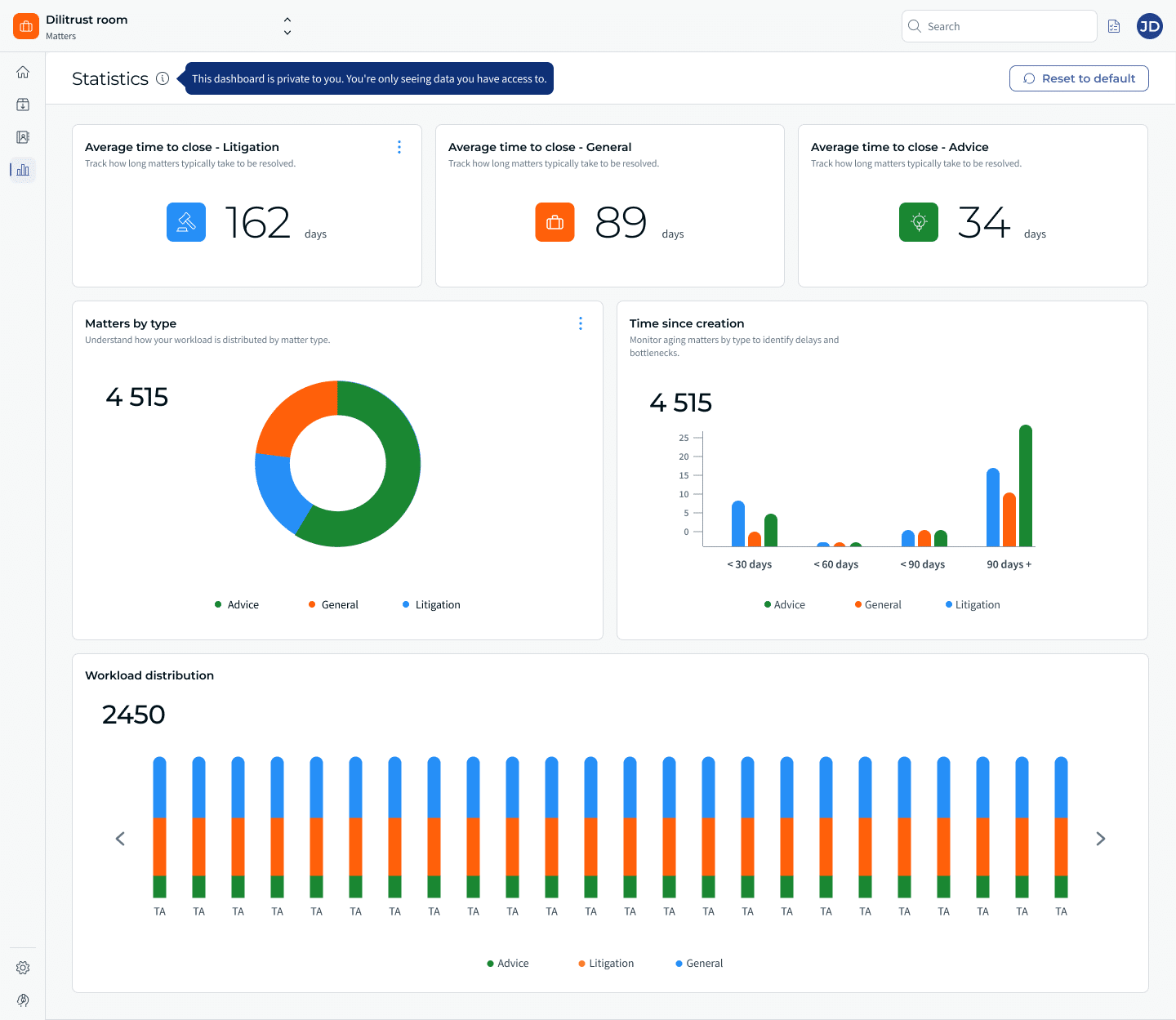
- Tracking Boards: Monitor all relevant activities and get a comprehensive view of your matters’ progress at any time.
- Relevant Insights: Track key metrics like open matters, matter types, and complexity levels within a single dashboard.
- Informed Decision-Making: With centralized information, teams can identify inefficiencies and make data-driven decisions.
- Easy Reporting: With all information stored in one place, reports can be generated effortlessly — including time spent on each matter.
Enhanced Collaboration
- Secure Document Sharing: Eliminate the risks of sending sensitive information via email. Documents are stored within the matter management system, accessible only to designated collaborators.
- Centralized Documentation: All necessary information is easily accessible, typically with a search feature. Legal matters are structured by case, allowing teams to locate up-to-date documentation without searching across multiple tools.
- Integrated Communication: Most tools offer built-in communication features — automatic notifications and notes on different matters, accessible by authorized collaborators including external parties — to keep everyone aligned.
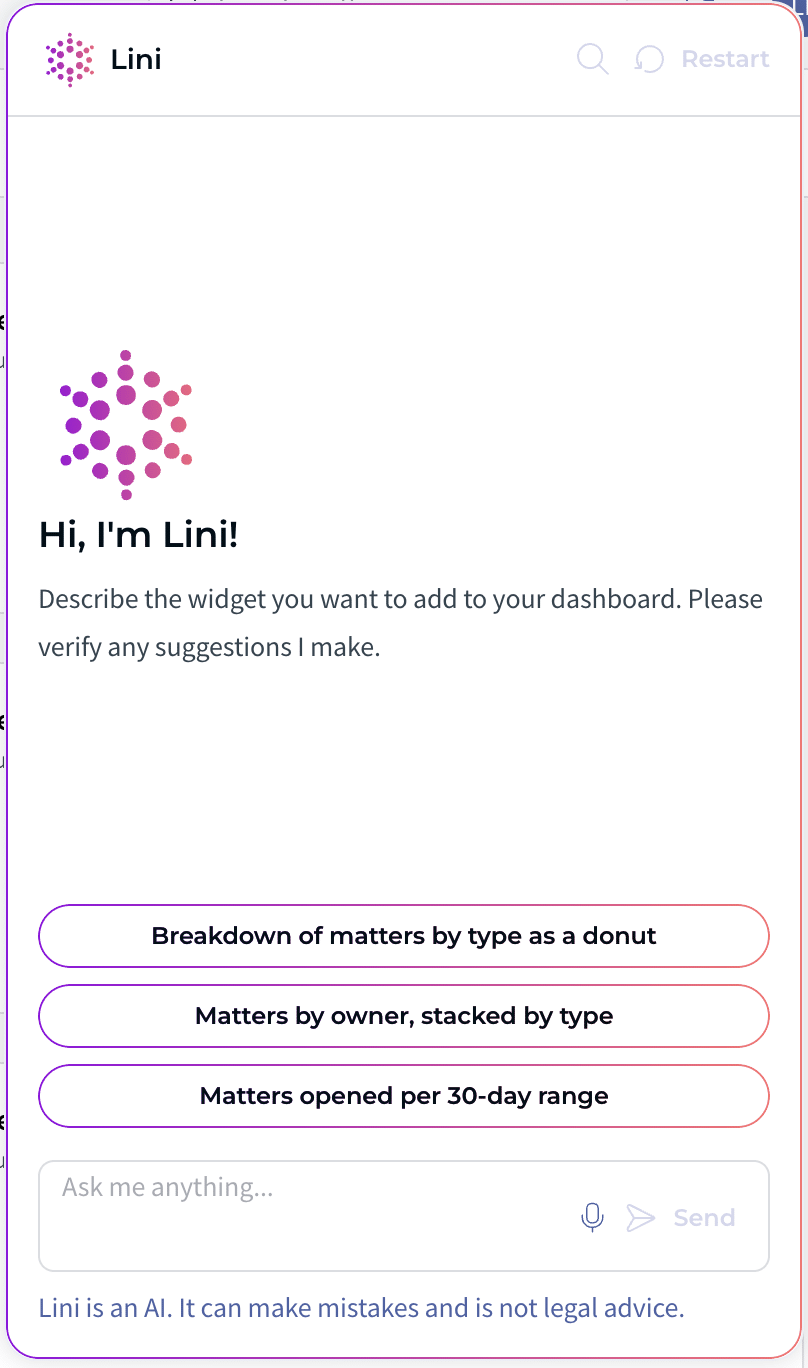
The plus: Personalized and AI-powered features are now standard in leading matter management software. Solutions today offer AI-powered capabilities such as matter summaries and AI-generated status updates — reducing manual reporting and giving legal leadership instant visibility into every matter’s status.
What to Consider Before Choosing a Tool
Understanding the benefits of matter management is one thing. Finding the right solution for your team is another. Not all platforms deliver the same level of integration, usability, or reporting depth — and the wrong choice costs more than just the license fee.
See Matter Management Software in Action
DiliTrust’s Matter Management module centralizes intake, tasks, and reporting for in-house legal teams — with AI-generated status updates built in.
What a Matter Management Tool Should Include
There are key considerations when selecting a matter management tool, including security and user-friendliness. Among the essential features, your solution should include:
Centralized Document Management
A matter management system should have secure, cloud-based storage that enables legal teams to store, organize, and access legal documents without friction. Matter-centric document management — where every file is attached directly to the relevant matter — eliminates the version confusion and scattered storage that shared drives create.
Task and Workflow Automation
An effective tool should support automated processes and workflows for various functions. It should delegate tasks to the right individuals, track deadlines, and send reminders and notifications automatically.
Advanced Reporting and Analytics
The solution must help teams gain insights into efficiency and report findings to senior leadership. Comprehensive reporting should allow data visualization at both the matter and global levels — including time spent per matter, the percentage of matters closed and won, and other relevant metrics.
User-Friendly Interface
Adoption depends on ease of use. A matter management system should have an intuitive interface requiring minimal training. Mobile accessibility also matters: legal teams need to manage matters remotely and access key documents on any device.
Security and Compliance Features
Legal matters often involve highly sensitive information. A matter management solution should provide strong security features, including encryption, access controls, and compliance tracking. Alignment with industry regulations such as GDPR and HIPAA is non-negotiable.
Collaboration and Communication Tools
Your solution should make communication between internal and external stakeholders straightforward. Features like built-in messaging, real-time document sharing, and role-based permissions improve coordination across every matter.
Frequently Asked Questions
Who is responsible for matter management in a company?
In most companies, matter management is led by the in-house legal team — typically the General Counsel, Legal Operations Manager, or a dedicated legal team member. Legal Operations Managers are often responsible for the matter management process end to end, including setting up workflows, tracking matter intake, and reporting on legal performance to senior leadership.
What counts as a legal matter?
A legal matter is any discrete legal issue or task that requires tracking, documentation, or action by the legal team. This includes contract reviews and negotiations, employment disputes, litigation, regulatory filings, compliance investigations, privacy requests, and intellectual property matters.
Why is matter management important for in-house legal teams?
Effective matters management gives in-house legal teams full visibility and control over their entire workload. Without a structured system, deadlines are missed, documents are lost, and compliance risks multiply. A centralized matter management solution reduces administrative burden, improves cross-department collaboration, and allows legal to operate as a strategic function rather than a reactive one.
What is the matter management process from intake to resolution?
The matter management process typically follows these steps: a matter is submitted via a request form or intake portal, triaged and assigned to the appropriate legal team member, tracked through tasks and deadlines, documented with all relevant files and communications, and then closed with a resolution summary. In modern platforms, each stage of this process is tracked within a centralized system, giving teams and leadership full visibility throughout.
Why Matter Management Matters for In-House Legal Teams
For in-house legal teams, effective matter management means more than staying organized — it means maintaining centralized visibility and control over every matter in the portfolio, from a routine NDA to a complex cross-border dispute. The real driver is risk reduction: missed deadlines, inconsistent data, and fragmented communication create compliance exposure that shows up in audits, not just efficiency reports. Cross-department visibility matters equally — when Finance needs litigation provisions or HR needs a compliance update, a structured system delivers the answer immediately. As AI-assisted matter management becomes the standard, teams that have already centralized their data will be best positioned to extract real value from it.
Want to learn more about DiliTrust’s Matter Management Solution?
DiliTrust’s Matter Management module centralizes intake, tasks, and reporting for in-house legal teams — with AI-generated status updates built in.
How do you choose legal ops software?
Overwhelmed by options? This guide shows you how to spot must-have features, avoid common pitfalls, and confidently select the right platform.