



Two central players play a key role in the private equity sector: the general partner (GP) and the limited partner (LP). While LPs provide the capital, GPs actively manage investments. But that’s not all there is to it. Nowadays, the roles of GPs and LPs continue to evolve.
But what exactly distinguishes GPs and LPs, what tasks do they perform, and how are their roles changing in the current market environment?
What is a Limited Partner (LP)?
A limited partner (LP) is an investor in a limited partnership. They provide capital but do not take an active role in the operational business. They are so to speak, a “silent partner” who stays in the background and is not involved in the day-to-day business.
What is a General Partner (GP)?
A general partner (GP) is a person or company that is responsible for the management of a partnership or limited partnership and is liable with all of its assets. In the field of venture capital or private equity, the GP acts as a fund manager, makes investment decisions and manages the fund’s assets.
What is the difference between GP vs LP?
The general partner (GP) is the active manager of a fund. It assumes responsibility for capital investment, portfolio management and communication with investors. In contrast, the limited partner (LP) is an investor who participates financially in the fund but does not intervene in operational management and thus assumes the role of a “silent partner”.
Tasks of a Limited Partner
LPs invest capital in private equity funds and expect an appropriate return in return. Their tasks include:
However, due to increasing competitive pressure, LPs expect more than just passive participation: they demand a high degree of transparency, detailed information on investments and strategies as well as regular, meaningful reports on the fund’s performance.
The process of investing in private equity funds
Limited partners invest in private equity funds by committing to provide a certain amount of capital during the life of the fund. The company managed by the general partners requests capital from the LPs when investment opportunities arise. LPs generally have limited control over investment decisions as the GPs are responsible for sourcing, acquiring and managing the portfolio companies.
The Role of GPs and LPs in Real Estate Investment Partnerships
Within private equity, real estate investment has become a significant area where GPs and LPs collaborate. In a real estate partnership, the partnership agreement typically defines how passive investors (LPs) commit capital, while GPs take on the active role of identifying opportunities, managing risk, overseeing operations, and seeking value creation.
Investment strategies may include residential projects, commercial real estate, real estate syndication, or broader estate investing approaches, depending on the risk tolerance of the fund and its investors. Returns are often structured so that both LP and GP stakeholders receive a share of the profits, with GPs additionally earning carried interest and a management fee for their work.
Successful real estate investing requires careful due diligence, strong investor relations, and an understanding of corporate structures, liability, and the varying market conditions in each state, and finally a well-planned exit strategy. This combination of responsibilities essentially defines the role of a General Partner.
Tasks of a General Partner
In private equity firms, general partners have a number of key responsibilities. Their main responsibilities include:
- Raising capital and presenting the investment strategy and track record to LPs
- Deal generation, and thus maintaining relationships with potential business partners and industry networks
- Examination and evaluation of investment opportunities including due diligence and yield analysis
- Negotiation and structuring of transactions
- Optimization of portfolio companies through strategic initiatives and ongoing performance monitoring (after acquisition)
- Realization of the exit strategy
See how PE firms manage due diligence, side letters and governance workflows in one secure platform.
The next section takes a closer look at the individual phases of the investment process from the perspective of a general partner.
Still managing side letters and LP obligations in spreadsheets?
Explore six practical ways PE firms manage permissions, stay regulatory compliant, handle side letters, centralize stakeholder data, and more.
Phases and responsibilities of a GP in an investment
In the context of a private equity investment, the general partner bears the main operational and strategic responsibility. Its tasks extend over the entire life cycle of an investment, from identification to sale. A distinction can be made between two central phases:
Before closing the deal: analysis, structuring and negotiation
In the preparatory phase of an investment, the GP’s focus is on identifying attractive target companies and carefully analyzing potential opportunities and risks. This phase is crucial for the subsequent performance of the portfolio and involves a large number of complex tasks:
1. Sourcing and Deal Origination
GPs use their network, specialized consultants and market analyses to identify suitable investment targets. Industry knowledge plays a key role in identifying companies with potential for value appreciation at an early stage.
2. Due Diligence
As soon as a target company is considered, a comprehensive due diligence process begins. This includes legal, financial, tax, operational and ESG aspects. The aim is to recognize risks, validate valuation assumptions and identify potential deal breakers at an early stage.
3. Structuring of the Transaction
Based on the results of the due diligence, the GP develops a customized transaction structure. This includes, among other things
4. Negotiations and Conclusion
The GP handles the negotiations with sellers, banks and advisors in order to secure the best possible conditions for the fund and the LPs. After successful completion, the closing process takes place, during which all legal and financial conditions are finalized.
After the deal: Value enhancement, controlling and exit strategy
After closing, the actual management and value creation phase begins. This is where the GP develops its operational strength and implements targeted measures to sustainably increase the value of the company.
1. Integration and Strategy Implementation
Immediately after the acquisition, the GP begins integrating new structures, systems or processes. He implements the planned value enhancement strategy and works closely with the portfolio company’s management team.
2. Operational Support and Controlling
GPs take on an active role in strategic controlling:
3. Reporting to LPs
Alongside operational support, the GP regularly informs its limited partners about the development of the portfolio. The requirements for transparency and depth of detail have increased considerably in recent years. Limited partners demand granular information about:
4. Preparation and Implementation of the Exit
As soon as the portfolio company has achieved an increase in value, the GP prepares the exit. Depending on the market situation, different strategies are possible, including:
The GP manages the exit process and ensures optimal utilization of the invested capital with the aim of generating maximum distributions for the LPs.
Current challenges: What LPs expect from GPs today
The relationship between limited partners and general partners is undergoing significant change. Increasing market complexity and growing competitive pressure mean that LPs now place significantly higher demands on GPs than they did a few years ago.
More transparency and granular data
The requirements of limited partners have increased significantly with time and complex market structures. An annual report alone is no longer sufficient. Instead, investors expect standardized reports that enable consistent comparability as well as detailed insights at portfolio level. They also value transparent fee structures and comprehensible valuations of individual investments in order to be able to make well-founded decisions.
Liquidity despite a difficult market
In view of stagnating exit opportunities, GPs are under increasing pressure to create liquidity. Among other things, NAV-based loans, continuation funds, cross-fund transactions, dividend recaps and partial exits are being used. At the same time, limited partners are demanding full transparency with regard to the valuation methods used and the underlying data.
Managing Complex Holding Structures
As a fund grows, so does its entity landscape. GPs typically manage dozens of holding companies, subsidiaries and special purpose vehicles across multiple jurisdictions, and each with its own compliance obligations, shareholders and reporting requirements. Keeping that structure visible and up to date is not optional. Auditors, LPs and regulators expect clarity on demand.
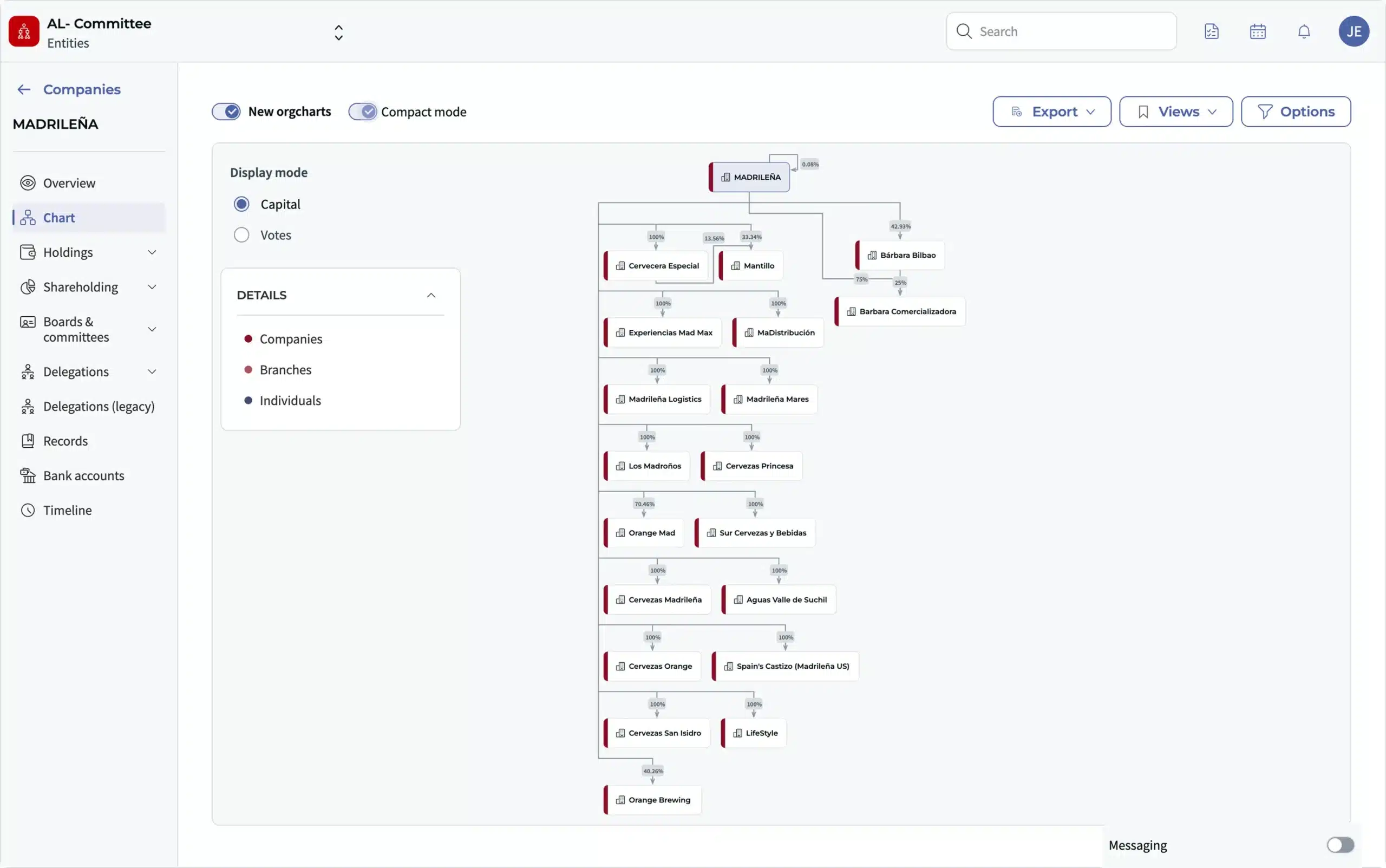
That’s where entity management software becomes essential. A centralized structure view — like the one below — gives legal and finance teams a live overview of every entity, shareholding relationship and key obligation across the entire portfolio.
Modern PE firms need more than spreadsheets
DiliTrust helps teams centralize:
How DiliTrust supports GPs and LPs
As LP expectations rise, GPs are under growing pressure to keep pace. Meeting these demands calls for professional support, particularly around contract management, reporting, and compliance. That’s where DiliTrust comes in.
DiliTrust brings contractual obligations from agreements like LPAs and side letters into a single platform, where they’re easy to track and manage. Automated workflows then take care of the routine, keeping compliance requirements on track, deadlines under control, and responsibilities clearly assigned.
The built-in entity management module keeps every holding and company structured and up to date, while the Board Portal gives boards a secure, central space to prepare and run their meetings.
In practice, that structure looks like this:
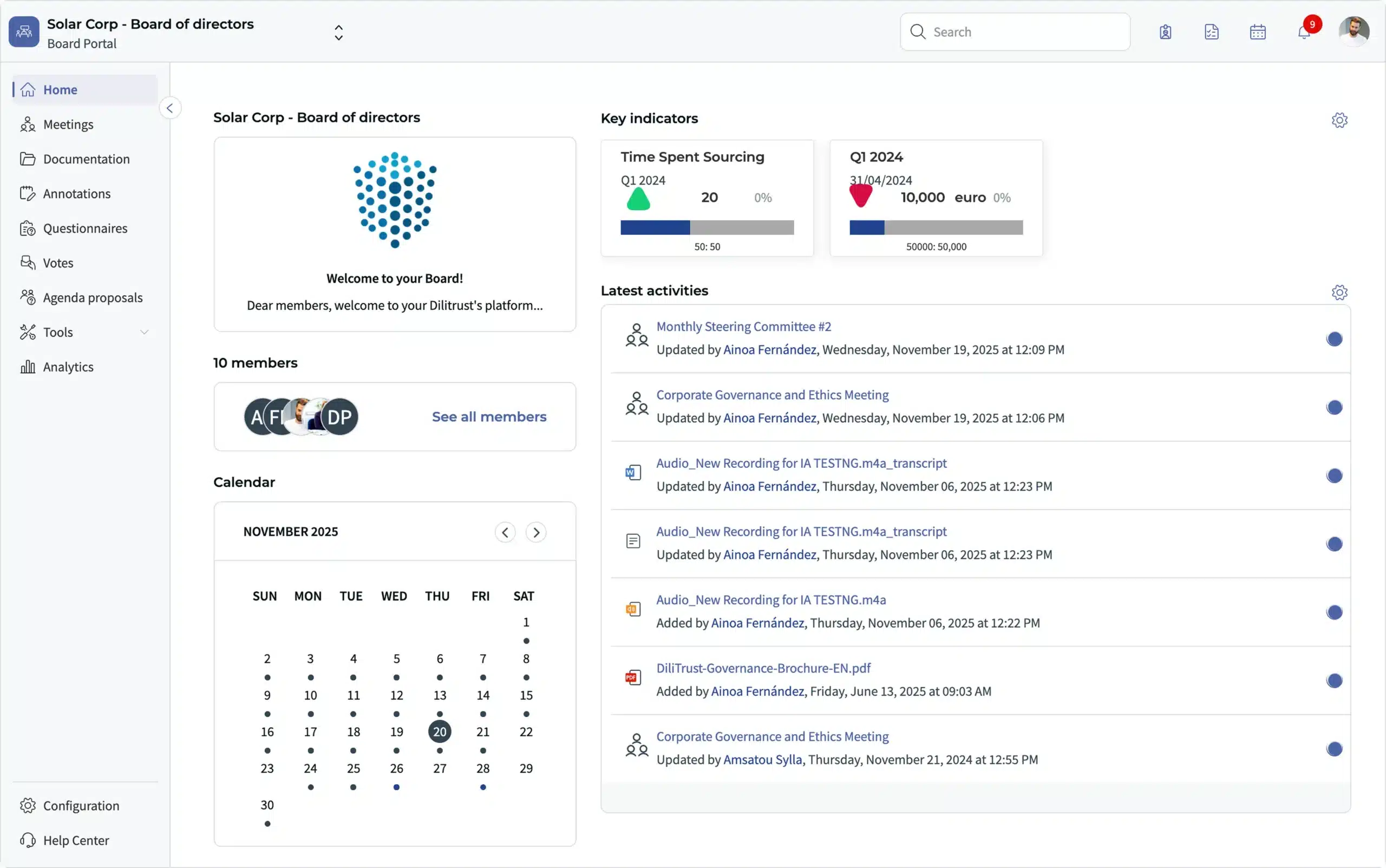
Together, these tools help GPs meet the expectations of today’s LPs with confidence.
Conclusion: GP vs LP, a partnership in transition
The relationship between general partners and limited partners is constantly evolving. GPs today have to deliver far more than just good returns. Transparency, individualization and digital processes have become the new standard. Tools such as DiliTrust help to meet the increased requirements and ensure a long-term, trusting partnership with LPs.
Overall, it’s not an LP vs GP situation, or vice versa. As you can see are both working together at one string and toward the same goals. One cannot function without the other. Each brings unique value, resources and expertise to the partnership, and long-term success in private equity depends on collaboration.