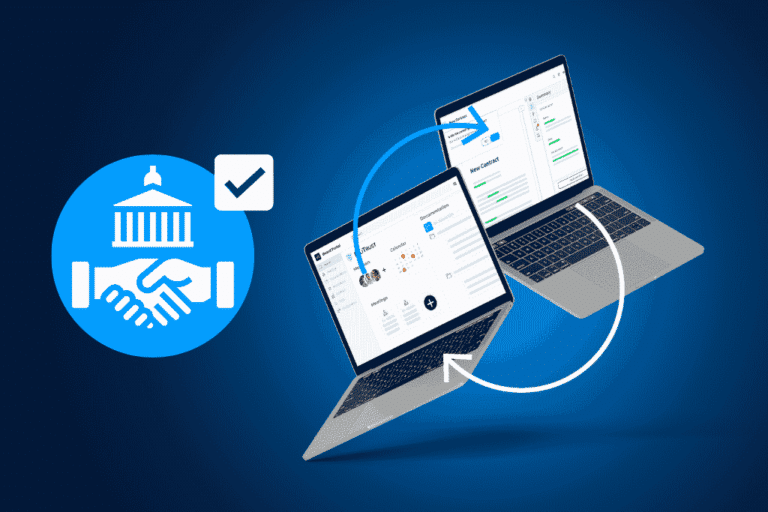



AI contract review for utilities is the automated analysis of power purchase agreements, concessions, supplier frameworks, SLAs, and public tender contracts against a company’s own legal playbook. The system reads each document, identifies clause deviations and missing provisions, and flags them for legal review, across any contract volume, in a fraction of the time manual processes require.
European utilities manage some of the most contract-intensive operations in any sector. Power purchase agreements, concessions, grid supply deals, public tenders, supplier frameworks, SLAs: all running simultaneously, across different counterparties, under distinct regulatory frameworks. For most legal and procurement teams, that means hundreds to thousands of active documents at any given moment.
Three regulatory developments are now landing simultaneously on teams that have not grown to absorb them. Manual contract review was never built for this volume. The compliance gap has a documented price tag.
The 2026 regulatory squeeze: three forces hitting at once
CSRD: sustainability clauses become a legal obligation
The Corporate Sustainability Reporting Directive now requires utilities to embed sustainability clauses in supplier contracts across the EU. Regulatory sanctions apply for non-compliance. Legal and procurement teams must verify, across their entire supplier portfolio, that the right clauses exist and are enforceable.
NIS2: cybersecurity requirements in third-party contracts
Utilities are classified as critical infrastructure under NIS2, which carries maximum regulatory exposure. Specific cybersecurity requirements must appear in all third-party ICT contracts, and every gap is a direct compliance risk. At portfolio scale, identifying those gaps manually is not realistic.
The energy crisis aftermath: contracts signed under pressure are now in dispute
Across European markets, agreements negotiated during the 2021–2023 energy crisis are surfacing in litigation. Price revision clauses, force majeure provisions, and indexation terms that were never properly reviewed at the time are now being scrutinized. As a result, companies that signed quickly are finding out what they actually agreed to only now.
Managing any one of these in isolation is feasible but managing all three at once, on teams that haven’t grown, is where the model breaks. As a matter of fact, a 2024 Deloitte study found that poor contract management destroys nearly $2 trillion in global economic value every year.
3 places where margins disappear
At DiliTrust, we have noticed a similar pattern across large contract portfolios managed under time pressure. There are some places where margins tend to vanish, including:
Silent auto-renewals
This is a contract manager’s worst nightmare: a contract renews itself automatically, no alert was set. For a single agreement, that is a process gap. Across a multi-utility portfolio, it compounds: contracts running another twelve months on terms that should have been renegotiated at current market rates.
Price indexation clauses that were never revisited
Indexation terms written in favour of counterparties were common in contracts signed during the energy crisis, when suppliers had the leverage. The issue? Many are still active in agreements that have not been reviewed since signing. The financial exposure grows each year, quietly, inside documents no one is systematically monitoring.
Missing compliance clauses
CSRD sustainability provisions and NIS2 cybersecurity requirements need to be present in the right supplier contracts. Most legal teams know exactly what needs to be in there. Verifying clause-level compliance across hundreds of active agreements, at pace, is where manual processes break down.
All three risks trace back to the same structural problem: contract volume makes consistent, systematic review unreachable through traditional processes. This carries big consequences, for instance in the US, $870 billion are lost every year on dispute resolution, much of it tracing back to contractual terms that were never properly reviewed, tracked, or enforced.
What changes with AI-assisted contract review
Addressing the tracking and enforcement issue at scale means rethinking how legal and procurement teams allocate their time. AI can help with this, but the chosen tool must fulfill certain requirements.
What a CLM platform should actually do
AI-assisted contract review reads each contract, identifies its type, and checks it against the company’s own rules, clause by clause, across any volume. When something is missing or deviates from policy, the system flags it and suggests compliant language. The lawyer reviews the flag and decides: accept, modify, or override.
The decision stays with the legal professional. What changes is that the system handles the volume and consistency that manual review cannot sustain.
For example, a team that could not realistically audit 500 supplier contracts for NIS2 compliance within a quarter can now do it systematically, without adding headcount. For the utility sector, the CLM tool should manage a specific type of documentation such as:
With the proper solution and the right AI features, utility legal teams can reach astounding results.
The business case: What utilities are recovering
Based on DiliTrust CLM client outcomes across the utility sector:
- 20–35% reduction in legal review costs, with time reallocated from manual processing to work that requires genuine legal judgment
- 0.5% of total contract portfolio value recovered annually (on a €500M portfolio, approximately €2.5M per year), from renegotiated indexation clauses, avoided penalties, and recaptured auto-renewal windows
- Under 24 hours to complete a standard contract review cycle, versus days or weeks on manual workflows
- Day-one visibility across all active contracts, obligations, risks, and upcoming renewals, before any of the above figures even apply
The clock is already running
CSRD, NIS2, and the compliance obligations that came with post-crisis energy markets are already in force. Every contract signed today sits inside that regulatory framework.
Every quarter the current approach stays in place is another quarter of compounding and unmonitored exposure. Legal and procurement teams working under live CSRD and NIS2 obligations can measure the cost of that gap in renegotiated clauses not caught, renewals not flagged, and penalties not avoided.
See how DiliTrust CLM gives utility legal and procurement teams full contract visibility, from clause risk to renewal alert, in a platform built for the complexity of your sector.
Frequently asked questions
Do utilities need AI-specific contract review for NIS2, or does a standard compliance audit cover it?
Standard compliance audits assess policies and governance frameworks, not individual contract clauses. Under NIS2, specific cybersecurity requirements must appear in every third-party ICT contract, meaning clause-level verification is required across the entire supplier portfolio. At any meaningful scale, that requires automated review. A legal team manually reviewing 400 ICT supplier contracts for NIS2 clause completeness would need months; AI-assisted review reduces that to days, with automatic flagging of missing or non-compliant language.
How long does it take to review a utility’s full supplier portfolio for CSRD clause compliance?
A single contract review cycle drops to under 24 hours with AI-assisted review, compared to days or weeks manually. For a full supplier portfolio, the meaningful variable is how quickly legal can triage, not how long the system takes to process. Teams using DiliTrust CLM typically complete full portfolio audits in weeks rather than quarters, because the AI handles volume while legal focuses on flagged exceptions.
What ROI can a utility realistically expect from systematic AI contract review?
Recoverable value depends on portfolio size and how long contracts have been unmonitored. Based on DiliTrust CLM client outcomes across the utility sector, organisations typically recover 0.5% of total contract portfolio value annually through renegotiated indexation clauses, recaptured auto-renewal windows, and avoided penalties. On a €500M portfolio, that is approximately €2.5M per year. Legal review costs typically fall 20–35% as time shifts from manual processing to judgment-intensive work.
Can AI contract review handle long-term PPAs and concession contracts?
PPAs and concession contracts are among the most complex agreements utilities manage: indexation schedules, volume adjustment mechanisms, regulatory change provisions, multi-jurisdiction governance clauses. AI contract review platforms built for the sector, including DiliTrust CLM, recognise these document types, extract the relevant clause categories, and check them against the organisation’s playbook standards. The system flags deviations and missing provisions; legal judgment is applied to the exceptions.