


AI oversight refers to the structured processes, responsibilities, and accountability mechanisms that govern how artificial intelligence is used, monitored, and corrected across an organization. It establishes who approves AI use cases before they go live, who is responsible when AI influences a consequential decision, and how leadership stays aligned with legal and regulatory requirements as these systems scale. As AI moves from isolated pilots into core business operations, AI oversight has shifted from a best practice into a governance requirement, and one that organizations can no longer treat as someone else’s problem.
What is AI oversight and why it matters
Understanding where AI oversight starts requires looking at where AI has actually landed inside the organization.
AI oversight matters today more than ever because AI-powered technology now lives across all business functions. For many teams, it has moved far faster than accountability structures could follow.
If you map how AI lives within organizations today, it looks something like this:
- Legal uses it to review contracts and automate workflows
- Finance uses it to model risk
- HR departments use it to scan and screen candidate applications
- Marketing generates and personalizes content at scale
Everyone is involved somehow. But when problems arise, who owns the output, and how is that handled? In each of these cases, someone gave a prompt and someone decided to use the result. That chain of decisions is where accountability needs to live, and in most organizations, it does not yet have a clear home.
Legal teams are not exempt from this. When an AI-assisted legal analysis is shaped by AI hallucinations and the output makes it into a filing, that is a general counsel problem. AI oversight is the discipline that ensures whoever made use of an AI output was authorized to do so and can answer when issues surface.
The accountability question keeps finding its way to the top of organizations not because boards invited it, but because there is no other body with the authority to make the answer stick across every function that is now using AI. Understanding why that responsibility lands at board level, and not with management, is the next piece of the picture.
Why boards can no longer “simply” hand AI oversight to management
Most boards understand that AI needs oversight. They approve and fund the AI strategy, but the AI governance structure around it has not kept pace. Few boards have formally established a dedicated body to oversee what they have funded.
There is a structural gap at work. Boards have traditionally sat at the end of the decision chain, receiving reports and approving direction. But AI governance does not work that way. The risk does not sit neatly below the board waiting to be reported upward. It accumulates inside functions, across tools, and through decisions that happen before anyone thinks to escalate. Here is why that gap belongs at the board level to resolve.
Important AI decisions are cross-functional
When AI governance questions reach the boardroom, the instinct is often to send them back down. Management is closer to the tools. IT understands the infrastructure. Legal handles compliance. The board reviews what it hears.
That logic breaks down when you look at the decisions that actually matter:
- How much AI risk is acceptable for what strategic return?
- Who answers when an AI-influenced decision is challenged in court or by a regulator?
- How consistent are the company’s public statements about what its AI can and cannot do?
These questions cut across every function simultaneously, and single individuals cannot answer in the name of the entire organization. The board, on the other hand, has the mandate to do so.
Boards are the ones who sign off and carry the risk
When AI is embedded in the strategy a board has funded, the board has taken on responsibility for how that technology performs and what happens when it does not.
According to PwC, 99% of executives believe boards should be actively involved in AI oversight, yet only 35% say their board currently is. That is the gap boardrooms need to close today. Boards hold fiduciary duties that do not make an exception for technology usage and outputs. When AI systems fail, produce biased outputs, or expose the company to regulatory action, the accountability question travels upward. Regulators, investors, and courts are increasingly looking at board-level governance as the point of accountability, not only at the team that ran the model.
Management can implement, but only the board can set the accountability framework
There is a version of AI governance that lives entirely within management: policies, technical standards, compliance workflows, vendor due diligence. Management can and should build all of that. What management cannot do is set the accountability framework that determines who answers for AI decisions at the organizational level. That requires the kind of authority only the board holds, and an accountability structure that originates below the board remains a set of operational guidelines, useful in practice, but not sufficient for the questions regulators and investors are now asking.
Rupali Patel Shah’s No More Kicking the Can: AI Governance Is Now a Board Problem makes the case for why deferral is no longer an option. Once that argument lands, the next question becomes practical: where, specifically, within the board should AI oversight sit?
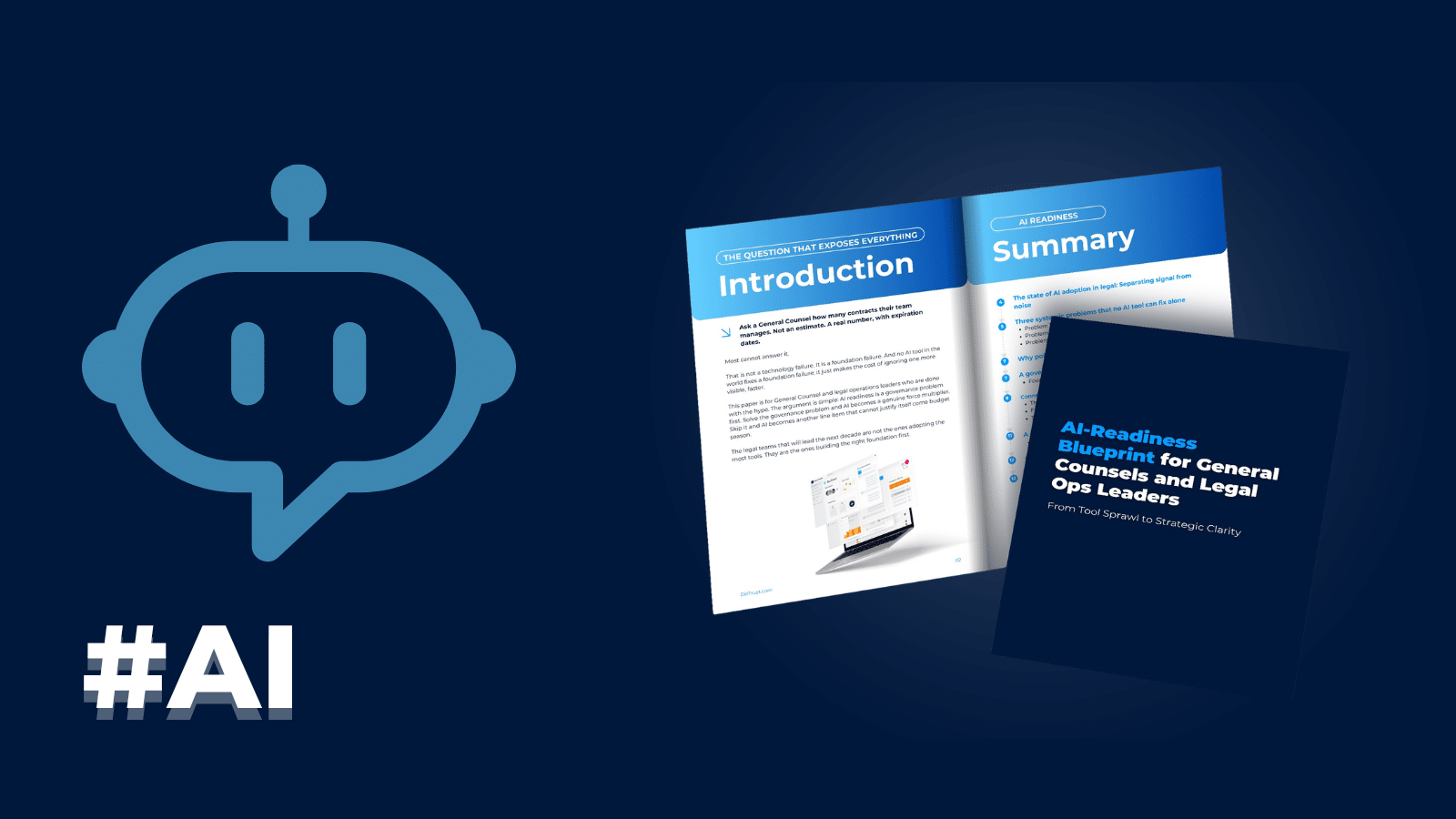
From AI Risk to AI Readiness: The Blueprint for Your Legal Department
What you’ll find in this blueprint:
- From AI adoption to real AI value: what makes the difference
- The 3 problems no software can solve on its own
- A 90-day plan for AI implementation any legal team can act on
Five places AI oversight can live
Once the case for board ownership is established, the real work is choosing which body within the board structure carries it. There is no single right answer, but that is precisely the point. The right home for AI oversight depends on:
- The organization’s risk profile
- AI use cases and its size
- What its investors expect
What matters above all is that the choice is deliberate rather than defaulted.
| Committee | Best fit | Watch out for |
|---|---|---|
| Audit & Risk | AI reads primarily as compliance, financial reporting, or vendor risk | May underweight strategic and reputational dimensions |
| Technology or Cybersecurity | AI is central to product or infrastructure; technical fluency is the priority | Legal and disclosure exposure can slip through without direct GC involvement |
| Nominating & Governance | Board composition and director fluency are the primary gap | Not built for ongoing risk monitoring |
| Dedicated AI Committee | AI is embedded across the business; investor or regulatory scrutiny is elevated | Can create structure disproportionate to the actual risk profile |
| Full Board | Smaller board with genuine AI fluency and high engagement | Without a named lead, ownership diffuses and the accountability question remains open |
Selecting a committee is itself a governance act, and it should be treated as one.
What making a real decision actually looks like
Choosing a committee is only the first step. What makes the decision real is how it is recorded, reviewed, and built to hold over time.
The choice needs to be documented in board minutes, governance committee charters, or a formal policy, and it needs a built-in review trigger tied to material changes in AI use. A new AI deployment, a regulatory shift, entry into a new market: each of these is a moment when the oversight structure should be revisited, not assumed to still fit.
Investors are increasingly looking beyond the committee assignment itself. They want to see AI fluency on the board , not just at the committee level, and many are beginning to treat director AI literacy as a composition question in the same way they treat financial expertise or sector experience.
Boards building that fluency now will be better positioned as those expectations continue to harden. With the decision made and documented, the immediate practical steps are more straightforward than they might appear.
A practical starting point
The good news is that none of this requires a new budget, a working group, or a dedicated program. Three moves are enough to get started.
Put the question on the next agenda as a governance decision
Not an AI update slot where management fills the time, but a structured discussion with one clear output: which body owns AI oversight, and who is the named lead.
Ask the GC to concisely map the current legal perimeter
What laws already apply to how the company uses AI today, where the highest-exposure use cases sit, and what the disclosure obligations look like. Two pages should be enough to frame the decision and enough to surface whether the answer is more urgent than the board currently assumes.
Document the decision and build in a review trigger
Building that expectation in from the start is what separates governance that holds from governance that looks good on paper until it is tested.
An oversight structure is only as strong as the people operating it. Getting the committee assignment right resolves the structural question. The harder one, whether the board has enough AI fluency to actually use that structure well, and how that readiness shapes AI adoption across the whole organization, is where we turn next.
Meet Legal AI – Lini
Lini is the AI engine that powers every dimension of legal work. Trained to think like a legal expert, Lini understands the nuances of governance, compliance, risk and reasons with context, not assumptions.