






The IT director role in digital transformation is to lead the technology side of change: deciding which projects come first, keeping data secure, choosing the tools and making sure people actually use them. Strategy may start in the boardroom, but delivery runs through IT.
This page covers the core IT director responsibilities, how the role differs from a CIO, how IT works with the board and legal, and a free guide you can download.
Download your guide today!
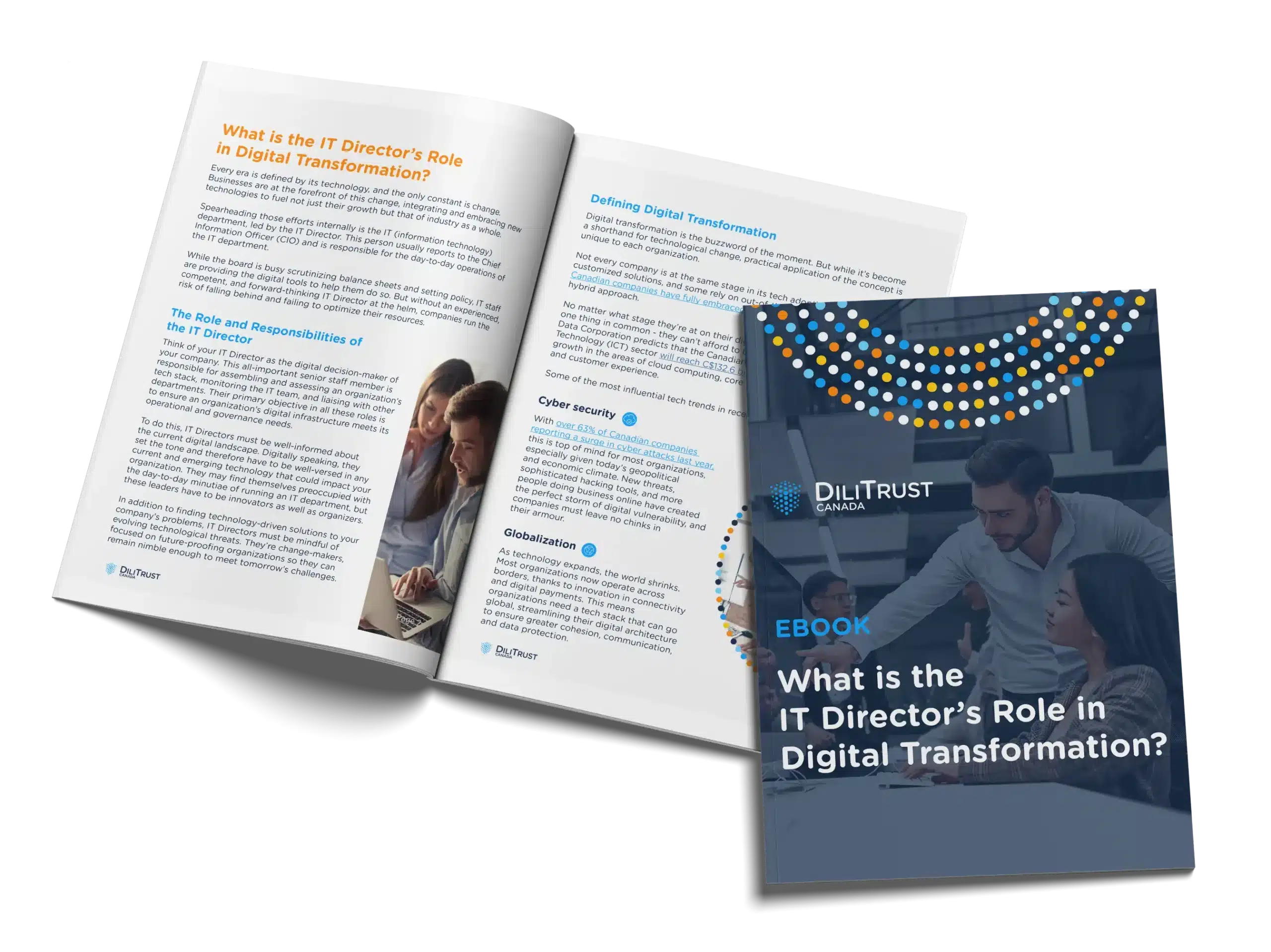
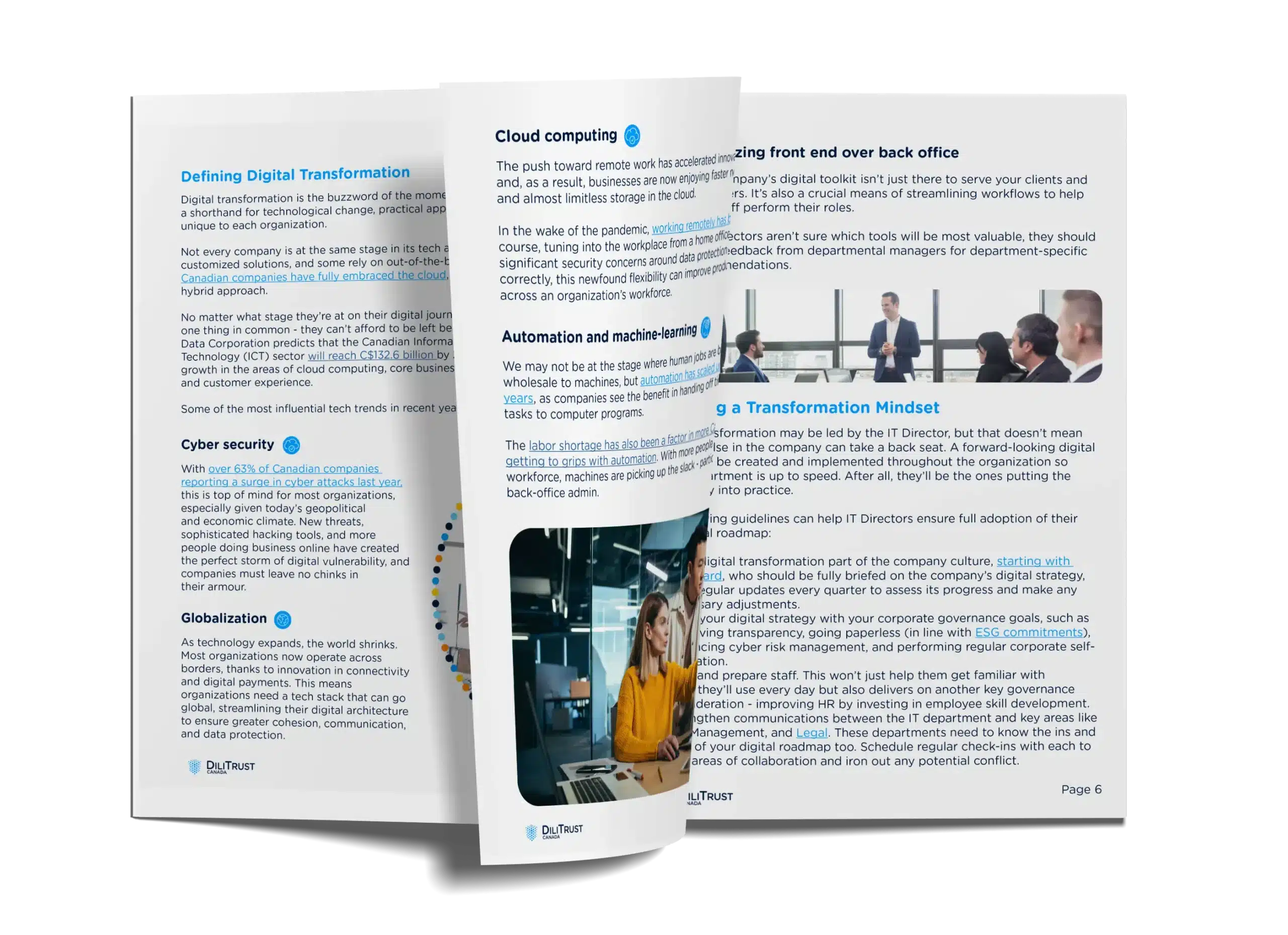
What You Will Find in This Guide
Every transformation project eventually lands on someone’s desk. When the board approves a new strategy, IT has to turn it into systems, access rights and a rollout plan, while keeping the current stack running. Without a clear owner for that work, projects stall between departments and security gaps open at every handover. This guide sets out what that owner does and how to do it well.
Inside, you’ll find:
- What IT directors are responsible for, from the tech stack to the IT team
- How digital transformation plays out in practice, whether you run fully in the cloud or in a hybrid setup
- How to approach cybersecurity and the digitization of sensitive documents
- How IT supports the board’s operational and governance needs
What Does an IT Director Do?
So, what does an IT director do? Think of them as the company’s digital decision-maker. They assemble and assess the tech stack, manage the IT team and act as the link between IT and every other department. The goal behind all of it is to make sure the organization’s digital infrastructure meets its operational and governance needs.
During a large change program, that remit stretches. Here’s how each responsibility shifts.
| Responsibility | What it means in a transformation |
|---|---|
| Technology strategy and stack | Deciding which systems to replace, keep or retire, and in what order, so the business doesn’t run two stacks for years |
| Security and data protection | Holding every new tool to the same security bar as the old one, especially where board, legal or personal data is involved |
| Vendor and tool selection | Assessing vendors on security, hosting, integration and support as well as features, together with the teams who will use the tools |
| Change management and adoption | Planning training, rollout and support so new tools replace old workarounds instead of sitting next to them |
| Reporting to leadership | Keeping executives and the board informed on progress and risk (see the board section below) |
Some organizations also appoint an IT transformation director to run one specific program. That role usually reports to the CIO or the IT director.
How Is an IT Director Different From a CIO?
An IT director runs delivery: systems, infrastructure, projects and the IT team. A CIO sets technology strategy at executive level and answers to the CEO or the board for how technology supports business goals. Put simply, the CIO decides where technology should take the company, and the IT director gets it there.
In a digital transformation, the IT director vs CIO split gets blurry. The CIO owns the business case and the roadmap. The IT director owns execution, but usually sits on the steering committee and shapes priorities based on what the infrastructure and the team can realistically absorb. Both answer for security.
In smaller organizations there’s often no CIO at all. The IT director covers both jobs, which means presenting to the board becomes a direct responsibility instead of something handled one level up.
How the IT Director Shapes Digital Transformation
Digital transformation is the redesign of how an organization works around digital tools and data. For some companies that means a full move to the cloud; for others, a hybrid model that keeps some systems on premises.
The IT director’s first job is to set the order. You can’t run every project at once, so you rank them by business impact, risk and dependency. A new ERP may have to wait until identity and access management is in place.
The second big call is custom versus off-the-shelf. Custom development fits unusual processes, but you’ll maintain that code for years. Off-the-shelf software ships faster and comes with the vendor’s security certifications, but you adapt your processes to it. A practical rule: build where the process sets you apart, buy where it doesn’t. A clear digital transformation roadmap makes those choices visible to everyone who has to fund them or live with them.
How IT Directors Work With the Board and Legal
Board and legal documents are some of the most sensitive data a company holds: strategy papers, M&A files, litigation records, directors’ personal data. When they circulate as email attachments or sit in consumer file-sharing apps, IT carries the risk without controlling it.
That’s where the IT director role in digital transformation reaches into governance. Working with the general counsel and the corporate secretary usually covers three areas:
- Secure handling of board and legal documents: access rights, encryption, audit trails, and what happens to files on a director’s personal tablet
- Joint tool selection: choosing a board portal or legal software together, so legal gets workflows it will use and IT gets a tool it can secure and support
- Compliance and data residency: where data is hosted, which jurisdiction applies, and whether the vendor’s certifications match your regulatory obligations
If legal is planning its own legal department digital transformation, IT should join at the first vendor shortlist. Security reviews run late in the process tend to reopen decisions everyone thought were made.
Reporting to the board is the other half of the relationship. Directors want to know what’s on track, what’s at risk and what they need to decide. A one-page summary in the board pack, plus a short agenda slot, usually lands better than a 30-slide deck. The cadence typically follows the board or audit committee calendar, with an extra update whenever a major risk changes.
Translate technical metrics into business terms. “Patch compliance at 94%” means little to a director. “Two customer-facing systems stay exposed to a known vulnerability until the March upgrade” gets a decision.
Download the Guide: The IT Director’s Role in Digital Transformation
Download your guide today to make sure your organization’s digital infrastructure meets its operational and governance needs. DiliTrust’s governance tools are ISO 27001, ISO 27701 and SOC 2 Type 2 certified, with servers in Europe, North America, Africa and the Middle East. Your IT and security teams can review the details in our security documentation.