


Your legal fees are climbing. You’re asking a law firm to review every NDA. Your HR manager is forwarding vendor contracts to a partner billing at $600 an hour. And you still don’t have anyone at the table when your CFO asks: “What’s our exposure here?”
This is the moment most growing companies realize they need a different kind of legal support. A full-time General Counsel runs $300K+. That’s probably not where you are yet. And a law firm partner on speed dial was built for litigation, not day-to-day business risk.
That’s exactly what a fractional general counsel provides.
Key Takeaways
What Is a Fractional General Counsel?
A fractional general counsel is an experienced attorney who serves as your in-house legal lead on a part-time or project basis. They work inside your business, not from a law firm, dedicating a defined portion of their time to your company while typically serving several other clients simultaneously.
Think of it as senior legal leadership on your terms: the strategic judgment of a GC, without the cost and commitment of a full-time hire.
Fractional GC vs. Outside Counsel – Is There a Difference?
The terms get conflated, but they describe two fundamentally different arrangements.
Outside counsel means engaging a law firm or independent attorney for a specific matter, usually transactional or litigation-related. They bill hourly, work on your file from their own office, and move on to the next client when the matter closes.
A fractional GC is embedded in your business. They attend team meetings, advise your leadership on business decisions, and build a working knowledge of your operations over time. The relationship is ongoing, not matter-by-matter. That embedded context is what makes the model genuinely different, and for most growing companies, significantly more valuable than rotating law firm associates who learn your business from scratch every engagement.
What Does a Fractional General Counsel Actually Do?
The scope depends on your needs, but the core responsibilities are consistent across most engagements:
That last point is where the fractional model earns its cost. A law firm can tell you whether a contract clause is enforceable. A fractional GC can tell you whether signing it makes business sense and flag the three other clauses you didn’t think to ask about.
How Much Does a Fractional General Counsel Cost?
This is the question most articles avoid answering directly. Here’s what the numbers actually look like.
Fractional GC Pricing Models
Three main engagement structures exist in the market:
Most established fractional GC practices operate on a retainer model. It aligns incentives: you get consistent availability, they get a stable client relationship built on institutional knowledge of your business.
On an annualized basis, many companies spend roughly $60,000-$180,000 per year on fractional GC support, compared with $300,000-$500,000+ for a full-time GC when salary, bonus, benefits, and overhead are included. Published full-time General Counsel salary ranges already reach well into the six figures before those additional costs.
Fractional GC vs. Full-Time GC
| FRACTIONAL GC | FULL-TIME GC |
|---|---|
| Annual cost: $60,000–$180,000 | $250,000–$450,000+ base salary |
| Benefits, equity, bonuses: None | Significant, often 30–50% on top of base |
| Ramp-up time: Weeks | 3–6 months minimum |
| Scalability: Adjustable scope | Fixed headcount |
| Exit cost: End of contract period | Severance + legal risk |
The savings are real. Most companies running the comparison find they can access the equivalent of a senior GC’s judgment at 75-85% of the cost. For a 50-person company that doesn’t yet justify a full-time legal hire, that gap is decisive.
Fractional GC vs. Law Firm on Retainer
Many companies assume a law firm on retainer fills the same gap. The model works differently.
A retainer with a law firm still means hourly billing, rotating associates, and a relationship that resets with every new matter. The firm is responsive, but reactive.
| CATEGORY | FRACTIONAL GC | LAW FIRM RETAINER |
|---|---|---|
| Business context | Deep, ongoing relationship | Shallow, matter-specific |
| Billing model | Fixed monthly fee | Hourly, unpredictable |
| Proactive advice | Yes, flags issues before they escalate | No, responds when asked |
| Institutional knowledge | Builds over time | Resets with each engagement |
| Who picks up the phone | Your GC | Whichever associate is available |
Law firms are built for complexity: M&A transactions, litigation, specialized regulatory work. A fractional GC is built to sit inside your leadership team, embedded, proactive, and available between matters, not just when a crisis lands.
Who Benefits Most From a Fractional General Counsel?
The demand is real and documented. According to the 2025 ACC Chief Legal Officers Survey, understaffing is the single biggest barrier legal departments face today, and 41% of law departments received a cost-cutting mandate from their organization in the past year. Fractional GCs sit precisely at that intersection: senior legal judgment, without the full-time headcount cost.
The model works best in specific contexts.
- Startups and scale-ups (Series A to Series C): Legal needs are real and growing, but a full-time GC hire isn’t justified yet. Fundraising, employment contracts, IP protection, and commercial agreements all create meaningful exposure that ad hoc law firm billing doesn’t cover efficiently.
- SMEs in regulated industries: Healthcare, fintech, SaaS, and food and beverage companies face ongoing compliance obligations that require someone embedded in the business — not a firm you call when a deadline appears.
- Companies preparing for M&A or fundraising: Due diligence requires organized, accessible contract and corporate data, and someone who can coordinate the process. A fractional GC who knows your business saves weeks at exactly the moment when weeks matter most.
- Nonprofits and mission-driven organizations: Governance obligations, grant compliance, and board management create consistent legal needs, often without the budget for a full-time hire.
- Companies bridging to a full in-house function: A fractional GC can carry the legal function while the organization grows into it and often helps recruit their own eventual replacement.
A fractional GC managing multiple clients needs matters tracked, not scattered across inboxes.
See how DiliTrust’s Matter Management module keeps every client’s matters organized and audit-ready.
Signs Your Company Is Ready for a Fractional GC
Be honest with yourself as you read through these:
If two or more of these apply, you’re already in the zone where a fractional GC delivers immediate value and where the absence of one starts generating measurable risk.
When Is It Too Early?
If you have fewer than five employees, haven’t yet generated revenue, and your contracts are limited to a handful of vendor agreements, you probably don’t need a fractional GC yet. A one-time review by a business attorney, or a solid contract template library, may be sufficient.
The inflection point is typically 15–20 employees or a meaningful contract volume. After that, legal risk compounds faster than most founders expect and it rarely announces itself in advance.
How to Choose the Right Fractional General Counsel
Not every fractional GC is the right fit. Here are five questions worth asking in the vetting process:
- What industries have you served? Industry-specific experience matters. A SaaS company’s legal needs differ sharply from a healthcare provider’s.
- How many clients do you serve simultaneously? You want availability, not a 10-client queue. Most effective fractional GCs work with 3 to 6 clients at a time.
- What does your engagement model include? Understand exactly what you’re getting, hours per month, response time expectations, scope of work, what’s in and what’s out.
- How do you handle matters outside your expertise? A good fractional GC has a network of specialists. You don’t want them guessing outside their lane when it matters.
- Can you provide references from companies at our stage? Past client references from companies at a similar growth stage tell you more than any introductory call.
Red flags worth noting: if a candidate can’t explain your business risk in non-legal language, or can’t articulate how they would integrate into your leadership team, keep looking. You’re hiring a business advisor with a law degree. The legal credential matters less than the judgment.
Fractional GC and Legal Technology
A fractional GC managing 3 to 5 clients simultaneously has one hard constraint: time. How they manage it determines the quality of service you receive.
When your auditor asks for every vendor contract with an auto-renewal clause signed in the past two years, the answer should take minutes, not days. If your fractional GC is working out of shared drives and email folders, that answer takes days.
The best fractional GCs work with structured contract lifecycle management, entity management, matter management software and board governance tools. Ask whether they can help implement these for their clients too.
The DiliTrust Suite was built for exactly this: one platform for contracts, corporate entities, and governance workflows, without the disconnected tools.
See how DiliTrust supports legal teams and the counsel who advise them →
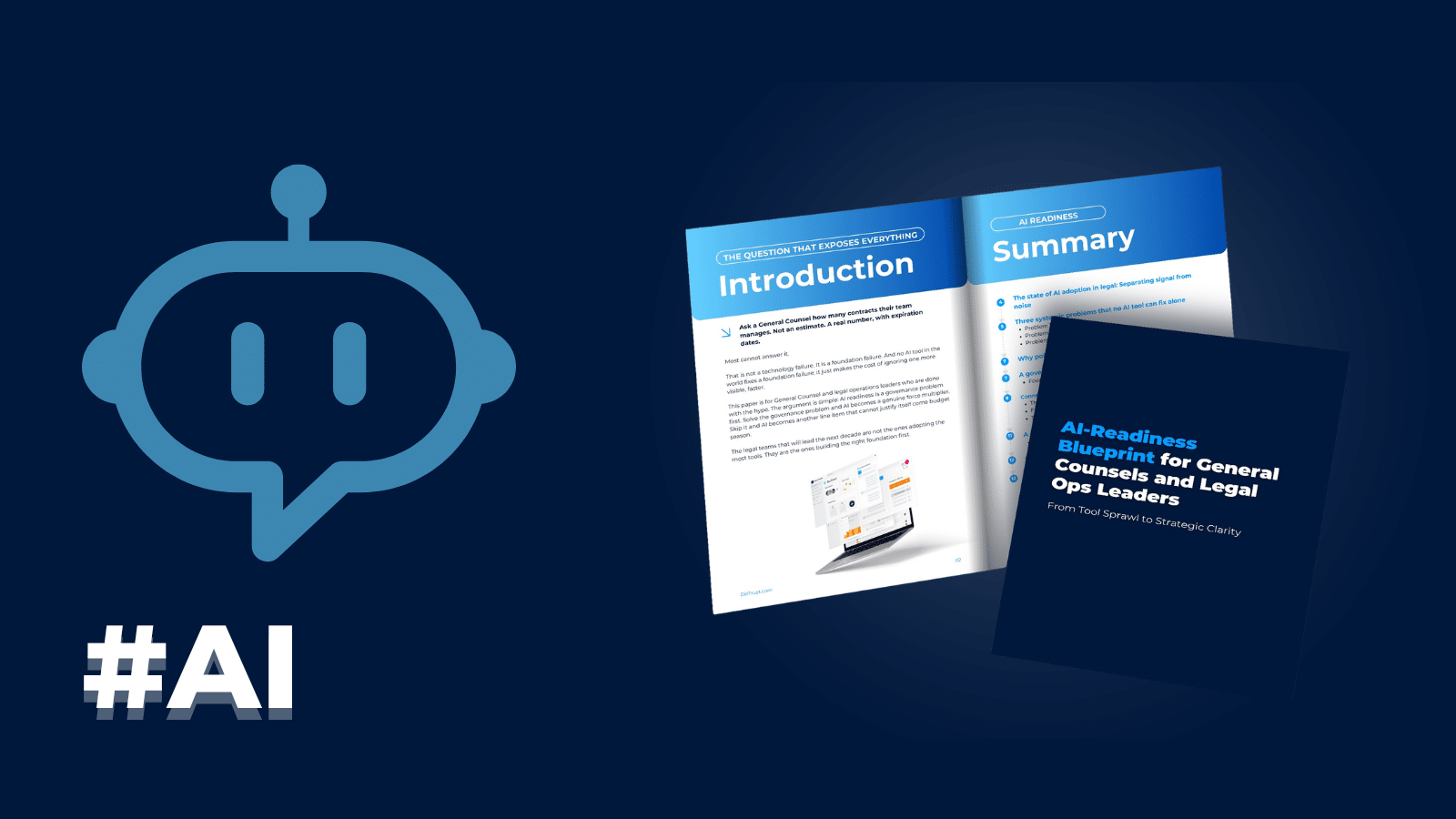
AI-Readiness Blueprint for General Counsels and Legal Ops Leaders
If you’re building or resourcing a legal function for the first time, this guide covers how GCs and legal ops leaders are structuring their technology stack in 2025. Practical, not theoretical.
Frequently Asked Questions
Is a fractional general counsel an employee or an independent contractor?
Almost always an independent contractor. This means no payroll taxes, no benefits obligations, and no employment relationship. The engagement is governed by a services agreement.
What’s the minimum time commitment for a fractional GC?
Most fractional GCs work on monthly retainers with a minimum engagement of three to six months. Project-based arrangements are shorter, but ongoing retainers deliver significantly more value because the attorney develops a real understanding of your business over time.
Can a fractional GC handle litigation?
Most fractional GCs are transactional attorneys, not litigators. If litigation arises, they will manage outside counsel, but you’ll need a specialist law firm to conduct the actual case. This is a feature, not a limitation: you want your GC focused on keeping you out of court, not billing hours once you’re in it.
What Legal Software Does a Fractional GC Typically Use?
Most fractional GCs working across multiple clients rely on a core legal technology stack: a contract lifecycle management platform to track what’s been signed and what’s coming up for renewal, entity management software for corporate records across jurisdictions, and a board portal if governance is part of the scope. The DiliTrust Suite covers all three in one connected platform, which is why growing companies and the advisors who support them use it as their legal operations foundation.
Legal teams needs the right tools to work well. So does your team.