


Your supplier just auto-renewed for two years. Same price, same terms. Nobody signed off, because nobody knew it was due. That’s not a one-off. It’s what happens when legal teams manage supplier contracts without a system built for the job. This guide covers what real vendor contract management looks like: the lifecycle, the risks, and the tools that make it workable at scale.
Key Takeaways
What Is Vendor Contract Management?
Vendor contract management is the structured process of creating, negotiating, signing, monitoring, and renewing contracts with external suppliers, service providers, and third-party vendors. The process starts with the first contract draft and does not end at signature; vendor contract management runs actively throughout: performance monitoring, deadline management, compliance reviews, and ultimately a deliberate decision on renewal or termination.
What Does Poor Vendor Contract Management Actually Cost?
Poor vendor contract management creates four categories of risk: uncontrolled costs, missed deadlines, undetected SLA breaches, and compliance gaps.
What Hidden Costs Come from Unmonitored Contract Clauses?
Unmonitored contract clauses cause organisations to pay for services they don’t use, or to accept terms that could have been renegotiated long ago. Price escalation clauses, automatic indexations, and scope expansions without reciprocal value go unnoticed without active monitoring. The result is gradual cost increases that only become visible during a detailed contract review.
Common uncontrolled cost drivers in supplier contracts:
According to WorldCC research, average contract value erosion sits at 8.6% annually, and the worst performers lose up to 15%.
Missed Deadlines as an Operational Risk
Picture this: a critical supplier relationship expires. The renewal option was due 90 days earlier. You find out only when the supplier stops delivering.
Missed renewal deadlines aren’t just costly; they can interrupt operations. And when a contract silently lapses while the supplier still has access to your systems or data, you’ve also created a liability gap.
SLA Breaches That Go Undetected
Service-Level Agreements are only as effective as their monitoring. Without systematic tracking, a supplier consistently underperforming on contractual obligations stays under the radar for months. By the time the damage is visible, the documentation is incomplete and the contractual penalties are nearly impossible to enforce.
Compliance Risks from Missing Clauses
GDPR requirements, obligations under supply chain due diligence legislation, sector-specific regulations: every supplier contract must include the right clauses. Without structured review at contract signing, and ongoing checks throughout the term, systematic compliance gaps develop.
Keep every deadline under control. DiliTrust automates deadline tracking across your entire contract portfolio, with configurable alerts that notify you well in advance.
The Phases of the Vendor Contract Lifecycle
Professional vendor contract management follows a clear lifecycle. Each phase carries its own risks and its own opportunities for improvement.
Phase 1: Drafting and Negotiation
The first contract draft determines everything that follows. Working with unchecked clauses or inconsistent templates at this stage embeds risks that will unfold over the contract term.
Best practice: Use a clause library with pre-approved standard clauses. This ensures every supplier contract is built on a legally reviewed foundation, regardless of who drafts it.
Phase 2: Review and Approval
Internal approval processes are often the biggest bottleneck. Emails get lost, comments are scattered across different document versions, and it’s unclear who the approvers are.
Structured workflows with defined approval stages reduce this friction significantly. Everyone knows who needs to do what and when and the status is always transparent.
Phase 3: Signing and Execution
Electronic signatures are now standard practice. What matters is that the signing process is documented in an audit-ready way: who signed, when, with what identity verification, and under what conditions.
Phase 4: Lifecycle Management and Monitoring
This is the phase where most manual processes fail. Contracts sit in archives, SLA obligations aren’t actively tracked, and deadlines creep up unnoticed.
An effective CLM system takes over active monitoring: automated reminders, status overviews, and KPI dashboards available at a glance.
Phase 5: Renewal, Renegotiation, or Termination
The decision at the end of a contract term should be a deliberate strategic choice, not a reaction to an already-expired deadline. Getting the right alert at the right time gives you the space to compare, negotiate, and decide.
Best Practices for Effective Vendor Contract Management
These five measures separate reactive legal teams from those that operate proactively:
| MEASURE | WHY IT MATTERS |
|---|---|
| Central contract repository | All contracts are stored in one searchable, version-controlled, and access-controlled location. |
| Standardised clause library | Ensures consistent contract quality and reduces ad hoc drafting. |
| Automated deadline tracking | Helps prevent missed renewal, termination, and other key contract deadlines. |
| Structured approval workflows | Defines clear responsibilities and provides traceable approval processes. |
| Regular contract audits | Enables proactive compliance assurance and helps identify risks before they escalate. |
One often underestimated factor: access rights. Who can view which contracts? Who can edit them? Granular permission frameworks protect sensitive content and satisfy internal governance requirements at the same time.
Vendor Contract Management with AI-Powered Software
Manual processes don’t scale. If your organisation manages 200 active supplier contracts, spreadsheets aren’t a control system; they’re a liability.
CLM software fundamentally changes the equation, not because it replaces lawyers, but because it handles the repetitive work and frees up capacity for what actually requires legal judgment.
What Modern CLM Platforms Do
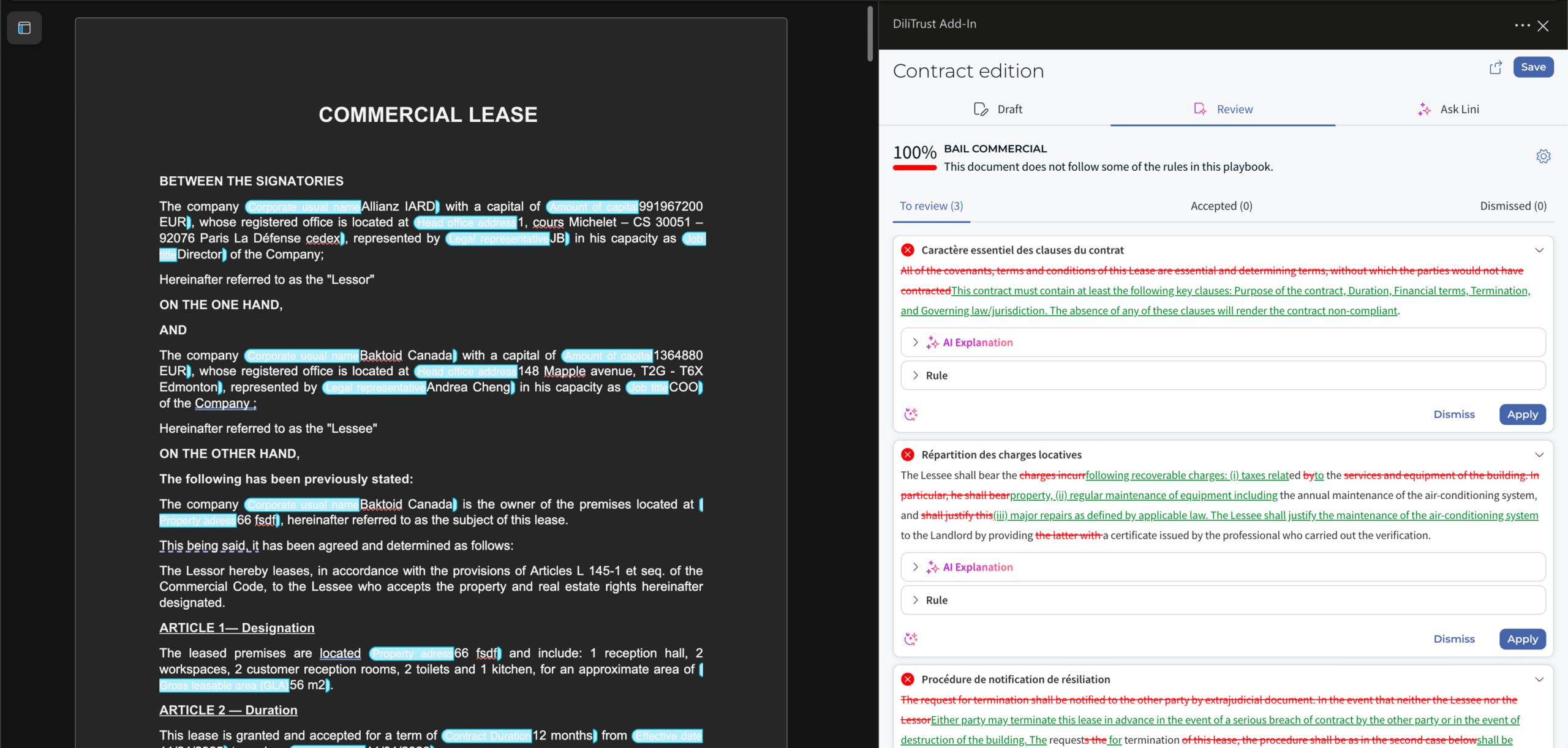
DiliTrust Contract Lifecycle Management
The DiliTrust CLM is built for legal teams that need full control over their contract portfolio, from first draft to renewal decision.
The platform covers every phase: template-based contract creation, collaborative negotiation, e-signing, centralised archiving, and automated deadline tracking. It connects via API to existing ERP and CRM systems, so contract data stays in sync without manual updates.
Three numbers that illustrate the difference:
AI is changing how legal teams manage contracts
Watch this 30-minute webinar replay to see the 5 contract bottlenecks slowing legal teams down and the practical controls that restore structure, accountability, and AI-assisted clause visibility.

Conclusion: From Missed Deadlines to Full Control
Supplier contracts are not static documents. They are living agreements, with deadlines, obligations, risks, and opportunities that unfold over months and years.
Managing this lifecycle actively protects your organisation from cost leakage, compliance exposure, and operational surprises. Managing it reactively means paying the price sooner or later.
The starting point is more straightforward than it seems. A central repository, automated reminders, and structured workflows are not major projects; they are the first realistic step toward a contract management function that actually works.
DiliTrust gives your legal team control back over every contract, every deadline, and every supplier.
Ready to stop managing vendor contracts in spreadsheets?
Frequently Asked Questions About Vendor Contract Management
What risks does poor vendor contract management create?
The four most common risks are: uncontrolled costs from unnoticed price clauses, missed deadlines for renewals or terminations, SLA breaches that go undetected, and compliance gaps from missing or outdated contract clauses. Each of these risks can have significant financial and legal consequences.
How does vendor contract management ensure GDPR compliance?
Every supplier contract involving the processing of personal data requires a Data Processing Agreement (DPA) under Article 28 GDPR. CLM systems help create these agreements systematically, link them to the main contract, and ensure they remain current throughout the term, including automated checks for mandatory clauses.
What are the four types of contracts?
The four common types of contracts are:
Fixed-price contracts: The price is agreed in advance and remains unchanged unless the contract is amended.
Cost-reimbursement contracts: The buyer reimburses the seller for allowable costs, often with an additional fee or profit.
Time and materials (T&M) contracts: Payment is based on the time worked and the materials used, making them suitable when the project scope is uncertain.
Unit price contracts: Pricing is based on a fixed rate per unit of work, product, or service delivered.