


A vendor’s software contract auto-renewed at the start of January. The opt-out window had been 90 days prior. Nobody in legal had flagged it. By the time procurement noticed, the company was locked into another 12-month term at a pricing level they’d planned to renegotiate. Six figures. Gone.
This scenario plays out in legal departments every quarter. And with large organizations managing anywhere between 20,000 and 40,000 active contracts at any given time, a single spreadsheet or shared calendar simply can’t carry that load.
The problem isn’t that legal teams don’t care about deadlines. It’s that the tools they’re using weren’t built to track them at scale. Here’s what to do instead.
Key Takeaways
What Is Contract Deadline Management?
Contract management covers the full lifecycle: drafting, negotiation, signature, execution, renewal, and termination. Most teams invest heavily in the front end. Templates, approval workflows, e-signature tools. Far fewer have a reliable system for what happens after the ink dries.
Contract deadline management is that post-signature layer. It is the process of tracking every time-sensitive obligation in a signed agreement: renewal windows, notice periods, payment dates, performance milestones, compliance checkpoints. They pass silently if nobody is watching.
Most legal teams discover they have a deadline problem only after something goes wrong.
When a Missed Deadline Costs More Than You Think
The financial impact of missed contract dates is well documented. Research from World Commerce & Contracting puts the figure at 8.6% of annual revenue lost to poor contract management practices each year. For a company with €50M in revenue, that’s €4.3M quietly leaking out through missed renewals, unfavorable auto-renewals, and untracked obligations.
The Real Price of Manual Tracking
Most legal teams rely on some combination of spreadsheets, calendar alerts, and institutional memory. For a portfolio of 30 contracts, this works. For 300, it’s already brittle. For 3,000, it fails.
The problem isn’t that people forget. The problem is that notice periods, automatic renewal clauses, and performance milestones are buried in contract body text, not on cover pages. When an attorney leaves, their tacit knowledge leaves with them. When a spreadsheet isn’t updated consistently, it becomes fiction.
That gap has a price. After centralizing contracts across 50 countries with DiliTrust, a sports retailer generated €1M+ in cost avoidance in the first year, purely from renewals they no longer missed. Read their story here.
The Key Dates Every Contract Should Track
Not all dates are equal. Some carry hard legal consequences if missed. Others represent strategic windows that only open once per contract term.
The dates your system must capture, without exception:
The notice period deadline is the most consistently missed date. If a contract requires 60 days’ written notice before expiration and you flag it at day 45, you have no leverage. You’re already locked in.
The Most Common Contract Deadline Mistakes
Knowing what to track is half the problem. The other half is understanding where systems break down.
Your contracts contain more deadlines than you think. DiliTrust’s AI-powered metadata extraction identifies critical dates on import; including obligations buried in dense contract body text. See how it works:
How to Build a Contract Deadline Management System
A working system has five components. Skip one, and the others compensate poorly.
Step 1: Centralize your contract repository
Every contract should live in one place, accessible with role-based permissions, searchable by metadata, and updated in real time. Shared drives don’t qualify. Email threads definitely don’t.
A centralized repository is the foundation. Without it, automated reminders fire for contracts you can’t quickly find, and audit trails don’t exist.
Step 2: Capture and standardize key date metadata
For each contract, define the mandatory fields your team captures at intake: expiration date, notice period, renewal type (automatic vs. manual), jurisdiction, and contract owner. Make these fields required, not optional.
The more consistently this data is captured, the more reliable your alerts become. Inconsistent metadata is the most common reason reminder systems fail in practice.
Step 3: Set up automated reminders with escalation rules
Alerts should fire at 120, 90, 60, and 30 days before any critical deadline, not just once. Each alert should go to a named owner and a backup. If the primary owner doesn’t act within a defined window, the escalation rule triggers a notification to their manager.
This escalation logic is what most manual systems lack. A calendar invite can’t escalate itself.
Step 4: Assign ownership and accountability
Every contract needs a named owner responsible for responding to deadline alerts. For high-value agreements, add a secondary owner or a cross-functional stakeholder (procurement, finance, compliance).
Unowned contracts are the fastest path to missed deadlines. If nobody is accountable, nobody acts.
Step 5: Build a renewal review workflow
A renewal shouldn’t be a last-minute decision. At 90 days out, the system should trigger a review workflow: evaluate vendor performance, benchmark against market rates, get cross-functional input, and define the negotiation position. By 30 days out, you should have a clear answer, renew, renegotiate, or terminate and the appropriate notice already prepared.
What to Look for in Contract Deadline Management Software
When evaluating CLM tools specifically for deadline tracking, these are the capabilities that actually matter in day-to-day legal operations:
| CAPABILITY | WHY IT MATTERS |
|---|---|
| AI-Powered Date Extraction | Automatically identifies key dates from imported contracts, eliminating manual data entry and reducing the risk of missed deadlines. |
| Configurable Reminder Cadences | Enables customized alert schedules based on contract type, criticality, or risk level (e.g., 90/60/30 days before expiration or fully customized intervals). |
| Escalation Rules | Automatically escalates notifications to designated stakeholders when required actions are not completed within predefined timeframes. |
| Centralized Dashboard | Provides a consolidated view of upcoming deadlines and obligations, with filtering by owner, legal entity, contract type, or business unit. |
| Role-Based Access | Ensures users can access only the contracts and information relevant to their responsibilities, supporting confidentiality and compliance. |
| Full Audit Trail | Records all contract-related activities, including user actions, timestamps, and changes, ensuring transparency and audit readiness. |
| CRM/ERP Integration | Synchronizes contract milestones and deadlines with existing business systems, eliminating duplicate data entry and improving process efficiency. |
| Obligation Tracking | Monitors ongoing contractual commitments and deliverables after execution, not just renewal, termination, or expiration dates. |
The last point is often underestimated. Many tools track renewal dates well. Fewer track the ongoing performance obligations that live inside the contract term, payment schedules, service credits, regulatory reporting windows. A full deadline management system covers both.
How DiliTrust Helps Legal Teams Stay Ahead of Every Deadline
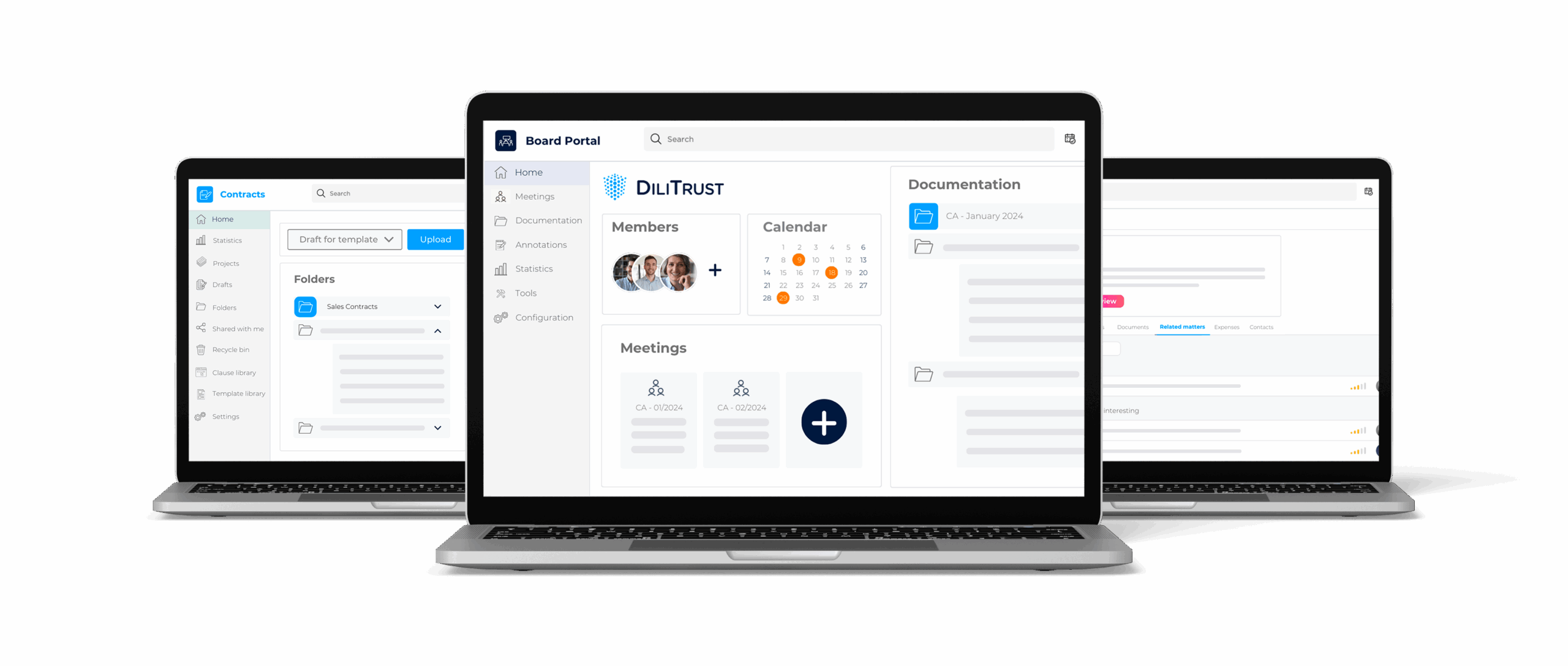
DiliTrust’s Contract Lifecycle Management module is built around the specific challenge of post-signature visibility. Once a contract is signed and stored, the platform automatically generates reminders based on each document’s key date data, expiration, notice periods, auto-renewal triggers, and obligation checkpoints.
On import, DiliTrust’s AI and OCR technology reads contract documents and extracts critical dates and metadata automatically. This matters for legal teams inheriting legacy contracts or bulk-importing historical agreements: the system identifies deadlines buried in dense text, not just those entered manually.
From the contract dashboard, your team gets a real-time view of every agreement approaching a critical date, filterable by contract type, entity, owner, or jurisdiction. Alerts go to the right people. Escalation rules fire if nobody acts. And every action is logged for audit purposes.
The result: 10x faster than manual contract management, 360° visibility across your full portfolio, and 100% traceability of every action taken on every document.
DiliTrust connects natively with Matter Management, Entity Management, and your existing business tools (ERP, CRM, e-signature providers), so deadline data doesn’t stay siloed inside the legal function.
See how DiliTrust helps legal teams take control of their contract deadlines.
From AI-powered date extraction to configurable automated alerts, the platform is built for the post-signature complexity your team faces every day.
Frequently Asked Questions About Contract Deadline Management
How far in advance should you set contract deadline reminders?
For most contracts, start at 90 days. High-value or complex agreements benefit from an initial alert at 120 days, giving legal and procurement enough time for a full performance review, benchmarking, and stakeholder alignment before committing to a renewal or initiating a termination notice.
What happens if you miss a contract notice period?
If a contract has an automatic renewal clause and you miss the opt-out notice window, the contract rolls over for another term, often at existing pricing and terms. Depending on the contract value, this can represent significant unexpected spend. In some contracts, missing a notice period also forfeits the right to terminate for cause during the new term.
What software do legal teams use to manage contract deadlines?
Contract Lifecycle Management (CLM) platforms are the standard. They automate reminder delivery, centralize deadline data, and eliminate the human dependency in deadline tracking. DiliTrust’s CLM module includes AI-powered date extraction, configurable alert cadences, escalation rules, and a real-time contract dashboard, giving legal teams full control over their entire contract portfolio’s critical dates.
Can contract deadline tracking be automated?
Yes. CLM platforms like DiliTrust extract key dates on import using AI and OCR, then generate automated reminders based on configurable rules. When a deadline is approaching and the assigned owner hasn’t acted, escalation rules trigger notifications to secondary owners or managers, removing the need for manual calendar management entirely.