


AGM requirements are becoming increasingly demanding, driven by stricter governance expectations, mounting pressure for transparency, and, as recent statistics show, the continued shift toward virtual and hybrid formats. Key developments include requirements for full audio and video live streaming, secure digital voting, and compliant bylaw amendments to enable virtual meetings. At the same time, greater scrutiny of ESG, board gender quotas, and more active shareholder engagement is making AGMs more complex and costly to plan and deliver.
What Is an Annual General Meeting (AGM)?
The Annual General Meeting is the statutory meeting of shareholders of a public limited company. It is a central governing body in which shareholders exercise their participation and oversight rights in relation to the Management Board and the Supervisory Board.
The Annual General Meeting usually takes place once a year. Its core functions are to inform shareholders, oversee the company’s management, and pass resolutions on fundamental corporate matters.
The statutory responsibilities of the Annual General Meeting include resolutions on the appropriation of net profit, the discharge of the Management Board and the Supervisory Board, the election of Supervisory Board members, amendments to the Articles of Association, and certain capital measures.
Through this clearly defined role, the Annual General Meeting serves as the link between shareholders and company management, ensuring that key decisions are properly authorized and legally compliant.
What Happens at an AGM?
At the Annual General Meeting, shareholders are informed about the company’s financial position and performance. This is based on the presentation of the annual and consolidated financial statements, as well as the Management Board’s report on business performance and strategic direction. The Supervisory Board also reports on its oversight activities.
A central component of the AGM is the adoption of resolutions on key corporate matters. These include, in particular, the appropriation of net profit and the distribution of dividends, the discharge of the Management Board and the Supervisory Board, and the election of Supervisory Board members or auditors. In certain cases, amendments to the Articles of Association or capital measures are also adopted.
Shareholders also exercise their participation rights at the Annual General Meeting. They have the right to ask questions, submit motions, and exercise their voting rights.
AGM Agenda and Typical Meeting Flow
An Annual General Meeting typically follows a clearly structured procedure that combines legal requirements with orderly execution.
Depending on the size of the company and its shareholder structure, the Annual General Meeting may last several hours or extend over one or more days.
Managing AGM logistics across legal, finance, and the board? DiliTrust centralizes every step — from convening notices to resolution tracking. See how it works →
How to Prepare for an AGM
The preparation of an Annual General Meeting requires close coordination between the Management Board, Supervisory Board, legal department, investor relations and external service providers.
| Preparation step | Description |
| Determination of date and location | Selection of a suitable date, taking legal deadlines into account, and decision on the meeting format, whether in person, hybrid, or virtual. |
| Preparation and review of the agenda | Definition of the agenda items in consultation with the Management Board and Supervisory Board, including legal review to ensure that all items are properly formulated and meet quorum requirements. |
| Legally compliant invitation to shareholders | Timely publication and distribution of the invitation, including all legally required information on the agenda, participation, and voting rights. |
| Compilation of relevant documents | Preparation of the annual and consolidated financial statements, reports of the Management Board and Supervisory Board, as well as draft resolutions and voting proposals. |
| Organization of voting rights and powers of attorney | Management of shareholder registrations, proxies, authorizations, and voting instructions, including preparation of attendance and participant lists. |
| Technical preparation | Ensuring appropriate technical infrastructure, particularly for hybrid or virtual Annual General Meetings, including voting and transmission systems as well as IT security. |
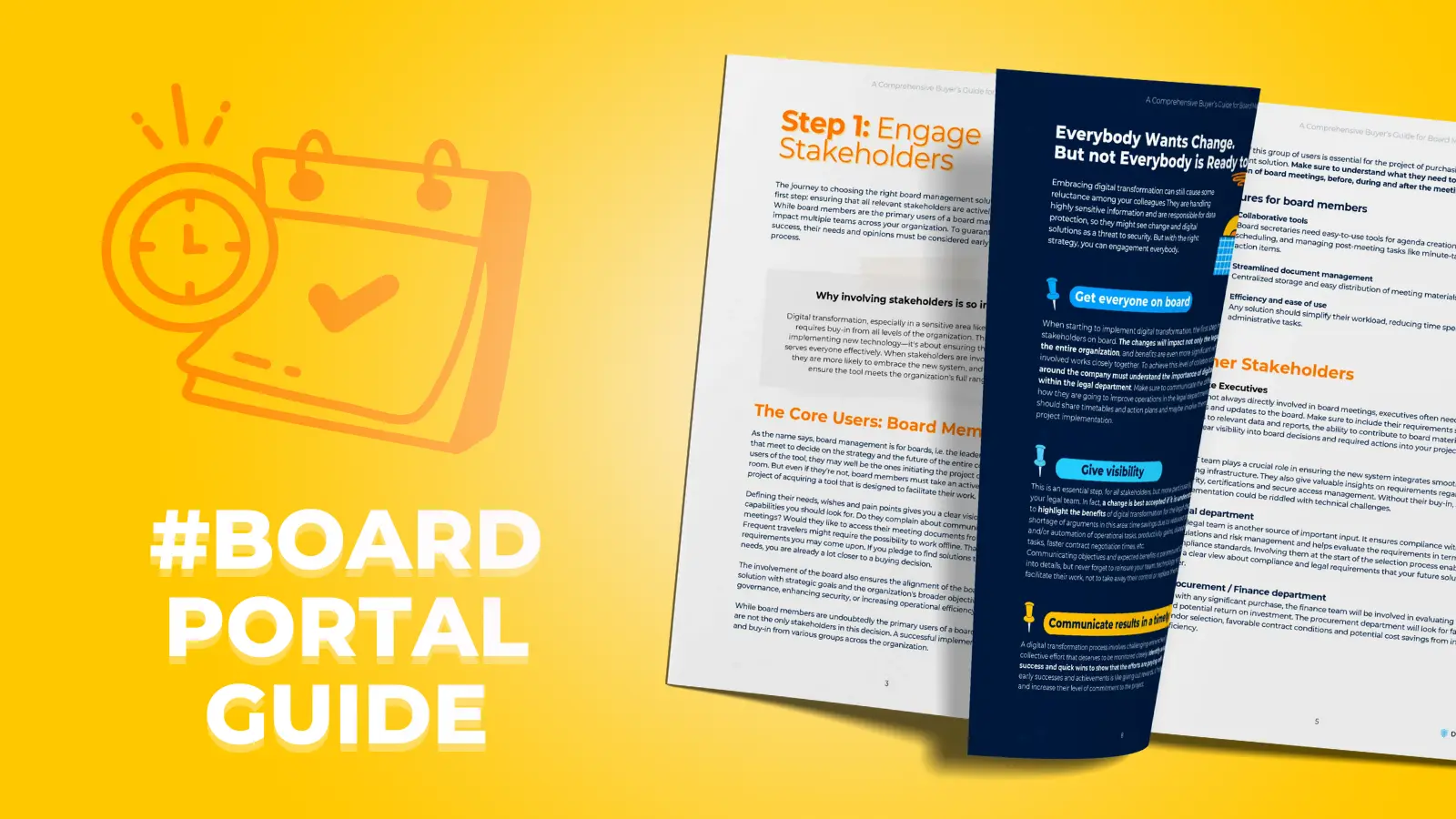
Managing your next AGM across spreadsheets and emails?
Discover our Board Management Buyer’s Guide, designed to help you evaluate solutions, compare key features, and make the best choice for your organization.
AGM Preparation Checklist
A structured checklist helps to ensure that all legal, organizational and technical requirements of the Annual General Meeting are met on time.
- Review dates and deadlines in accordance with the AktG: Ensure that convocation deadlines, publication periods, and statutory minimum notice periods are complied with.
- Legal coordination of the agenda: Align the agenda with the Management Board, Supervisory Board, and legal department, including a legal review to confirm quorum requirements for all items.
- Management Board resolution to convene the Annual General Meeting: Formal resolution of the Management Board to convene the meeting as the required legal basis.
- Publish the invitation in due time: Timely publication and distribution of the invitation, including all legally required information.
- Finalize annual financial statements and reports: Audit and approval of the annual and consolidated financial statements, as well as the reports of the Management Board and Supervisory Board.
- Prepare voting and resolution proposals: Draft clearly formulated proposed resolutions and voting documentation for the Annual General Meeting.
- Review IT and security framework: Assess the technical infrastructure, particularly for hybrid or virtual meetings, including data protection and IT security measures.
- Appoint a minute-taker: Designate a person responsible for the legally compliant recording of the minutes of the Annual General Meeting.
Careful and early preparation reduces legal risks, supports a smooth meeting process, and creates the foundation for transparent and effective resolutions.
How to Run an Effective AGM
An effective Annual General Meeting is characterized by clear moderation, structured procedures, and transparent communication with shareholders. The chair plays a key role, managing the meeting, coordinating requests to speak, and ensuring compliance with the rules of procedure.
A well structured agenda and clearly defined speaking times help keep discussions focused while still allowing sufficient opportunity for shareholder questions and comments. Digital solutions can further support the process, for example through electronic voting systems, digital speaker requests, and centralized access to relevant documents.
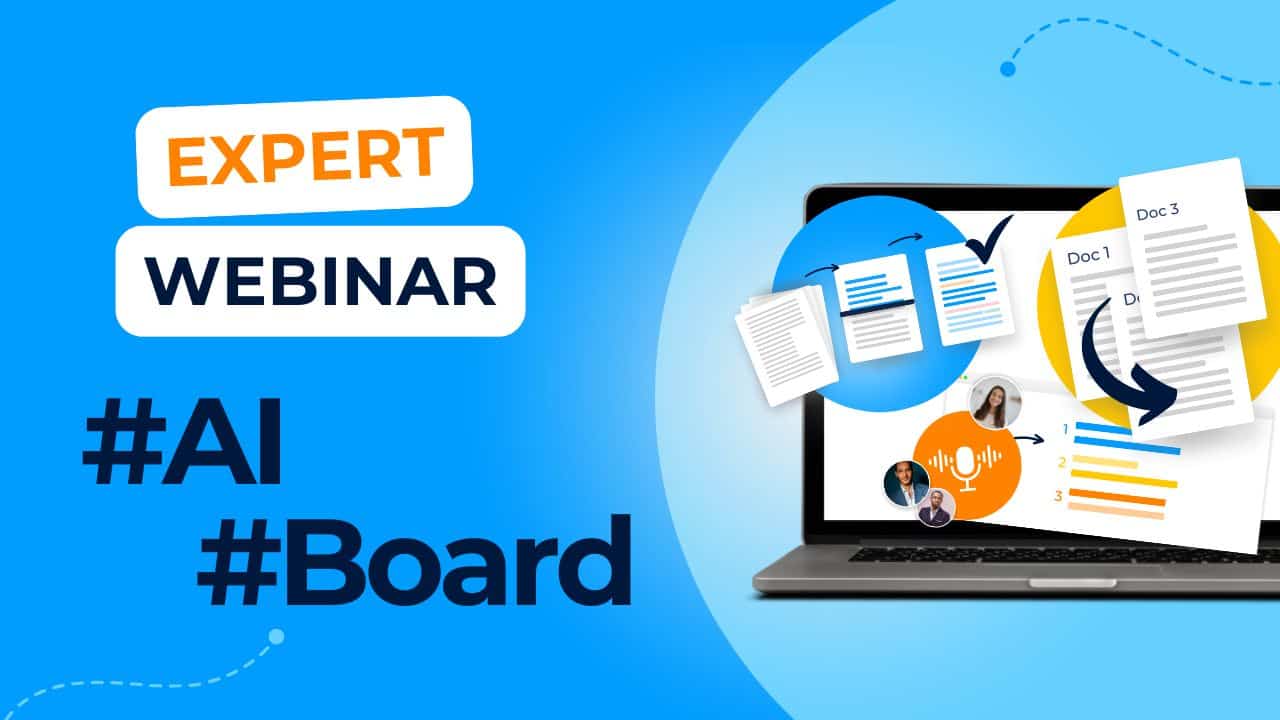
Can AI make your board meetings more efficient?
Discover three practical and secure ways to streamline meeting preparation and follow-up, improve decision-making, and protect sensitive data with AI-driven tools.
Shareholders’ Rights and Roles at the AGM
Shareholders are not merely observers at the Annual General Meeting, but active decision-makers with significant participation rights. They influence key corporate decisions and oversee the company’s management.
Their most important rights include:
AGM Follow-Up: Minutes, Filings, and Next Steps
The implementation phase begins immediately after the Annual General Meeting.
Minutes and Legally Compliant Documentation
All resolutions adopted at the Annual General Meeting must be fully and accurately recorded in the minutes. The minutes document the course of the meeting, the voting results, and any shareholder statements, and serve as key legal evidence. In many cases, they form the basis for entries in the commercial register, notarial certifications, or other corporate law measures.
Publication of Resolutions
Certain resolutions of the Annual General Meeting are subject to statutory publication requirements. These may include the announcement of voting results, capital measures, or changes in board composition. Publication typically takes place via the company website, the Federal Gazette, or through ad hoc disclosures, where applicable.
Implementing the Resolutions
The resolutions of the Annual General Meeting are binding on the company and must be implemented without undue delay. This may include the payment of approved dividends, registration of amendments to the Articles of Association, execution of capital measures, or the appointment and removal of board members.
Archiving and Reporting
All documentation relating to the Annual General Meeting should be archived in an audit-proof manner. This includes invitations, agendas, reports, minutes, voting results, and presentations.
How DiliTrust Helps You Prepare Your AGM More Efficiently
Preparing for an Annual General Meeting is time-intensive and involves managing numerous documents, deadlines, and coordination processes. With an integrated governance solution such as the DiliTrust Board Portal, these tasks can be handled in a structured and efficient way.
DiliTrust’s Board Portal provides a centralized, secure platform that digitally supports every stage of meeting planning and preparation. This includes centralized document management, agenda creation and editing, secure document sharing, and streamlined communication with participants.
Intuitive features allow previous meetings to be duplicated, templates to be reused, and draft resolutions to be prepared consistently, significantly reducing preparation time. The platform also enables the distribution of invitations and reminders, as well as real-time collaboration, so that updates and feedback can be incorporated quickly.
A digital board portal helps structure processes and minimize errors, particularly in complex or hybrid meeting environments. All content remains securely accessible to authorized users at all times, enabling the Management Board, Supervisory Board, and organizers to collaborate efficiently and reliably.
Ready to stop tracking compliance obligations in spreadsheets?