


A limited partnership agreement (LP agreement) sets out clear guidelines regarding the roles of the partners, profit distribution, and company management, thereby ensuring efficient cooperation and shared goals. Modern studies show that effective digital agreement management is a key driver of organizational performance, with 77 % of business leaders in high‑performing organizations attributing superior results to structured digital governance of contracts and agreements.
This guide explores the fundamental aspects of LP agreements, their critical components, and how modern governance solutions help businesses manage these important documents efficiently.
What is a LP agreement?
A limited partnership (LP) agreement is a legally binding document that outlines the relationship between general partners and limited partners in a business structure. This agreement serves as the governing framework for the partnership, defining rights, responsibilities, and financial arrangements among all parties involved.
Limited partnerships consist of two distinct partner types:
- General partners who maintain full management control and assume unlimited liability for the partnership’s obligations
- Limited partners who contribute capital but have restricted management authority and enjoy liability protection limited to their investment amount
Unlike general partnerships where all partners share equal responsibility and liability, limited partnerships create a clear separation of roles. This structure proves particularly advantageous for businesses seeking outside investment while maintaining operational control.
The legal foundation of limited partnerships varies by jurisdiction, but most follow similar principles established under the Uniform Limited Partnership Act in the United States. Businesses typically choose the LP structure when they need to attract investors who want financial returns without day-to-day management responsibilities.
Essential Components of an LP Agreement
Effective LP agreements contain several critical elements that protect all parties and establish clear operational guidelines.
| ELEMENT | DESCRIPTION / CONTENTS |
|---|---|
| Partner Information and Capital Contributions | – Identification of all partners (general and limited partners) – Initial capital contributions from each partner – Nature of contributions (cash, property, services) – Procedures for additional capital calls – Valuation methods for non-cash contributions |
| Profit and Loss Allocation | – Formula for profit and loss allocation – Distribution schedules and procedures – Tax allocation provisions – Treatment of losses exceeding a limited partner’s investment |
| Management Rights and Decision-Making | – Scope of general partner authority – Any limitations on general partner powers – Matters requiring limited partner approval – Voting thresholds for different types of decisions |
| Transfer Restrictions and Exit Provisions | – Restrictions on transferring partnership interests – Right of first refusal provisions – Buyout procedures for departing partners – Valuation methods for partnership interests |
Common Challenges in LP Agreements
Despite their importance, LP agreements present several challenges for businesses. Understanding these potential pitfalls helps organizations create more effective agreements.
Balancing Interests Between Partners
General partners seek operational freedom and flexibility, while limited partners prioritize investment protection and financial returns. Finding the right balance requires thoughtful negotiation and clear documentation of expectations from all parties.
Addressing Liability Concerns
While limited partners enjoy liability protection, certain actions might jeopardize this status. The agreement should clearly outline prohibited activities for limited partners to maintain their liability shield.
Limited partnerships face various regulatory requirements depending on jurisdiction and industry. The agreement must address compliance obligations and establish procedures for meeting ongoing regulatory demands.
Best Practices for Drafting Effective LP Agreements
Creating comprehensive LP agreements requires attention to detail and consideration of all potential scenarios. Following these best practices helps businesses establish solid partnership foundations.
Clarity and Specificity
Ambiguous language leads to disputes and potential litigation. Effective LP agreements use clear, specific language that leaves little room for interpretation. Define all terms thoroughly and avoid vague provisions that might create confusion later.
Tailoring to Business Needs
Standard templates rarely address the unique aspects of specific business relationships. Customize your LP agreement to reflect the particular circumstances, goals, and risk profiles of your partnership.
Regular Review and Updates
Business conditions change over time, necessitating updates to partnership agreements. Establish a regular review schedule to ensure the agreement remains aligned with current business realities and partner expectations.
Discover your savings
Get a realistic ROI based on industry standards when you partner with DiliTrust on CLM.
How Technology Solutions Streamline LP Agreement Management
Modern governance solutions transform how businesses manage their partnership agreements, offering significant advantages over traditional paper-based approaches.
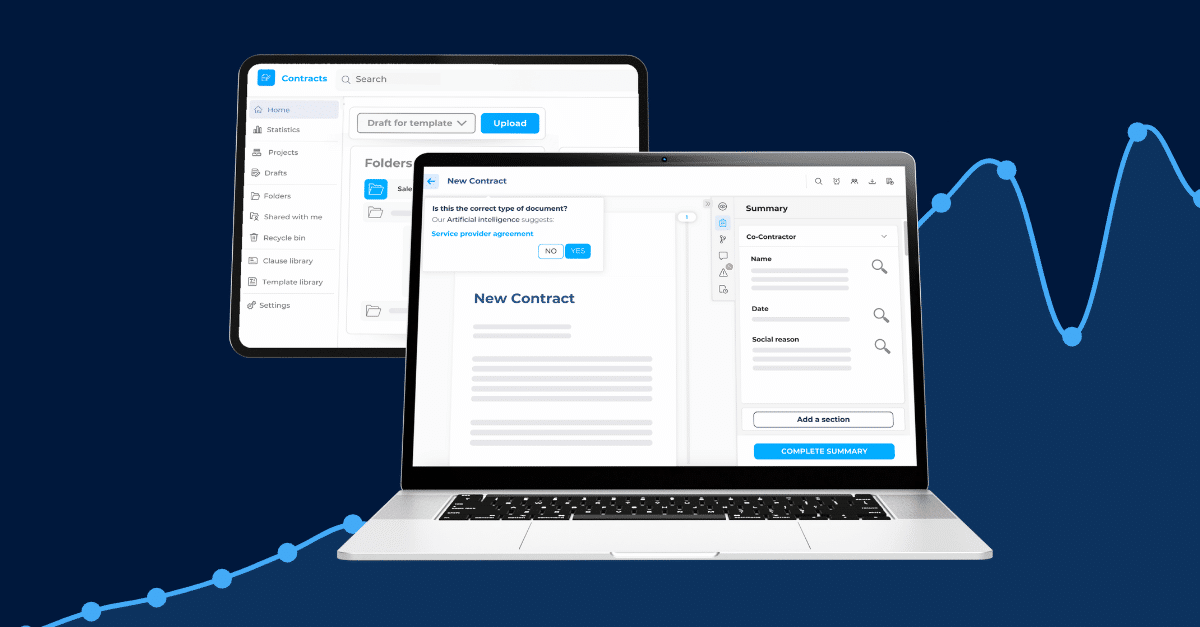
The DiliTrust Suite offers comprehensive tools specifically designed for managing complex legal documents like LP agreements. Its secure document management module provides the robust features needed for effective partnership governance, including:
Is your CLM driving real business impact?
Discover how to transform contract lifecycle management from an administrative tool into a strategic engine that accelerates business, strengthens governance, and elevates Legal’s influence.

Laying the Groundwork for Stronger Partnerships
LP agreements serve as the foundation for successful limited partnerships, establishing clear guidelines for partner relationships and business operations. Through careful drafting, regular reviews, and leveraging modern governance technology, businesses create partnerships built for long-term success.
For organizations seeking to optimize their partnership agreement management, digital governance solutions offer significant advantages. These platforms streamline document management, enhance security, and improve collaboration among partners.
Evaluate your current approach to managing LP agreements and consider how digital governance solutions might strengthen your partnership foundations. With the right combination of legal expertise and technology support, your limited partnerships will stand on solid ground for years to come.
Want to learn more about how DiliTrust can enhance your corporate governance? Contact us today!
Track LP obligations and entity data in a single governance platform.