



The general secretary position stands as a cornerstone in organizational governance, serving as the administrative backbone across associations, corporations, and non-profit entities. This role combines strategic oversight with practical implementation, ensuring an organization operates efficiently while maintaining proper documentation and compliance. Understanding general secretary responsibilities is essential for both those in the position and the organizations they serve.
What Is a General Secretary?
Before exploring the specific duties of a general secretary, it’s important to understand what the role actually represents. Though the title may vary slightly across industries, the general secretary typically holds a central leadership position that blends administrative precision with strategic oversight.
Indeed, a general secretary functions as the principal administrative officer within an organization, overseeing secretarial functions while also contributing to strategic direction. Unlike other executive roles focused primarily on operations or finances, the general secretary maintains responsibility for organizational memory through record-keeping, meeting management, and information dissemination. This position exists in various contexts – from corporate boards to international organizations – with responsibilities tailored to specific organizational needs.
General Secretary vs. Corporate Secretary: Key Differences
The titles “general secretary,” “corporate secretary,” and “company secretary” are sometimes used interchangeably. They are not always the same role. Understanding the distinction helps organizations structure governance correctly and ensures compliance obligations are properly assigned.
| GENERAL SECRETARY | CORPORATE / COMPANY SECRETARY |
|---|---|
| Primary context | Associations, NGOs, trade unions, international bodies, and some corporations |
| Core focus | Administrative coordination, meeting governance, strategic liaison |
| Legal mandate | Varies by organization type and jurisdiction |
| Key output | Meeting minutes, records, policy execution |
| Reporting line | Board or executive committee |
In practice, the two roles share significant overlap in governance-facing organizations. Both are responsible for meeting management, record-keeping, and procedural integrity. In many mid-sized companies, a single person carries both functions. For organizations evaluating purpose-built tools, our guide to corporate secretary software covers the technology considerations in detail.
Core Responsibilities of a General Secretary
The general secretary’s role extends far beyond traditional administrative tasks. As a key figure in shaping, guiding, and maintaining the organizational structure, this position encompasses a wide array of responsibilities. From strategic leadership to policy execution and day-to-day coordination, the general secretary acts as both an operational backbone and a governance advisor.
Key Responsibilities at a Glance
| RESPONSIBILITY AREA | KEY ACTIVITIES |
|---|---|
| Strategic Leadership | Strategic planning participation, board decision follow-up, leadership transition support |
| Communication & Representation | Official correspondence, stakeholder liaison, external representation |
| Policy Development | Drafting policy documents, compliance monitoring, staff guidance |
| Administrative Coordination | Meeting scheduling, agenda preparation, minutes, records management |
Strategic Leadership and Organizational Oversight
The general secretary provides critical leadership by actively participating in strategic planning sessions and closely monitoring the implementation of board decisions. They play a key role in ensuring continuity during leadership transitions, offering valuable guidance on governance matters and best practices.
Additionally, the general secretary supports committee members in carrying out their mandates, helping to align their efforts with the organization’s broader strategic goals. These responsibilities require balancing immediate administrative needs with long-term organizational vision, making the role both challenging and impactful.
Communication and Representation Duties
Effective information flow stands among the most important responsibilities of a general secretary. This includes:
Through these functions, the general secretary becomes the information hub, facilitating clear communication across all organizational levels.
Policy Development and Implementation
General secretaries play an instrumental role in shaping and maintaining organizational policy. They are responsible for drafting policy documents in line with board directives and for keeping the policy manual up to date and accessible to relevant stakeholders.
In addition to monitoring compliance with established policies, they proactively recommend updates when legal or operational requirements evolve. To ensure effective implementation, general secretaries also provide training and resources that support staff and leadership in adhering to these policies.
Administrative and Logistical Coordination
The administrative responsibilities form the foundation of the general secretary role:
These tasks ensure organizational continuity and provide the documentation necessary for effective governance and legal compliance.
Automate agendas, minutes and board documentation in one secure platform.
Key Skills and Qualifications Required
To meet the wide-ranging demands of the position, a general secretary must possess a strong blend of interpersonal, organizational, and analytical skills. These competencies enable them to lead with clarity, communicate effectively, and manage complex responsibilities across various organizational domains.
Leadership and Decision-Making Abilities
Successful general secretaries demonstrate sound judgment in complex situations, often making decisions that balance immediate concerns with long-term goals. They are able to work independently while still aligning with collective decision-making processes.
Their leadership style is diplomatic, particularly when navigating competing priorities within the organization. A strong commitment to the organization’s values and mission guides their actions, and they possess the ability to delegate tasks effectively while maintaining appropriate oversight and accountability.
Communication and Negotiation Skills
The role demands exceptional communication abilities including:
These communication competencies support transparency while maintaining appropriate confidentiality around sensitive matters.
Organizational and Analytical Competence
General secretaries bring strong organizational and analytical skills, managing records with precision, solving problems strategically, and leveraging technology to ensure efficient, compliant, and transparent operations.
How Technology Is Reshaping the General Secretary Role
The scope of general secretary work has expanded significantly as governance demands have grown. Digital platforms and AI-assisted tools are changing how many of the core duties are carried out, allowing general secretaries to focus more time on governance and advisory work.
In practice, this shift looks something like this: a single dashboard where meetings, documents, members, and activity logs all live in one place.
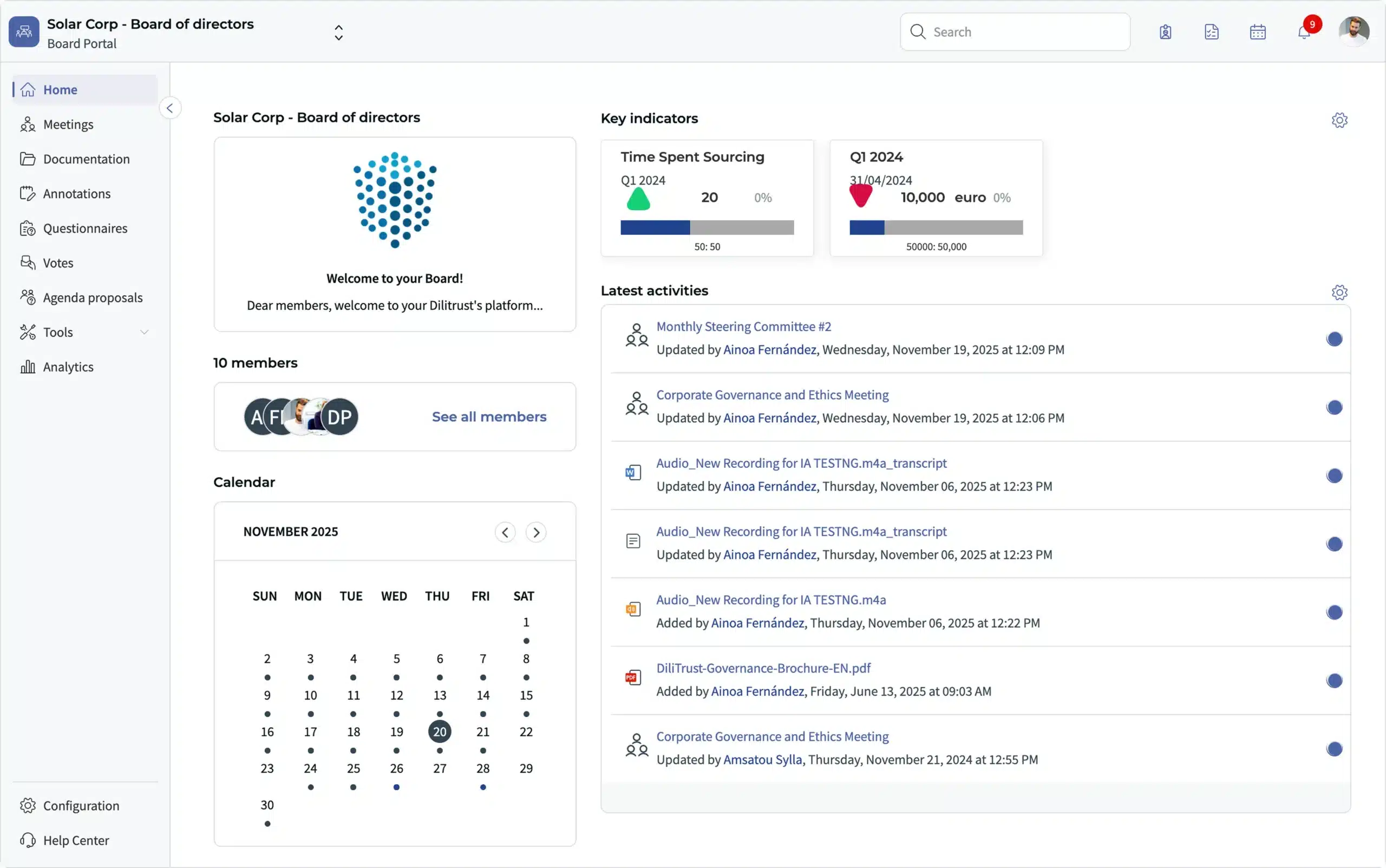
Several tasks that once required significant manual effort can now be handled more efficiently:
According to The Corporate Governance Institute, today’s governance secretary handles a far broader scope of tasks than the traditional “note-taker” role, increasingly recognized as a strategic position at the heart of board operations.
See how DiliTrust helps governance teams reduce manual work.
General secretaries who adopt digital governance workflows are better positioned to contribute at a strategic level, spending fewer hours on preparation logistics and more time advising leadership on governance best practices.
Searching for the right board solution?
Challenges Faced by General Secretaries
While the role of a general secretary offers significant influence and responsibility, it also comes with complex challenges. From managing competing demands to maintaining impartiality under pressure, general secretaries must constantly navigate organizational tensions. Understanding these challenges is essential to appreciating the resilience and adaptability the role requires.
Balancing Internal Management and External Representation
General secretaries often struggle with:
Addressing these challenges requires exceptional time management and clear role definition.
General secretaries often face competing priorities, limited authority, and pressure to remain neutral while executing decisions they may not fully support. Navigating these challenges requires discretion, strong relationship management, and a steady focus on organizational integrity and cohesion.
The Strategic Importance of the General Secretary Role
The general secretary position, though sometimes underappreciated, provides essential continuity and administrative support that enables organizational success. Beyond managing meetings and producing minutes, these professionals serve as guardians of organizational process, facilitators of governance, and key contributors to strategic direction.
Organizations benefit from recognizing the strategic value of this role by:
With proper support and recognition, general secretaries transform from administrative functionaries into strategic partners, enhancing organizational effectiveness through their unique combination of administrative expertise and governance knowledge.
For organizations seeking to optimize their governance processes, investing in tools and training for general secretaries represents a strategic decision that yields benefits across all operational areas. Digital governance solutions offer particular advantages, streamlining administrative tasks while enhancing information security and accessibility.
The DiliTrust Board Portal is built around the full board meeting lifecycle that general secretaries manage daily, from agenda preparation and document distribution to digital voting, e-signatures, and AI-generated minutes. General secretaries using the platform report saving up to 50% of their meeting preparation time by centralizing governance workflows in one secure environment
Can AI make your board meetings more efficient?
Discover three practical and secure ways to streamline board meeting preparation and follow-up, improve decision-making, and protect sensitive data with AI-driven tools.

Frequently Asked Questions About General Secretary Responsibilities
What software do general secretaries use?
General secretaries typically rely on a mix of tools: document storage, email, calendars, and spreadsheets for tracking entities and deadlines. The challenge is that these tools weren’t built for governance, so information ends up scattered and version control becomes a constant risk. That’s why many teams move to a dedicated board portal like DiliTrust that brings agendas, documents, minutes, voting, and entity tracking into one secure place.
How can governance workflows be automated?
The most time-consuming tasks are also the most automatable: distributing agendas, drafting minutes from meeting notes, tracking action items, and sending deadline reminders. Platforms like the DiliTrust Board Portal handle this automatically, freeing the general secretary to focus on advisory work rather than logistics.
What features should board management software include?
At a minimum: secure, permission-controlled document sharing; digital voting and e-signatures; AI-assisted draft minutes; entity and mandate tracking; offline access for directors on the move; and a full audit trail. For teams managing several boards or subsidiaries, multi-entity support and role-based permissions are essential.
How do governance platforms improve compliance?
Compliance gets easier when records are centralized and decisions documented automatically. A full, timestamped audit trail means an auditor’s request for a years-old resolution takes seconds, not days. With a platform like DiliTrust, EU-based hosting also helps teams meet data-sovereignty and GDPR requirements.
Still managing board processes manually?
See how governance teams automate: