


Artificial intelligence is reshaping how legal teams work. But not all AI is designed the same way, and for legal professionals handling confidential contracts, board materials, and regulatory filings, the distinction between private and public AI is not a technical detail. It is a governance decision.
This article explains what private AI is, why it matters specifically for legal teams, and what to look for when choosing a secure legal AI solution.
What is Private AI?
Private AI refers to artificial intelligence systems that operate within a controlled, closed environment. Your data stays inside your infrastructure. It is not shared with external servers, used to train shared models, or exposed to third parties.
Public AI tools, by contrast, process your inputs on shared infrastructure. The data you enter may inform future model training and may be accessible to the provider.
The table below summarizes the key differences:
| Feature | Private AI | Public AI |
|---|---|---|
| Data Storage | Within your environment | Third-party servers |
| Used to train models | No | Often yes |
| Data sovereignty | Controlled by your organization | Held by the provider |
| GDPR compliance | Built in by design | Varies by provider |
| Customization for your domain | High | Limited |
| EU AI Act alignment | Easier to demonstrate | More difficult |
For legal teams, the distinction matters because the data involved is rarely generic. Contracts, litigation files, board resolutions, and entity records are sensitive by nature.
Why Legal Teams Face Unique AI Privacy Risks
The legal function sits at the intersection of confidentiality, regulatory compliance, and strategic risk. This creates specific exposure when AI is deployed carelessly.
The numbers reflect how widespread the problem already is. According to IBM’s Cost of a Data Breach Report (2025), breaches involving shadow AI cost organizations $4.63 million on average, $670,000 above the standard average. Meanwhile, 83% of organizations have no technical controls to prevent employees from uploading confidential data to AI tools.
The Cisco 2026 Data and Privacy Benchmark Study found that 90% of organizations expanded their privacy programs specifically because of AI, yet only 12% describe their AI governance as mature and proactive.
Legal teams are under particular pressure because they are often the internal advisors called on to govern AI across the business. They need tools that are already compliant by design, not tools that create new compliance questions.
Key Advantages of Private AI for Legal Teams
Private AI offers several concrete advantages for in-house legal departments:
- Data stays in your environment. Sensitive contracts, matter files, and board materials are never transmitted to external servers or shared infrastructure.
- No training on your data. A private AI system does not use your confidential documents to improve its model for other users.
- GDPR compliance by design. Private AI operates within a framework that respects data minimization, purpose limitation, and data subject rights. Your legal team does not need to verify this case by case.
- Data sovereignty. Your organization controls where data is stored. This matters especially for regulated industries and multinational teams working across jurisdictions.
- Legal-specific precision. The best private AI systems for legal work are trained on legal documents and datasets, not on general internet content. The output is calibrated to legal reasoning, not generic summarization.
- Auditability. Every AI-generated output can be traced back to a source document or clause. This is essential when legal professionals need to verify a response before acting on it.
The EU AI Act and What It Means for Legal AI
The EU AI Act reaches full applicability in August 2026. It introduces a risk-based framework that classifies AI systems by the level of risk they present and imposes transparency, oversight, and documentation obligations accordingly.
For legal teams, this creates a dual compliance challenge. Any AI tool used in contract review, entity governance, or litigation support must satisfy both GDPR’s data protection requirements and the AI Act’s transparency and safety standards simultaneously. Non-compliance can trigger fines of up to 7% of global annual turnover for prohibited AI practices.
Private AI addresses this challenge more directly than public tools do. A sovereign, closed AI system allows organizations to document data flows, demonstrate compliance with transparency obligations, and maintain full accountability over how AI contributes to legal decisions.
Private AI in Legal Practice: Use Cases by Function
A good private AI solution for legal teams should be embedded directly into the workflows where legal professionals spend their time. Below are the core use cases where private AI delivers measurable value.
Contract Management
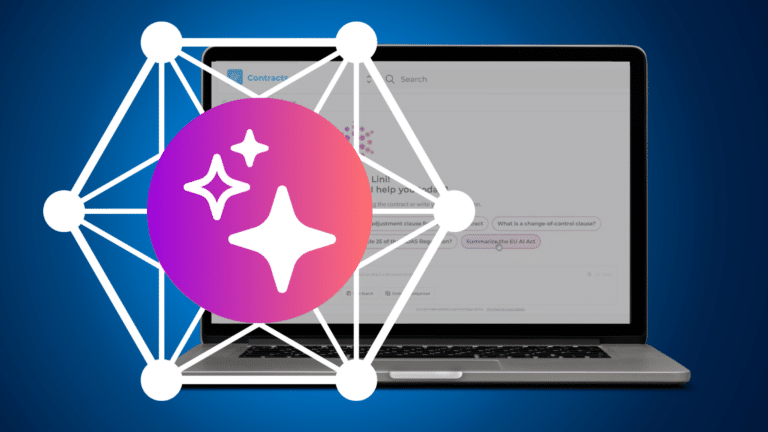
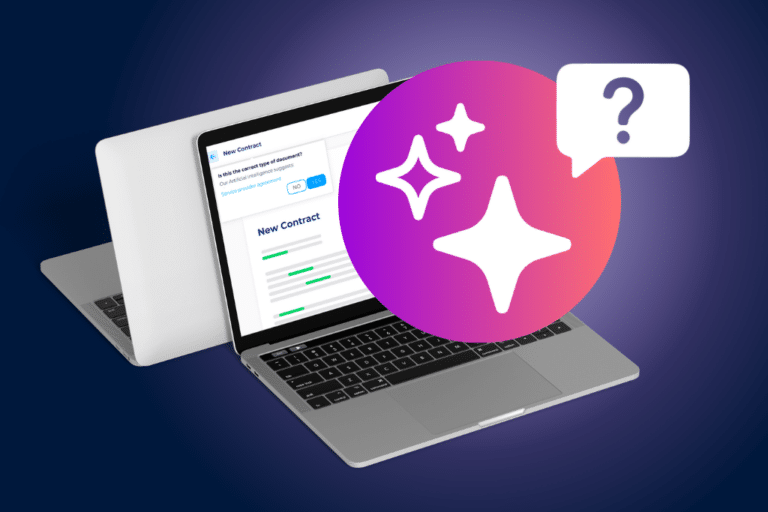
Ask any question about a contract in natural language and receive a precise, source-cited answer in seconds. Clause-level risk detection applies your compliance rules automatically and flags deviations before they become problems. Data extraction tools pull key dates, parties, and obligations from contracts in any format, creating structured summaries without manual input.
Board Governance
AI-assisted meeting minute generation reduces the time required for post-meeting documentation. Document summarization allows board members to extract key insights from lengthy board packs quickly, without switching tools or relying on external counsel.
Entity Management
Quickly retrieve signing authority, shareholder obligations, and subsidiary-level information from governance documents across multiple jurisdictions. Ask questions in natural language across entity files without building manual reports.
Matter Management
AI-generated matter snapshots provide an up-to-date summary of a matter’s status, past developments, and next steps. This keeps teams aligned without requiring manual updates.
Multilingual Work
Legal teams operating across jurisdictions can query documents and receive answers in their working language, regardless of the source document’s language. No external translation tools required.
Ask Lini, the AI-powered legal assistant embedded in the DiliTrust Governance Suite, is designed precisely for these scenarios. It works across all five modules of the suite (Board Portal, Contract Management, Entity Management, Matter Management, and Documentation Library) within a secure, sovereign environment.
What to Look for in a Secure Legal AI Solution
Not all tools marketed as “private AI” offer the same level of protection. When evaluating a legal AI solution, consider the following criteria:
| Criterion | What to verify |
|---|---|
| Data residency | Are data centers located in your region? Can you choose where data is stored? |
| Training data | Is your data ever used to train models? Ask for written confirmation. |
| Certifications | Does the vendor hold ISO 27001 and SOC 2 Type 2 certifications? |
| GDPR alignment | Is the solution designed to comply with GDPR from the ground up? |
| EU AI Act readiness | Can the vendor demonstrate transparency and accountability for AI outputs? |
| Auditability | Can every AI output be traced to a source document or clause? |
| Multi-tenancy isolation | Is data kept strictly isolated between different organizations? |
| Flexibility | Can you connect your organization’s existing enterprise AI model if preferred? |
DiliTrust’s AI Code of Conduct sets out exactly how its sovereign AI handles data security, certifications, and compliance. Teams evaluating AI solutions can use it as a reference point.
For organizations that have already invested in an enterprise AI provider, DiliTrust also offers the option to connect your own AI model (such as Azure OpenAI, Mistral, or Gemini) within the DiliTrust environment, keeping the governance structure intact while using a familiar AI engine.
Frequently Asked Questions About Data Auditing
What is the difference between private AI and public AI for legal teams?
Private AI processes and stores data within a controlled environment owned or managed by your organization. Public AI sends your data to shared third-party infrastructure, where it may inform model training. For legal teams handling confidential information, private AI reduces the risk of unauthorized data exposure and is easier to align with GDPR and the EU AI Act.
Is private AI GDPR compliant?
A well-designed private AI system is built to be GDPR compliant by default. It processes data lawfully, keeps it within defined boundaries, does not share it with third parties, and supports data subject rights. Compliance ultimately depends on how the vendor has designed their system, which is why certifications and transparent documentation matter.
What is the EU AI Act and how does it affect legal AI tools?
The EU AI Act, fully applicable from August 2026, classifies AI systems by risk level and imposes transparency, oversight, and accountability obligations. Legal AI tools used for contract review, governance, or litigation support may fall into regulated categories. Organizations using compliant private AI with full auditability and documented data flows are better positioned to satisfy these requirements.
Can private AI be trained on my organization’s legal documents?
A responsible private AI provider will not train shared models on your confidential data. Some private AI solutions allow organizations to fine-tune capabilities using their own documents within a fully isolated environment. Always ask vendors explicitly whether your data is used for model training.
What are the main use cases for private AI in legal departments?
The most common use cases include contract risk review, automated clause extraction, board meeting minute generation, document summarization, multilingual document querying, entity governance lookups, and matter status reporting.
Learn how DiliTrust’s sovereign AI is built to support legal teams securely. Request a demo.