


Legal teams, especially those managing multinational operations, work in stressful environments where contract reviews are often needed yesterday, entity documentation becomes difficult to track, all while ensuring compliance across jurisdictions. In a recent webinar, Jean-Baptiste Esbelin, Head of Product, and Ludwig Wolter, CLM Head of Product, explored how DiliTrust’s AI, Lini, has helped teams that oversee 50+ subsidiaries review 40+ contracts monthly and reclaim approximately 4.5 months of working time annually. Throughout a detailed feature presentation, they illustrated real-life Lini use cases that show how far AI can help legal teams.
Features that will remove manual work
Smart Report: Contract analysis at scale
Lini’s Smart Report feature enables legal teams to extract specific clauses or data points across their entire contract database. The system produces structured tables showing results contract by contract and each cell links directly to the relevant paragraph for quick verification.
Automated risk detection
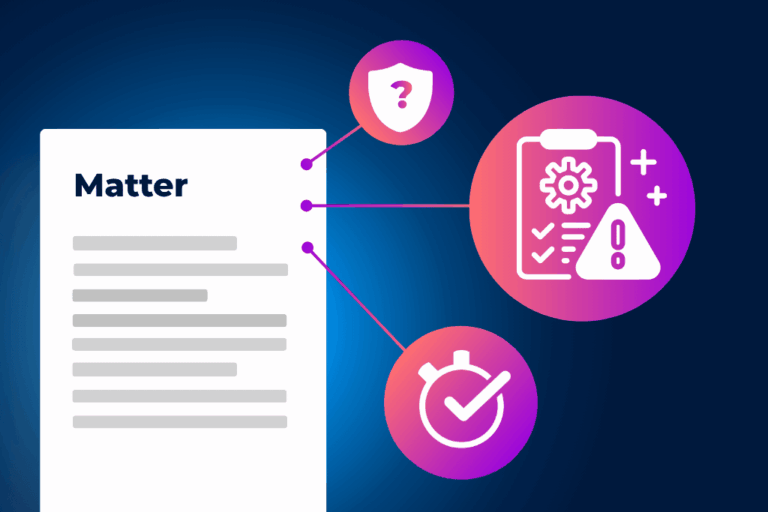
The risk detector automatically identifies non-compliant and potentially problematic clauses within contracts, flagging items with explanations. In addition, it can provide recommendations based on your playbooks. This shifts focus from clause-by-clause manual review to targeted evaluation where human legal judgment is most needed.
Entity Document Search and Board Support
Lini enables instant semantic search across entity documentation and can transcribe board meetings in multiple languages. It generates structured minutes with action plans and decisions, reducing the preparation time for board governance.
Real-world Lini use cases across legal operations
Throughout the webinar, Esbelin and Wolter presented real-life scenarios to illustrate the features previously mentioned.
M&A Due Diligence
One of the most time-sensitive Lini use cases involves acquisition scenarios. In such contexts, legal teams must quickly identify contracts containing change of control clauses that could be triggered by the transaction. Rather than reviewing thousands of agreements manually over several weeks, teams can scan contract databases in minutes. As a result, users can get a structured report showing which contracts contain restrictions and the exact clause language, enabling faster transaction processing.
Regulatory Compliance Audits
Compliance represents another critical area where Lini use cases demonstrate significant value. When regulations change, such as updates to GDPR or data protection laws, companies work under pressure to assess exposure across their contract portfolio. In response, legal teams can prompt Lini to identify all vendor agreements with liability caps, including contracts exceeding certain thresholds, or those lacking required data processing clauses. This visibility enables proactive remediation before compliance deadlines.
Revenue Operations
Lini use cases can go beyond the legal function, for instance into revenue operations. A classic example, when sales and legal teams collaborate during contract renewals. The challenge is that identifying legacy contracts without automatic price indexation clauses can be time-consuming. By analyzing active agreements systematically, Lini allows companies to update terms before renewal. As a result, finance teams gain visibility into which contracts may require manual pricing adjustments, ultimately supporting more accurate revenue forecasting.
HR Compliance Management
Employment law represents another domain where Lini delivers measurable impact. When regulations change and affect termination provisions or employee benefits, HR and legal teams need to understand which employment contracts require updates. Building on this need, Lini can analyze thousands of employee agreements to identify those with specific termination language or benefit structures. This capability produces reports that would otherwise take weeks to compile manually.
Lini, a modern legal companion
The Lini use cases outlined above demonstrate how AI-powered document intelligence transforms legal operations. These features and this technology automate tedious tasks. They do not replace legal judgment, they simply help it work better and smarter.
This partnership between human expertise and AI capability represents the future of legal operations in complex organizational environments.
Discover what LINI can do for legal teams
Watch the replay of our webinar to see how LINI uses AI to help legal teams analyze contracts faster, ask questions in natural language, and get instant insights from their data.