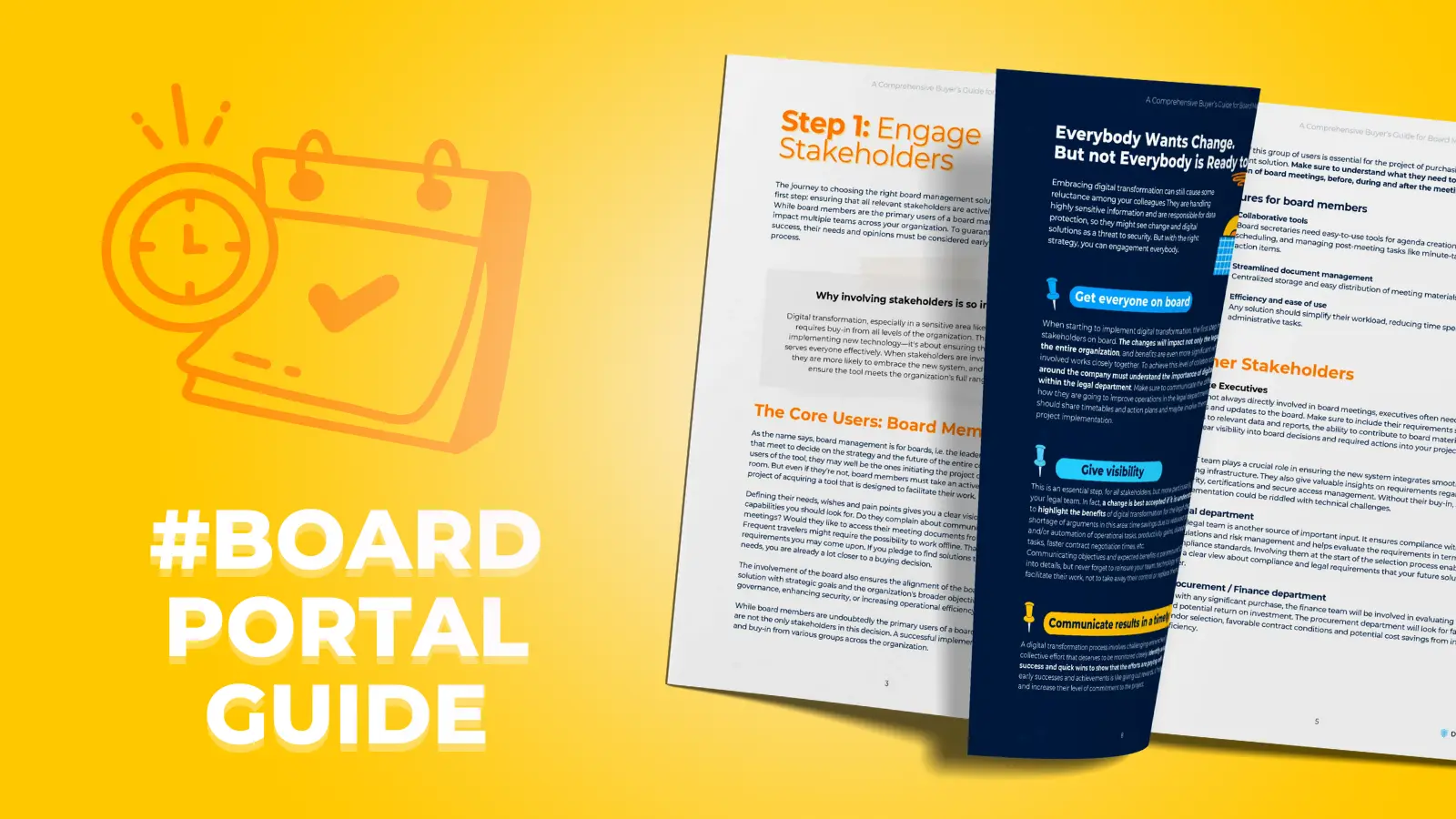



Steering committees provide strategic oversight and governance for key organizational initiatives. By aligning executive vision with project execution, these committees define objectives, allocate resources, manage risks, and ensure accountability. Effective steering committees are composed of diverse stakeholders and follow best practices for meetings and decision-making. Leveraging secure, integrated technology solutions further enhances their efficiency and supports robust corporate governance.
Steering committees play a vital role in organizational governance, providing direction and oversight for strategic initiatives and projects. These specialized groups bridge the gap between executive vision and operational execution, ensuring alignment with company objectives while maintaining accountability for outcomes. For organizations seeking to improve project success rates and strengthen governance frameworks, understanding how to structure and operate effective steering committees is essential.
What is a Steering Committee?
A steering committee is a group of key stakeholders responsible for providing guidance, making decisions, and monitoring progress on important initiatives within an organization. Unlike operational teams focused on day-to-day activities, steering committees maintain a strategic perspective, ensuring projects remain aligned with broader organizational goals.
These committees serve as a governance structure that oversees critical aspects of projects or programs, including scope definition, resource allocation, and risk management. They establish clear parameters for success and provide the necessary support to achieve desired outcomes.
The Strategic Role of Steering Committees
Steering committees function as the strategic compass for projects and initiatives, offering several significant benefits to organizations:
Within the governance framework, steering committees act as the link between executive leadership and project teams. They translate high-level strategic priorities into actionable guidance while filtering information to present executives with relevant updates and escalations.
Key Responsibilities of an Effective Steering Committee
The responsibilities of steering committees extend across multiple dimensions of project oversight and governance. Understanding these core duties helps organizations establish effective committees that deliver tangible value.
Strategic Direction and Oversight
Steering committees define and communicate project vision, ensuring alignment with organizational goals. They review project plans and deliverables, confirming these elements support strategic objectives. Additionally, they monitor external factors that might impact project outcomes, adjusting direction when necessary.
Resource Management
Effective committees approve budgets and resource allocations based on strategic priorities. They review financial performance regularly, addressing variances before they become problematic. When resource conflicts arise, steering committees make decisions about prioritization, ensuring the most important work receives adequate support.
Risk Management
Identifying potential risks early allows steering committees to develop appropriate mitigation strategies. They review risk assessments, evaluate potential impacts, and approve response plans. Through ongoing monitoring, they track how risks evolve throughout the project lifecycle, adjusting approaches as needed.
Progress Monitoring
Regular review of project progress against established metrics helps steering committees identify issues early. They evaluate whether projects remain on schedule and within budget, addressing deviations promptly. This oversight ensures continuous alignment with organizational priorities and stakeholder expectations.
Composition: Who Should Be on Your Steering Committee?
The effectiveness of a steering committee depends largely on its composition. Organizations should carefully consider who participates to ensure the right mix of authority, expertise, and perspective.
Essential Roles
A well-structured steering committee typically includes:
The ideal size for a steering committee ranges from 5-9 members, large enough to include necessary perspectives yet small enough to facilitate efficient decision-making. Each member should have clearly defined responsibilities and the authority to make decisions within their domain.
Best Practices for Running Successful Steering Committee Meetings
Effective meetings form the foundation of successful steering committee operations. Following established best practices helps ensure these gatherings deliver maximum value.
Meeting Structure and Preparation
Steering committee meetings should follow a consistent structure with clearly defined agendas distributed in advance. Materials for review should reach members at least 48 hours before meetings, allowing adequate preparation time. Each meeting should include updates on progress, discussion of issues requiring decisions, and review of action items from previous sessions.
Documentation and Follow-up
Thorough documentation of discussions, decisions, and action items provides a reference point for future meetings. Minutes should capture not only what was decided but also the rationale behind significant choices. Following each meeting, action items should be distributed promptly with clear ownership and deadlines assigned.
Decision-Making Frameworks
Establishing clear decision-making processes prevents paralysis and ensures forward momentum. Committees should define what constitutes consensus, when voting is appropriate, and how disagreements will be resolved. They should additionally clarify which decisions require full committee approval versus those that can be made by individual members.
Common Challenges and How to Overcome Them
Even well-structured steering committees face challenges that can undermine their effectiveness. Recognizing these issues and implementing strategies to address them helps maintain productive committee operations.
Decision Delays
When committees struggle to reach decisions, projects stall and momentum fades. Addressing this challenge requires establishing clear decision-making frameworks, setting time limits for deliberation, and ensuring the right people with appropriate authority participate in discussions.
Maintaining Engagement
Steering committee members often balance multiple responsibilities, making sustained engagement difficult. Overcoming this challenge involves demonstrating the value of participation, keeping meetings focused and efficient, and regularly acknowledging contributions.
Managing Conflicting Priorities
Different stakeholders naturally bring different priorities to the committee. Successfully navigating these differences requires creating space for open discussion, focusing on shared organizational goals, and establishing objective criteria for evaluating options.
Technology Solutions for Modern Steering Committees
Digital transformation has created new opportunities for enhancing steering committee operations through purpose-built technology solutions.
Secure Collaboration Platforms
Modern steering committees benefit from secure platforms that facilitate information sharing and collaboration. These solutions provide controlled access to sensitive documents, ensuring only authorized individuals view confidential materials. They additionally create audit trails that document who accessed information and when, supporting governance requirements.
Meeting Management Tools
Specialized meeting management solutions streamline the preparation, execution, and follow-up processes for steering committee meetings. These tools help organize agendas, distribute materials securely, capture minutes, and track action items, all within a unified environment.
Integrated Governance Solutions
Comprehensive governance platforms like DiliTrust provide integrated solutions specifically designed for steering committees and board management. These platforms offer secure document sharing, meeting management, and collaboration features within a single environment, simplifying administrative processes while strengthening security.
The Board Portal module within such solutions enables committees to prepare meeting agendas, share documents securely, and manage voting processes, creating significant efficiency gains for governance activities.
Steering Committees: The Foundation of Effective Governance
Steering committees serve as essential components of organizational governance, providing the structure, oversight, and direction necessary for successful strategic initiatives. When properly composed and operated, these committees help organizations navigate complexity, manage risks, and achieve important objectives.
By following best practices for committee composition, meeting management, and decision-making processes, and leveraging appropriate technology solutions, organizations establish steering committees that deliver genuine value. These committees not only keep projects on track but also strengthen overall governance frameworks, supporting long-term organizational success.
For organizations seeking to enhance their governance practices, investing in well-structured steering committees represents a significant opportunity to improve strategic alignment, resource utilization, and project outcomes.
Want to simplify board management?
Discover our Board Management Buyer’s Guide, designed to help you evaluate solutions, compare key features, and make the best choice for your organization.