


Governance has long shaped how organizations operate, but expectations have evolved. It’s no longer evaluated purely through the lens of compliance. Leadership now expects governance to produce measurable business results. Against that backdrop, entity management ROI (return on investment) is a clear indicator of whether predictive governance is delivering strategic impact.
This is where predictive governance comes into play. When organizations can anticipate obligations, they reduce friction and make better-informed decisions. When governance is structured, connected, and visible, the return on entity management becomes tangible evidence that predictive governance isn’t aspirational, it’s achievable.
What is predictive governance
Predictive governance is about using structured, reliable data and processes so that legal and compliance teams can anticipate obligations, risks, and decision points before they arise.
Why is this about more than simply staying compliant? Compliance focuses on responding to the exact requirements established by regulatory bodies, which is necessary to continue operating as a business. Predictive governance takes a step beyond that. It’s about understanding what else can be done operationally and strategically to take advantage of compliance requirements.
The result? Legal and governance teams that don’t just protect the business, but actively contribute to it.
Furthermore, predictive governance supports a proactive way of working. Teams can create both operational and strategic value while reducing risk exposure and financial liabilities.
High quality and structured entity data is key
In this case, the foundation starts with high-quality entity data and governance frameworks, not fragmented or ad hoc processes. Without centralized records, standardized processes, and visibility across the enterprise, companies cannot make informed predictions about compliance deadlines, corporate action impacts, or risk exposure. Structured data turns into foresight.
The cost of reactive governance
The real costs of reactive governance are often hidden, but they quickly become clear when processes fail. Missed compliance deadlines can result in penalties, strained relationships with regulators, and impaired access to markets. When legal teams spend hours tracking down entity information across disparate systems, they lose time that could otherwise be spent on strategic initiatives. If governance data lacks clarity or is out of date, executive confidence erodes and risk increases.
According to Ernst & Young, in a recent survey, 89% of organizations said they face challenges with legal entity management, mainly due to a lack of resources and structured processes. These challenges subsequently lead to broader business issues, such as poor deal readiness, increased reputational risk, or delays in statutory financial statements.
For these reasons, assessing entity management ROI is a practical starting point for governance modernization. It translates governance maturity into business language leadership understands, while strengthening credibility in the process.
Entity management ROI, a key driver to predictive governance
Predictive governance isn’t theoretical. It’s operational.
It emerges when organizations invest in entity management and execute with discipline and consistency. Entity management ROI is the clearest signal that this shift is taking place. When entity data is centralized, reliable, and actively used, governance moves from reactive reporting to anticipation. The resulting returns, whether in productivity, cost control, or structural clarity, are not side effects. They are the mechanisms that make predictive governance stick and drive better business outcomes.
Productivity gains through centralized entity management
One of the most immediate benefits reflected in entity management ROI is productivity.
Spreadsheets, email threads, and manual tracking lead teams to focus on admin tasks rather than value-driven work. Centralizing entity data and workflows within a single platform reduces this friction and allows teams to operate more efficiently.
By eliminating:
Legal professionals and leadership teams can reclaim time previously spent maintaining entity information. These productivity gains are not abstract. They translate into faster access to reliable data, smoother reporting cycles, and fewer errors across governance activities. As a result, teams can redirect their efforts toward analysis, advisory work, and strategic support instead of routine coordination.
Entity rationalization and smarter spending
Entity rationalization is another key driver of entity management ROI. When organizations gain full visibility into their entity landscape, the financial benefits can be significant. That visibility includes aspects such as ownership structures, mandates, and compliance status.
Centralized and standardized entity data enables leadership teams to:
This visibility supports more informed decisions on consolidations, dissolutions, or restructuring initiatives. Over time, these actions help lower external legal spend, reduce ongoing compliance costs, and limit the risk of managing excessive or poorly understood entities.
In summary, entity management ROI shows up when teams can:
Together, these points illustrate how entity management investments can deliver measurabale returns to the bottom line.
Make predictive governance come true
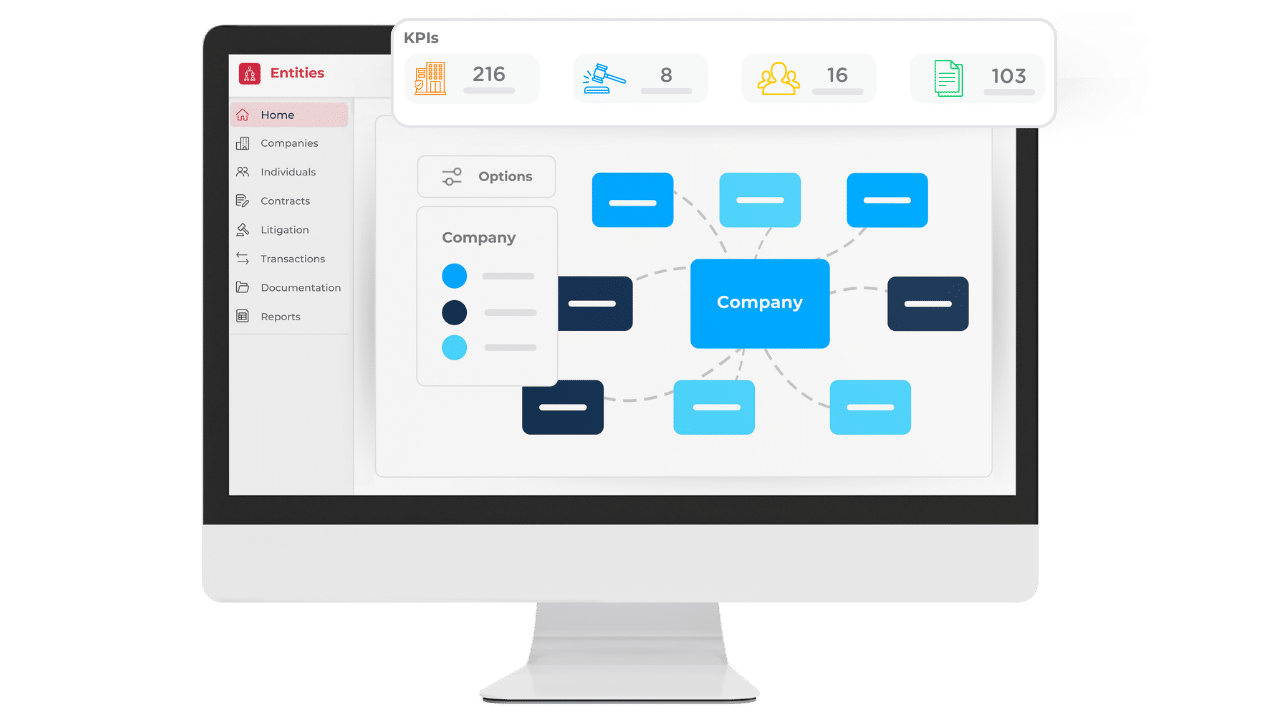
The shift to predictive governance requires a governance framework that tracks entities throughout their lifecycle, links compliance obligations to those entities, and makes those insights visible across teams.
Modern governance frameworks increasingly aim to unify all these elements within a single tool. Once an entity management solution is in place, the focus shifts to using it effectively. This can include automating routine tasks and providing real time insights through role-based access.
While predictive governance can be enabled by many practices and tools, legal entity management (LEM) often plays a pivotal role. It not only unlocks entity management ROI at scale, it also provides the visibility and control teams in large organizations need. It establishes a consolidated repository for entity records and compliance obligations and enables stronger compliance tracking.
The result is governance that isn’t just compliant, but that is predictive, strategic, and sustainable.
Discover your savings
Calculate your potential annual benefit by streamlining governance and centralizing corporate records with DiliTrust.