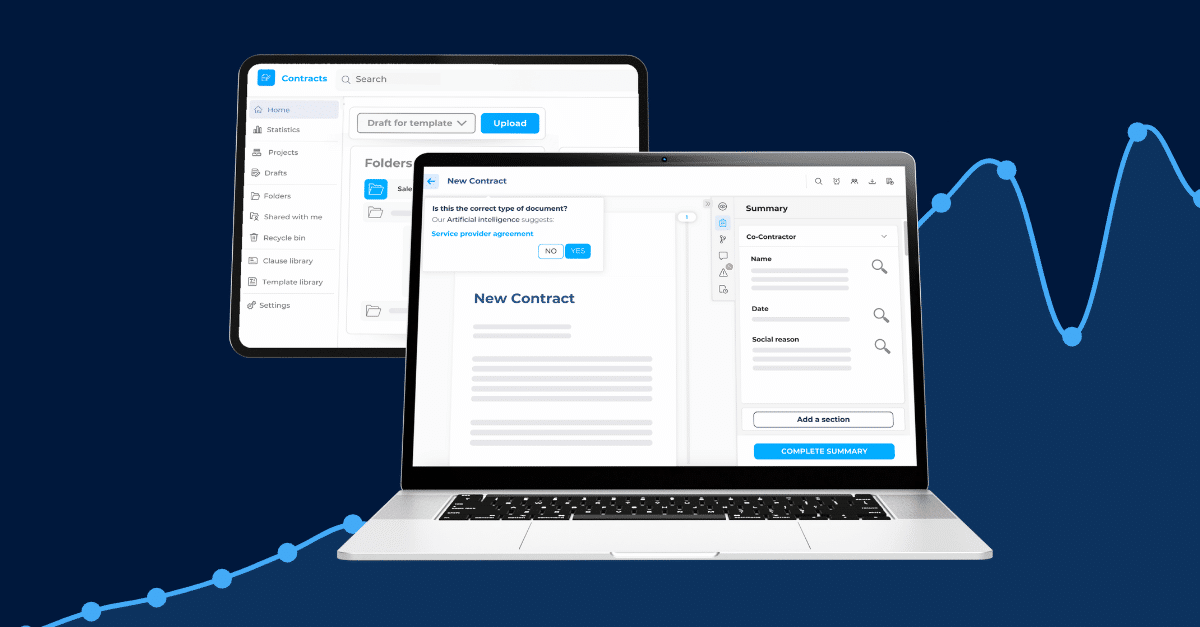



A structured contract review checklist helps organizations minimize legal and financial risks by ensuring consistency, compliance, and thoroughness throughout the contract lifecycle. Collaborative review processes and digital tools make contract management faster, more consistent, and a genuine business asset.
Contracts form the foundation of business relationships, yet inadequate reviews lead to significant risks. According to World Commerce & Contracting, companies lose approximately 9% of their annual revenue due to poor contract management. A structured contract review checklist is an essential tool for legal departments to mitigate risks, ensure compliance, and protect business interests.
What Is a Contract Review Checklist?
A contract review checklist is a structured list of items, clauses, and questions that reviewers work through before signing any agreement. It breaks the review into defined steps, from verifying party information to assessing risk and regulatory compliance, so every contract gets the same level of scrutiny.
The difference from a basic read-through: a checklist is repeatable. It creates a consistent process that holds whether your team reviews 10 contracts a month or 500. According to Gartner, managing contracts can consume up to half of a legal department’s time and capacity, a checklist is one of the simplest ways to reduce that load without adding headcount.
Why Every Organization Needs a Contract Review Checklist
Contracts govern nearly every aspect of business operations, from vendor relationships to employee agreements. Without a systematic approach to reviewing these documents, organizations expose themselves to unnecessary risks and potential financial losses.
A well-designed contract review checklist offers multiple benefits:
Additionally, a standardized checklist accelerates the review process, allowing legal teams to handle higher volumes of contracts without sacrificing quality. This efficiency becomes particularly valuable during periods of increased business activity or when resources are limited.
Essential Elements of a Contract Review Checklist
Before diving into the details of contract clauses and legal intricacies, it’s important to establish a structured approach. A well-rounded contract review checklist should cover all critical areas, ranging from basic identifying information to legal, financial, and performance-related terms.
1. Basic Contract Information
The first section of any contract review checklist should focus on verifying fundamental information. This includes:
2. Legal Terms and Conditions
This section addresses the core legal framework of the agreement:
3. Financial Considerations
Financial terms require careful scrutiny to avoid unexpected costs:
4. Performance Obligations
Clear performance standards protect both parties:
5. Risk Assessment
Identifying potential risks helps prevent future problems:
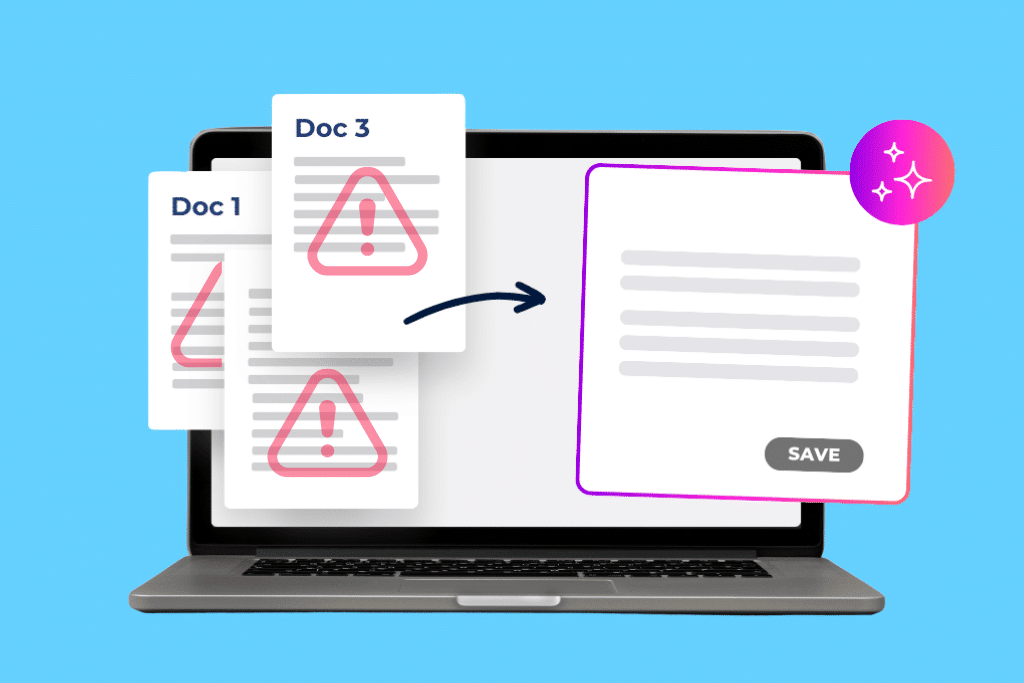
To enhance risk identification and mitigation, organizations are able to leverage AI-powered tools like DiliTrust’s Risk Detector. This proprietary solution automatically flags non-compliant or high-risk clauses by applying internal compliance playbooks. It streamlines the review process by suggesting compliant alternatives, helping legal teams finalize agreements with greater speed and confidence.
Struggling to catch every high-risk clause under deadline pressure?
DiliTrust’s Risk Detector automatically flags non-compliant clauses against your internal playbooks and suggests compliant alternatives in real time. No more manual line-by-line review.
Common Contract Review Mistakes to Avoid
Even experienced legal teams get caught by these errors, particularly under time pressure or high contract volumes.
| COMMON REVIEW MISTAKE | DESCRIPTION | RECOMMENDED ACTION |
|---|---|---|
| Reviewing Without Business Context | Legal assesses legal risk, but no one checks whether the commercial terms make sense for the business. | Bring finance and operations into the review process before the contract reaches final approval. |
| Missing the Auto-Renewal Clause | Evergreen provisions are easy to overlook in a long agreement. A missed notice deadline can lock the organization into an unwanted contract renewal. | Identify renewal and termination notice periods early and track them proactively. |
| Vague Deliverables | If services are described only in general terms, non-performance is difficult to enforce. | Define deliverables clearly, make them measurable, and link them to specific deadlines. |
| Treating Jurisdiction as Boilerplate | In cross-border agreements, governing law affects dispute resolution and compliance obligations. | Review governing law and jurisdiction clauses explicitly for every agreement. |
| No Post-Signature Obligation Tracking | A signed contract without monitoring creates compliance and operational risks. | Track renewals, price adjustments, milestones, and other obligations after execution. |
| Template Misuse | Using the wrong contract template can leave essential provisions missing. | Ensure the template matches the specific contract type before beginning the review. |
Implementing an Effective Contract Review Process
A checklist alone isn’t enough, it must be part of a structured review process.
Pre-review Preparation
Before beginning the actual review, gather relevant information about the business relationship and objectives. Understanding the context helps identify potential issues that might not be apparent from the contract language alone.
Collaborative Approach
Contract reviews benefit from multiple perspectives. While legal teams focus on legal risks, business stakeholders should review commercial terms, and financial teams should examine payment provisions. This collaborative approach ensures all aspects receive appropriate attention.
Documentation and Communication
Document all findings, questions, and suggested changes. Clear communication between the review team and those negotiating with the other party prevents misunderstandings and ensures important issues are addressed.
Final Approval
Establish a clear approval workflow that includes sign-off from all relevant departments before finalizing the agreement.
Leveraging Technology for Efficient Contract Reviews
Modern contract management solutions transform the review process through.
Centralized Contract Repository
Digital platforms provide a secure, centralized location for storing all contracts and related documents, making them easily accessible to authorized team members.
Automated Workflows
Technology streamlines the review process by automatically routing contracts to appropriate reviewers and tracking progress through each stage.
AI-Powered Analysis
Advanced contract management systems use artificial intelligence to identify potential issues, inconsistencies, or missing clauses. This technology significantly reduces review time while improving accuracy.
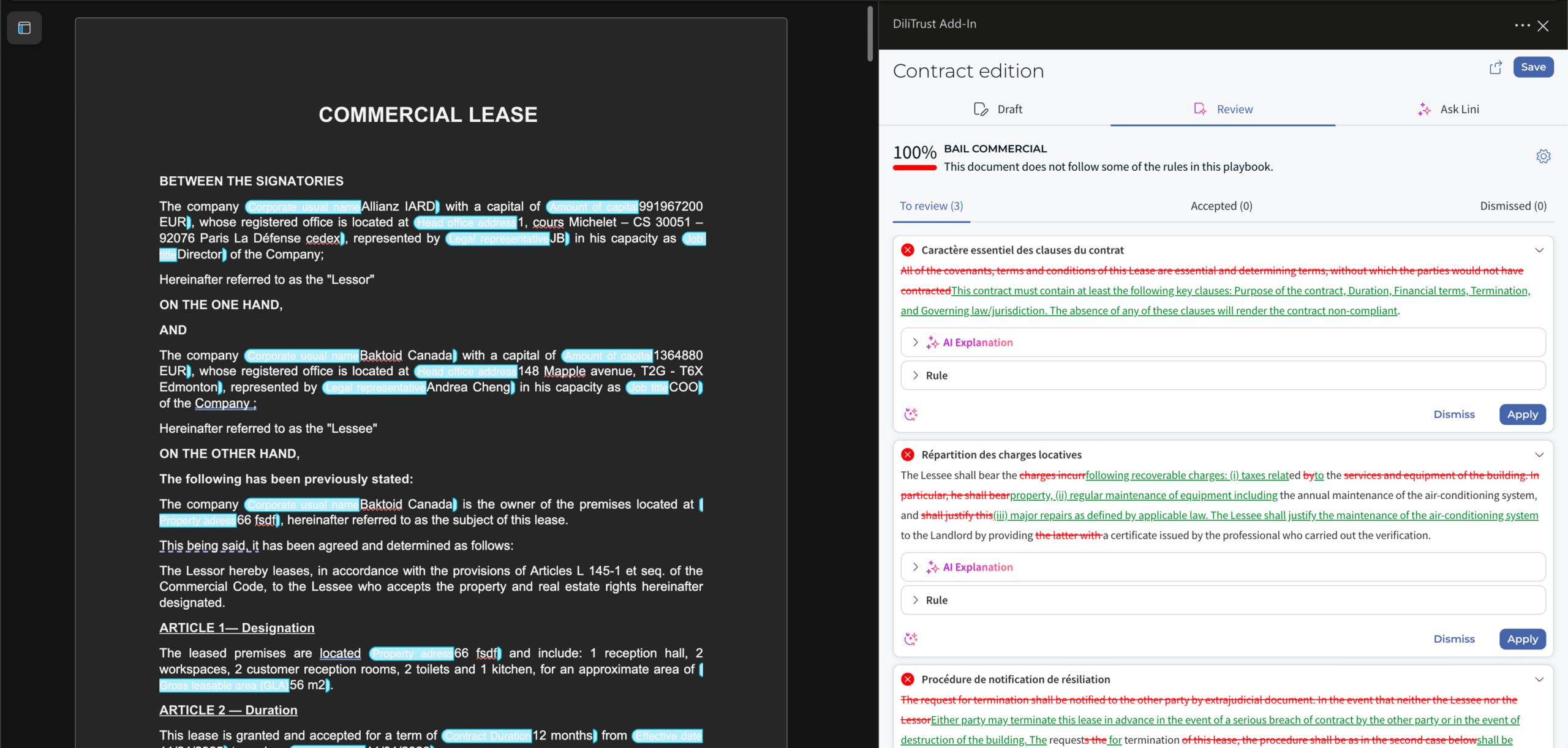
DiliTrust’s proprietary AI, Lini, powers the Risk Detector and additional review capabilities within the Contract Management module. Lini automatically scans incoming contracts against your internal playbooks, flags deviating clauses, and suggests compliant redlines, without exposing contract data to third-party AI providers. It runs on European servers, certified to ISO 27001, SOC 2 Type 2, and GDPR standards. For quick in-contract queries, Ask Lini lets reviewers ask plain-language questions directly within any document and receive cited, contextual answers in seconds.
Standardized Templates
Digital solutions offer standardized templates and clause libraries, ensuring consistency across all agreements and reducing the time needed to create new contracts.
The DiliTrust Suite provides comprehensive contract management capabilities, including automated workflows, secure document storage, and advanced analytics. These features enable legal teams to conduct thorough reviews efficiently while maintaining complete visibility throughout the contract lifecycle.
How AI saves legal teams 1.5 weeks every month
Manual contract review takes more time than it should. Watch this 30-minute webinar replay to see how AI handles the heavy lifting — from clause flagging to compliance checks — so your team focuses on what requires legal judgment.

Turning Contract Review into a Strategic Asset
A systematic contract review checklist serves as an essential tool for legal departments and business teams alike. By addressing all critical elements , from basic information to complex legal and financial terms, organizations protect themselves from unnecessary risks while ensuring their agreements support business objectives.
Implementing a structured review process, supported by appropriate technology, transforms contract management from a potential bottleneck into a strategic advantage. This approach not only reduces risks but also accelerates business operations by streamlining approvals and providing greater visibility into contractual relationships.
For organizations seeking to enhance their contract management capabilities, DiliTrust offers secure, intuitive solutions designed specifically for legal departments and governance professionals. Our Contract Lifecycle Management module provides the tools needed to implement efficient review processes while maintaining the highest standards of compliance and security.
Ready to transform your contract review process? Discover how DiliTrust can help your organization implement an effective contract review checklist and streamline your entire contract management workflow. Book a demo today
Frequently Asked Questions About Contract Review Checklists
A contract review checklist is a structured document listing the clauses, terms, and provisions to verify before signing any agreement. It covers five core areas: party identification, legal terms, financial conditions, performance obligations, and risk provisions. The goal is a consistent, repeatable review process, so nothing critical gets missed regardless of contract volume.
Legal teams handle the compliance and liability assessment. A complete review also involves business stakeholders for commercial terms and finance for payment and tax provisions. For high-value or high-risk agreements, sign-off from multiple departments before execution is standard practice.
It depends on complexity. A standard NDA might take 20-30 minutes. A complex Master Service Agreement can take several hours. AI-assisted reviews using playbook-based tools can cut that time significantly, reviewers focus only on what needs human judgment rather than scanning every clause manually.
Post-signature tracking is often where contract processes break down. CLM platforms monitor deadlines, renewal dates, price escalation clauses, and performance obligations, sending automated alerts before key dates to prevent missed commitments or unwanted auto-renewals.
Discover your savings
Get a realistic ROI based on industry standards when you partner with DiliTrust on CLM.