
Legal doesn’t need another tool.
It needs a system...
The business is moving at enterprise speed. Legal shouldn’t have to reconstruct the past to advise on the next move. And that’s where the Legal Operating System comes in.
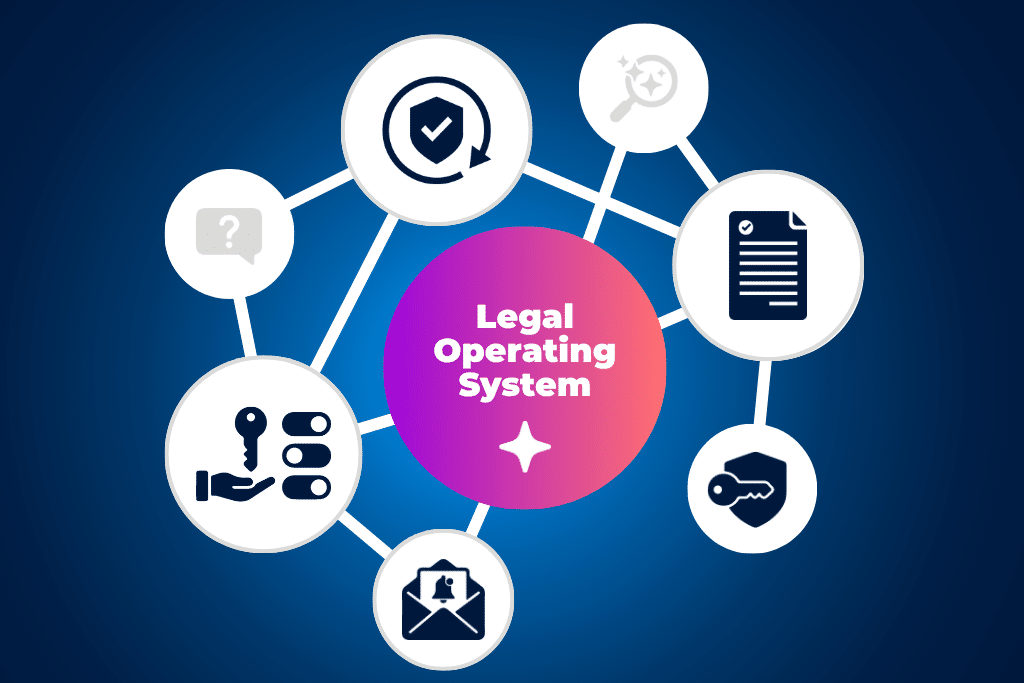
- Boards
- Matters
- Contracts
- Entities
- Documents
Legal has the tools. Now they need to work together.
1 · The tools arrived
Legal didn't fall behind on technology. It bought plenty.
A board portal. A matter tracker. A contract tool. An entity tracker. A shared drive full of documents. Each one solved a real problem, on its own.
2 · Then AI arrived
Inside a single document, AI works.
Document review, summarisation and comparison are where legal AI has taken hold. Roughly half of legal departments are scaling it or have fully embedded it.1 These AI features tend to be point solutions that create deeper fragmentation over time.
1 Deloitte, The AI imperative: Reshaping of the legal industry (Chief Legal Officer survey)
3 · Then it hit the edges
The moment an answer crosses a tool, AI stalls.
Outside counsel and spend analytics: 48% of legal departments report no AI adoption.1 Predictive analytics in litigation: about 64%.1 These are the questions whose answers live in more than one place.
The lease is in a shared drive. The fact that it auto-renews on 31 March unless you give six months' notice exists in one sentence, in one PDF, in one person's memory.
That's ungoverned data. It's why legal departments are deploying AI faster than they can prove what it produced: only a third have defined KPIs to measure it.1
AI isn't stalling on intelligence. It's stalling on context.
1 Deloitte, The AI imperative: Reshaping of the legal industry (Chief Legal Officer survey)
4 · The real problem
Legal doesn't have a tool problem. It has a system problem.
Finance runs on an ERP. Sales runs on a CRM. HR runs on an HRIS. Each has one system of record that every tool reads from. Legal has a collection of tools and nothing underneath them.
5 · The system
A system starts with one shared record.
Boards, matters, contracts, entities and documents stop being separate tools. They become capabilities that read from and write to the same record. A board decision opens a matter. A matter carries its contracts. Contracts connect to entities. Documents attach to all of them. Every connection adds context.
6 · Then AI, again
Now AI can read the whole record.
The same AI that was stuck inside one document can follow the thread across all of them. That's the difference between a smarter tool and an operating system.
7 · What changes
Questions that used to take a week.
Pick one and time it today: Who owns every contract currently under negotiation? Which entities are exposed if this clause triggers? Can we show a regulator the full decision trail in under an hour?
None of these are hard questions. They're questions whose answers live in five places. On one record, they stop being projects and become queries.
8 · The system exists
This is what we built.
Boards, matters, contracts, entities and documents aren't five products sold together. They're capabilities on one record. That's not an integration. It's the architecture.
AI is only as good as the record it runs on. And so is legal's seat at the table.
Bring the question your tools can't answer. Book a demo →
Connected by design
Legal is where a company's decisions become real. Legal OS gives that work one record to run on.
Shaping the conversation
When it comes to Legal Transformation, DiliTrust is an active voice showcasing the importance of legal teach, preparation, and evolution.
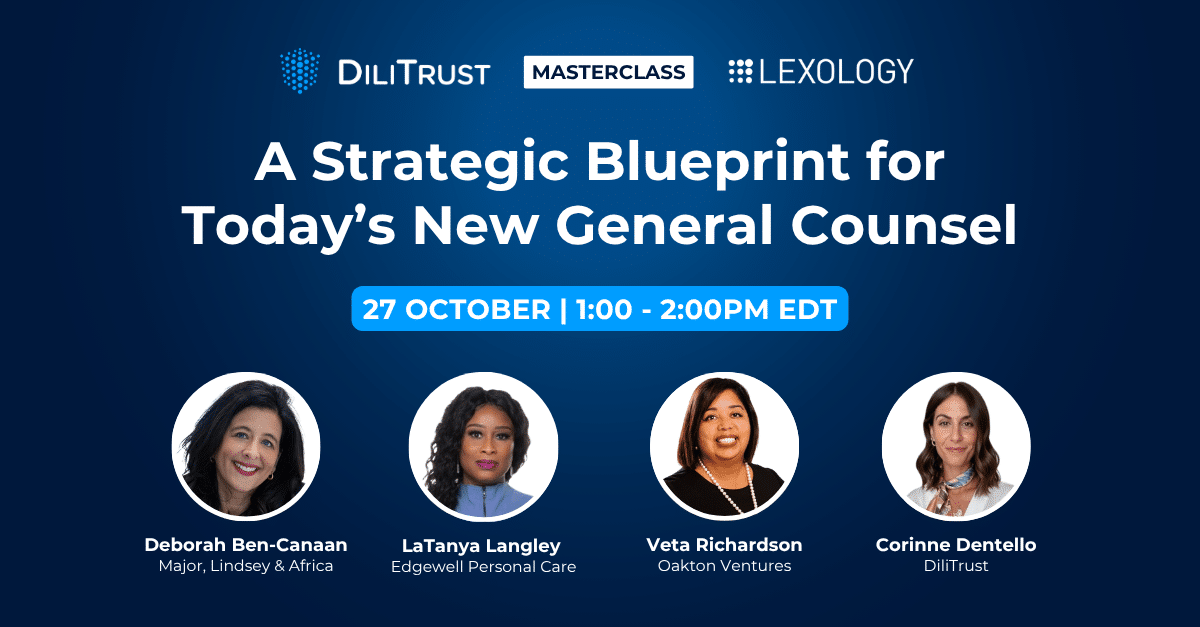
A Strategic Blueprint for Today's New General Counsel
October 27 at 1:00pm EDT
Stepping into the role of General Counsel at a new company, or being promoted to the top legal role at your current company, is exciting but daunting. With regulatory and economic demands growing, new GCs can’t afford to spend months just “getting settled.” Every GC needs to be ready to lead the law department's technology evolution.
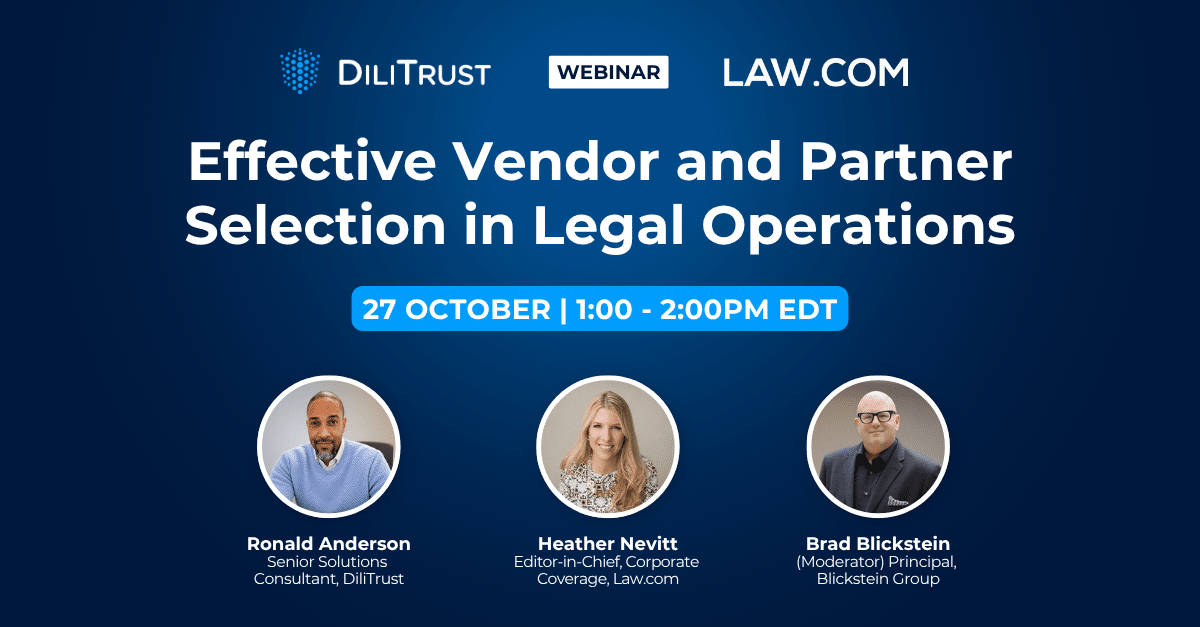
Effective Vendor and Partner Selection in Legal Operations
November 3 at 2:00pm EST
Legal technology is moving from experimentation to enterprise deployment, but with more tools, rising demands and tighter resources, choosing the right technology has become increasingly complex.
How Legal OS is shaping the world
What is Legal OS?
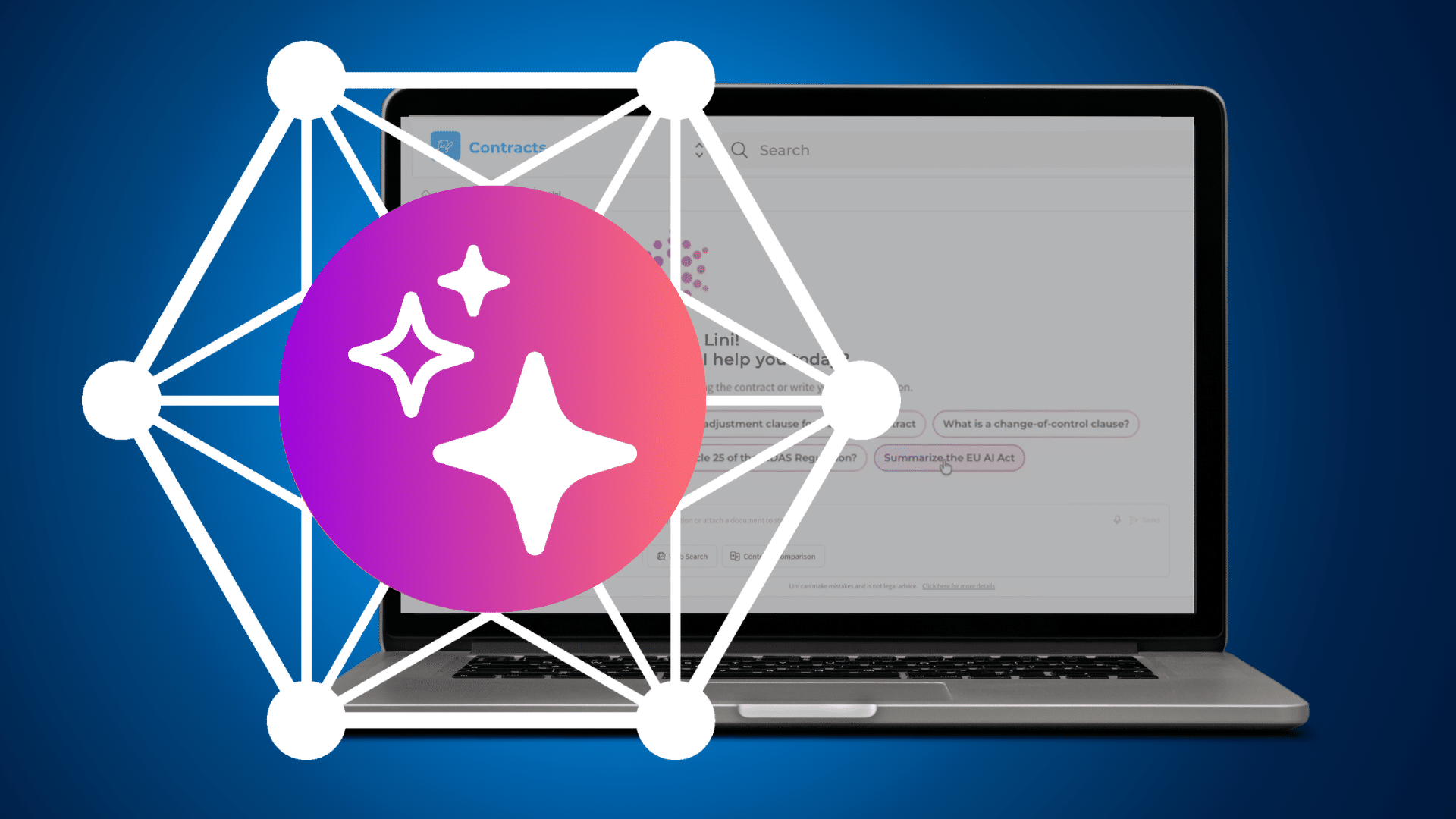
Why Legal AI Fails without a System beneath It


How Legal Becomes a Strategic Business Function
A system you can actually lead from
Bring the question your tools can't answer. We'll show you what it looks like when legal runs on a system that's been connected by design.